Skip to content
WAnimals
  • Map
  • Species
  • Parks
  • Diving
Log inCreate account
WAnimals

The guide for travellers and animal lovers: discover, plan and share your wild adventures around the world.

Discover wildlife

  • Species
  • Ecosystems
  • Glossary
  • Tags

Explore places

  • Map
  • Countries
  • Parks
  • Diving

Plan experiences

  • Guides

Learn

  • Blog

Resources

  • About us
  • How we build our profiles
  • Help centre
  • Contact
  • Install the app

Follow us

Account

  • Log in
  • Create account

© 2026 WAnimals. All rights reserved.

Terms of servicePrivacyCookiesLegal notice
MapSpeciesParksDiving
  1. Home
  2. Species
  3. Eastern Quoll

One of the 2 quolls on WAnimals
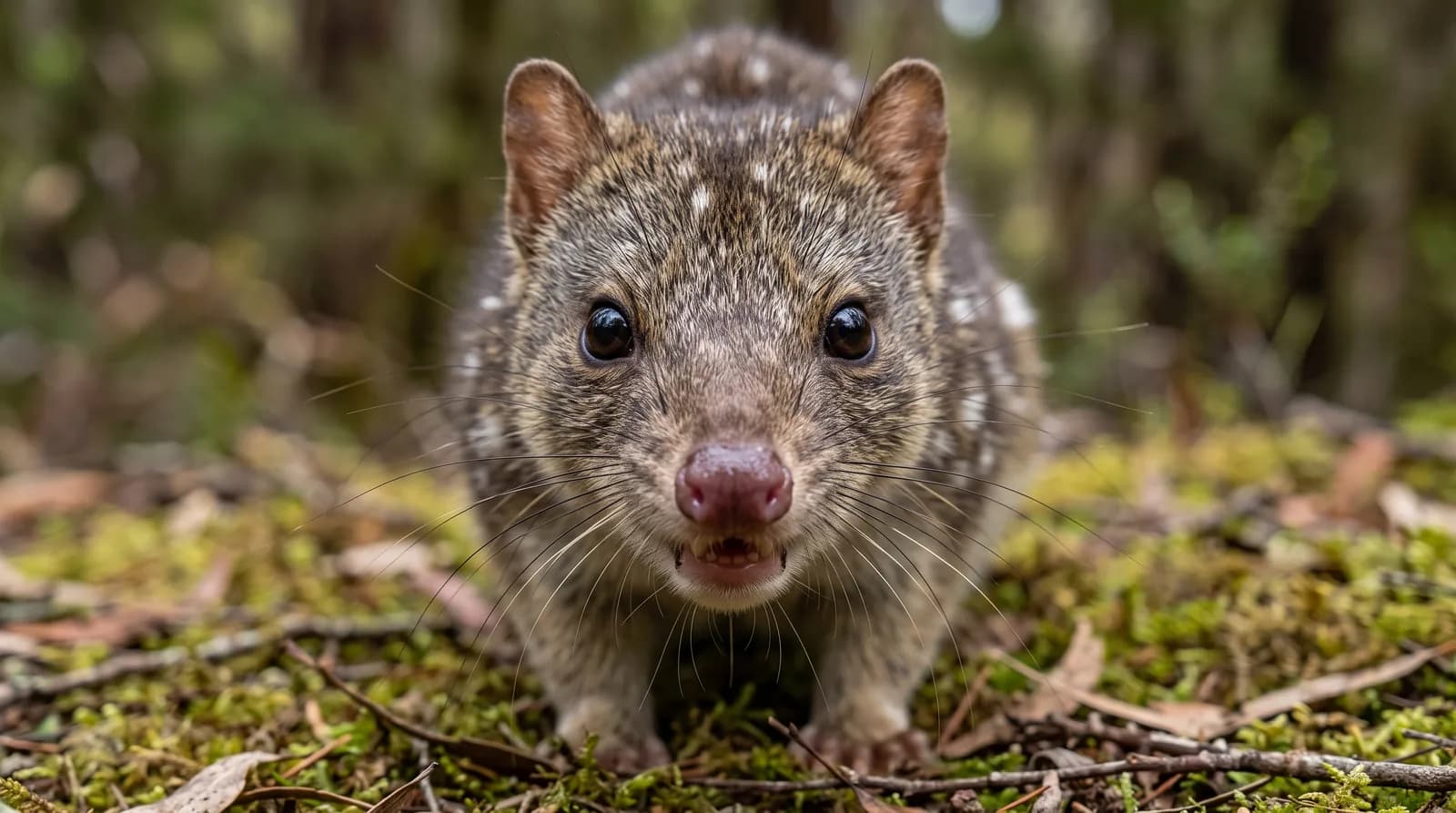
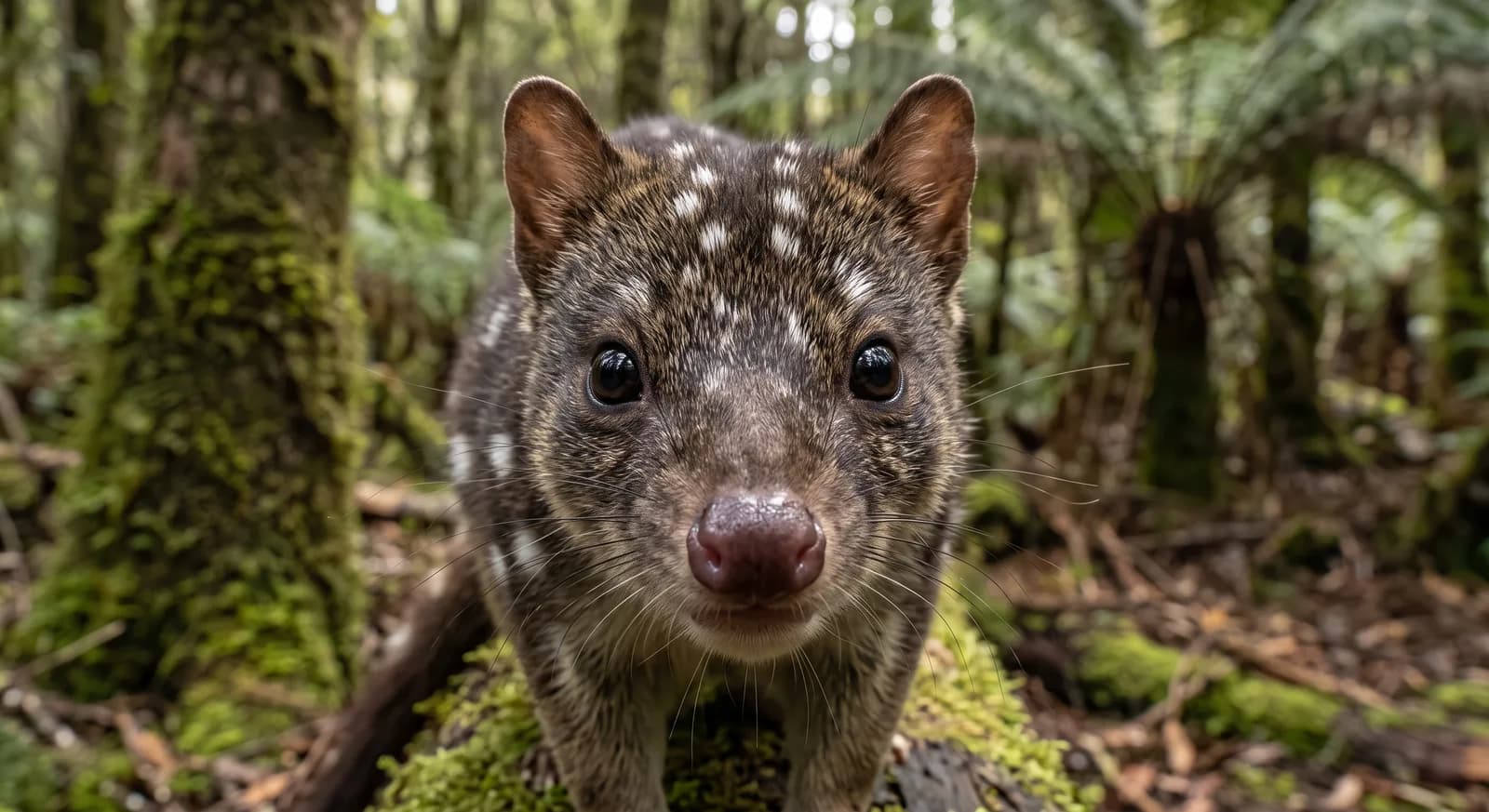
Eastern Quoll (Dasyurus viverrinus)

Mammals · Dasyuromorphia · Dasyuridae

Eastern Quoll

Dasyurus viverrinus

Endangered

At very high risk of extinction in the wild in the near future.

Spotted something wrong?

As many as 30 young can be born in a single litter, but the mother has only 6 to 8 working teats, so the great majority do not survive their first few minutes of life.

Weight

600 g – 2 kg

Size

28 cm – 45 cm

Life expectancy

3 years
Diet

Carnivore

Feeds mainly on other animals.

Activity

Nocturnal

Active mainly at night.

Social structure

Solitary

Lives and hunts alone, joining others only to breed.

Temperate forestGrasslandIslands
1countries4parks5same family

AI-generated images: illustrations, not photographs.

Fun facts

  • As many as 30 young can be born in a litter, but only 6 to 8 survive because there are not enough teats.
  • It died out on mainland Australia around the 1960s because of the red fox.
  • It has been reintroduced to protected mainland sanctuaries since 2016.

Life cycle and biology

Skeleton type
Vertebrate - internal bony skeleton (marsupial mammal)
Habitat and environment
Grassland, woodland and farmland of Tasmania and Bruny Island; extinct on mainland Australia since the 1960s, with recent reintroductions
Birth weight
0.02 grams (one of the smallest mammal newborns in the world)
Size at birth
Extremely undeveloped and tiny at birth, finishing its development in the pouch over some 8-10 weeks
Sexual maturity
10-11 months (both sexes)
Gestation / incubation
19-24 days
Litter / clutch size
As many as 30 young born per litter, though only 6-8 survive the competition for the available teats
Life expectancy in captivity
Documented record of up to 6.8 years in captivity

Sources consulted: AnAge (genomics.senescence.info) · Sydney Zoo · ACT Government fact sheet · Animal Diversity Web · Australian Geographic · The Animal Facts · Animalia.bio · PMC (mesopredator release cats study)

Where to find it

Loading map…

The pins mark the parks where its presence is documented.

Where to see it

Parks and dive sites where this species has been documented.

Related species

Other species in the catalogue with the most in common with Eastern Quoll — same habitat, park, country, tags or family.

Same taxonomic family
Shares a park

How to help

The eastern quoll is classified as endangered. Organisations such as the IUCN, WWF and the Wildlife Conservation Society work specifically on its conservation and that of its habitat; looking into their programmes is a good starting point if you want to get involved.

It's documented in 4 protected areas — one reason why protecting these places matters for its conservation.

Keep exploring

Based on what we already know about eastern quoll.

Share an experience, a fun fact or a tip for seeing the eastern quoll.
See full glossary
This page in other languages: Español · Deutsch · Français · Português · Italiano
See its range on the interactive map→
FreycinetAustralia
Tasmanian Wilderness (Cradle Mountain-Lake St Clair)Australia
Mount FieldAustralia
Ben LomondAustralia
Tasmanian DevilEndangered

Tasmanian Devil

Sarcophilus harrisii

Spotted-tailed QuollNear Threatened

Spotted-tailed Quoll

Dasyurus maculatus

Least Concern

Brown Antechinus

Antechinus stuartii

Least Concern

Fat-tailed Dunnart

Sminthopsis crassicaudata

Near Threatened

Brush-tailed Phascogale

Phascogale tapoatafa

Least Concern

Southern Brown Bandicoot

Isoodon obesulus

CountriesAustralia
ParksFreycinetAustralia
TagsCarnivore
Carnivore
Nocturnal
Solitary
Endangered
Temperate forest
Grassland
Islands
Mammal
Australia