Birds · Psittaciformes · Strigopidae
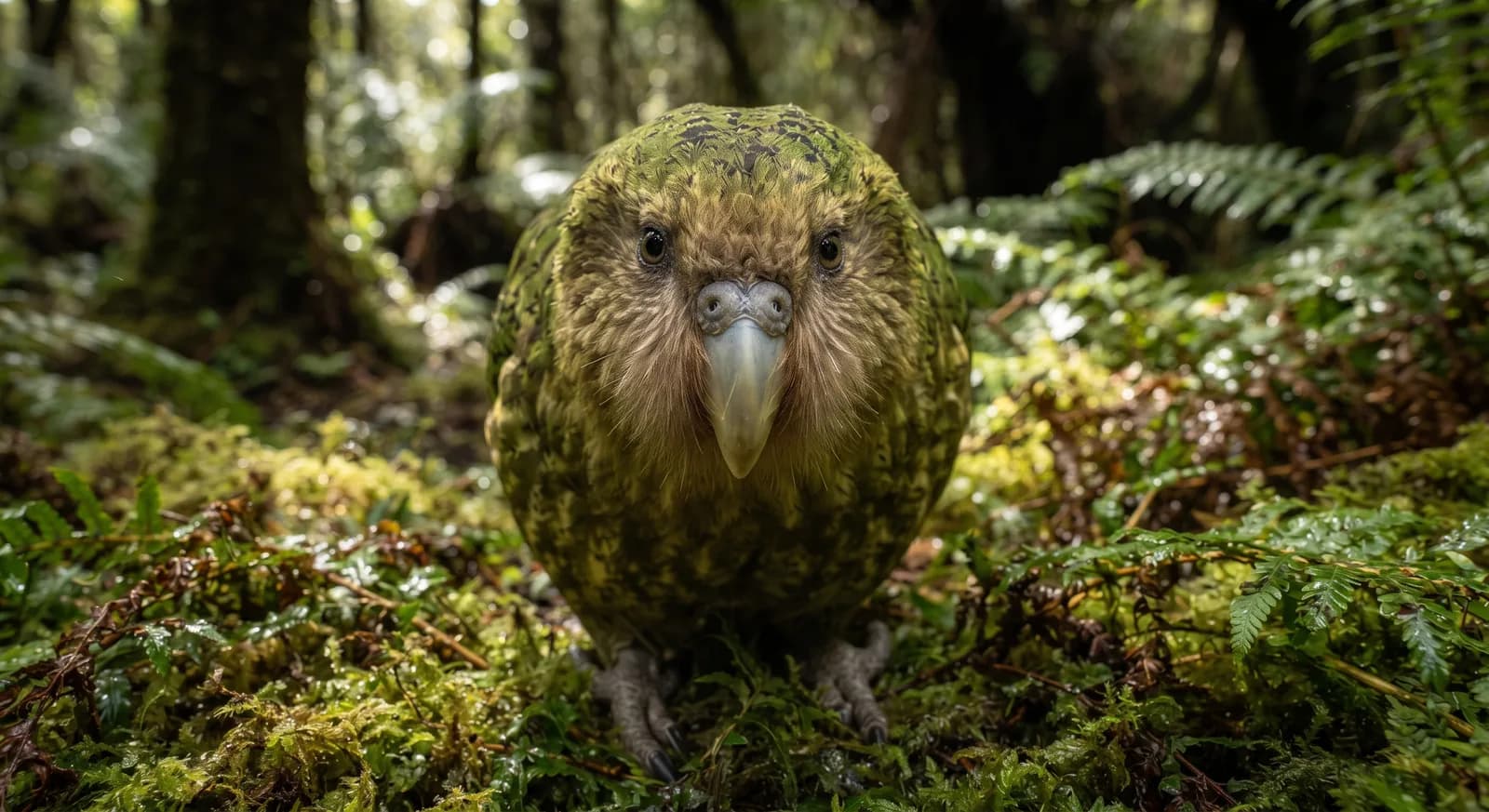
Kakapo
Strigops habroptilus
It faces an extremely high risk of imminent extinction in the wild. See full glossary
It is the only flightless parrot in the world and possibly one of the longest-lived birds known. It breeds at a lek, a system unique among parrots.
Weight
1.3 kg – 4 kg
Size
58 cm – 64 cm
Lifespan
60 years
Diet
Herbivore
Feeds mainly on plants.
Activity
Nocturnal
Active mainly at night.
Social structure
Solitary
Lives and hunts alone, joining others only to breed.
Sighting difficulty
Very hard
Fun facts
- It is the only flightless parrot in the world.
- Males compete by giving a deep resonant boom to attract females.
- It breeds only every two to five years, tied to the mast fruiting of trees such as the rimu.
- conservaciónIt is the world's only flightless parrot, nocturnal in habit and among the most threatened, with a population monitored bird by bird by conservationists in New Zealand.
Life cycle & biology
- Skeleton type
- Vertebrate - non-pneumatised bony skeleton, flightless bird (the only parrot species incapable of flight)
- Habitat & environment
- Forest and scrub on predator-free islands in New Zealand, where it was moved after nearly dying out on the mainland
- Birth weight
- No precise figure for hatching weight in the sources consulted
- Size at birth
- Downy on hatching and wholly dependent on its mother
- Sexual maturity
- Female: ~9-11 years | Male: ~5 years (though some sources put the start of male breeding activity as early as 4)
- Gestation / incubation
- ~30 days
- Litter / clutch size
- 1 to 4 eggs per clutch (~2.45 on average); it breeds only every 2-5 years, tied to the fruiting of certain trees
- Lifespan in captivity
- Up to 60 years documented in captivity
Sources consulted: AnAge (genomics.senescence.info); Animal Diversity Web; Birdfact; ResearchGate (Growth and fledging of kakapo); NZ Birds; Animalia.bio; PMC (hatching success study)
Where to watch it
Parks and dive sites where this species has been documented.
Related species
Other species in the catalogue with the most in common with Kakapo — same habitat, park, country, tags or family.
Great Spotted Kiwi
Apteryx haastii
Little Penguin
Eudyptula minor
 Endangered
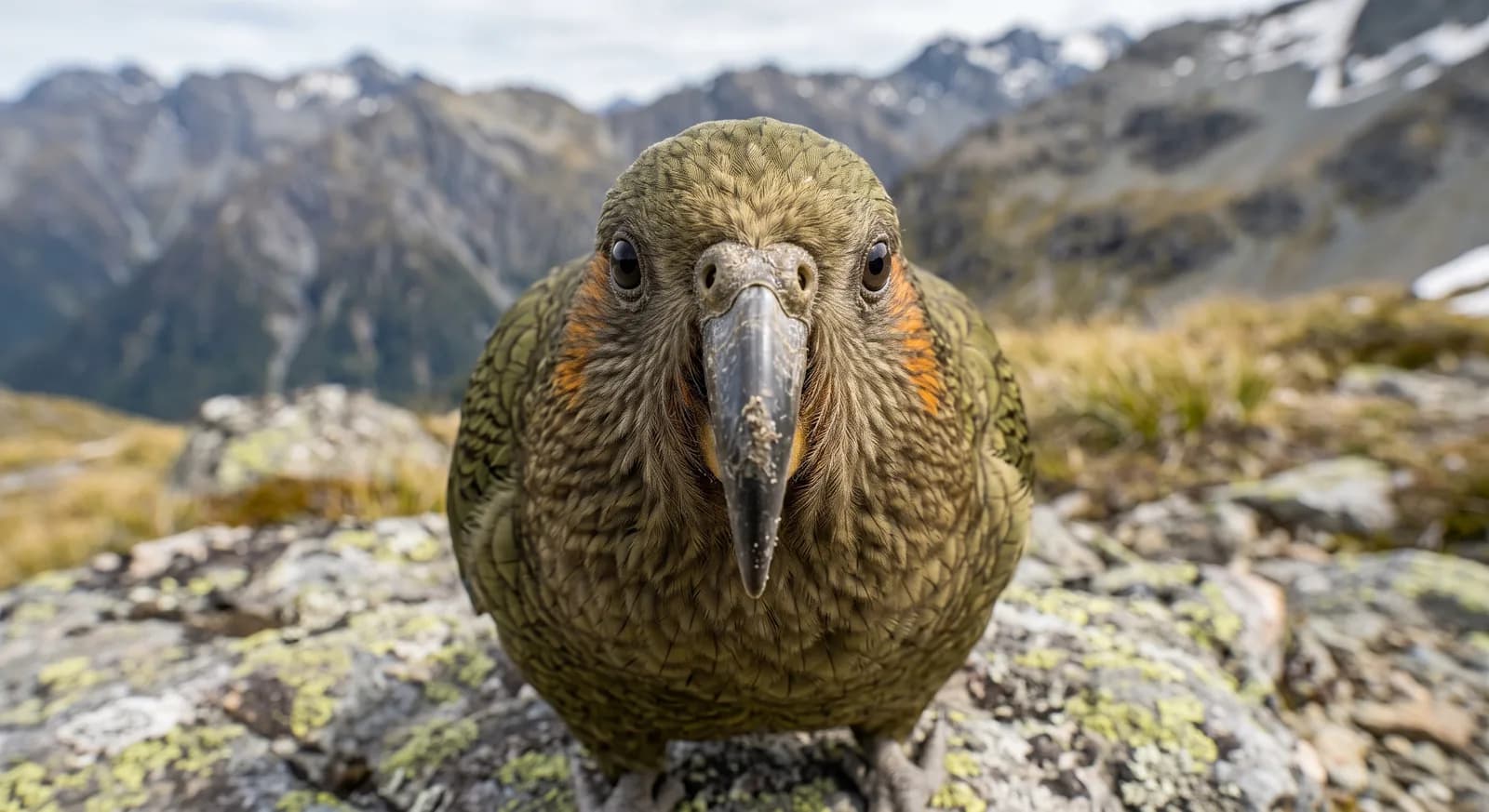
Kea
Nestor notabilis
Wetapunga
Deinacrida heteracantha
Spotted Shag
Phalacrocorax punctatus
Kelp Gull
Larus dominicanus
How to help
The kakapo is classified as critically endangered. Organizations such as UICN, WWF y Wildlife Conservation Society work specifically on its conservation and that of its habitat; looking into their programs is a good starting point if you want to get involved.
It's documented in 4 real protected areas — part of why protecting these places matters for its conservation.
Keep exploring
Based on what we already know about kakapo.
Comments
Share an experience, a fun fact or a tip for seeing the kakapo.
Be the first to comment.