Skip to content
WAnimals
  • Map
  • Species
  • Parks
  • Diving
Log inCreate account
WAnimals

The guide for travellers and animal lovers: discover, plan and share your wild adventures around the world.

Discover wildlife

  • Species
  • Ecosystems
  • Glossary
  • Tags

Explore places

  • Map
  • Countries
  • Parks
  • Diving

Plan experiences

  • Guides

Learn

  • Blog

Resources

  • Help centre
  • Contact
  • Install the app

Follow us

Account

  • Log in
  • Create account

© 2026 WAnimals. All rights reserved.

About usHow we build our profilesTerms of servicePrivacyLegal notice
MapSpeciesParksDiving
  1. Home
  2. Species
  3. American Green Treefrog

One of the 4 treefrogs on WAnimals

Amphibians · Anura · Hylidae

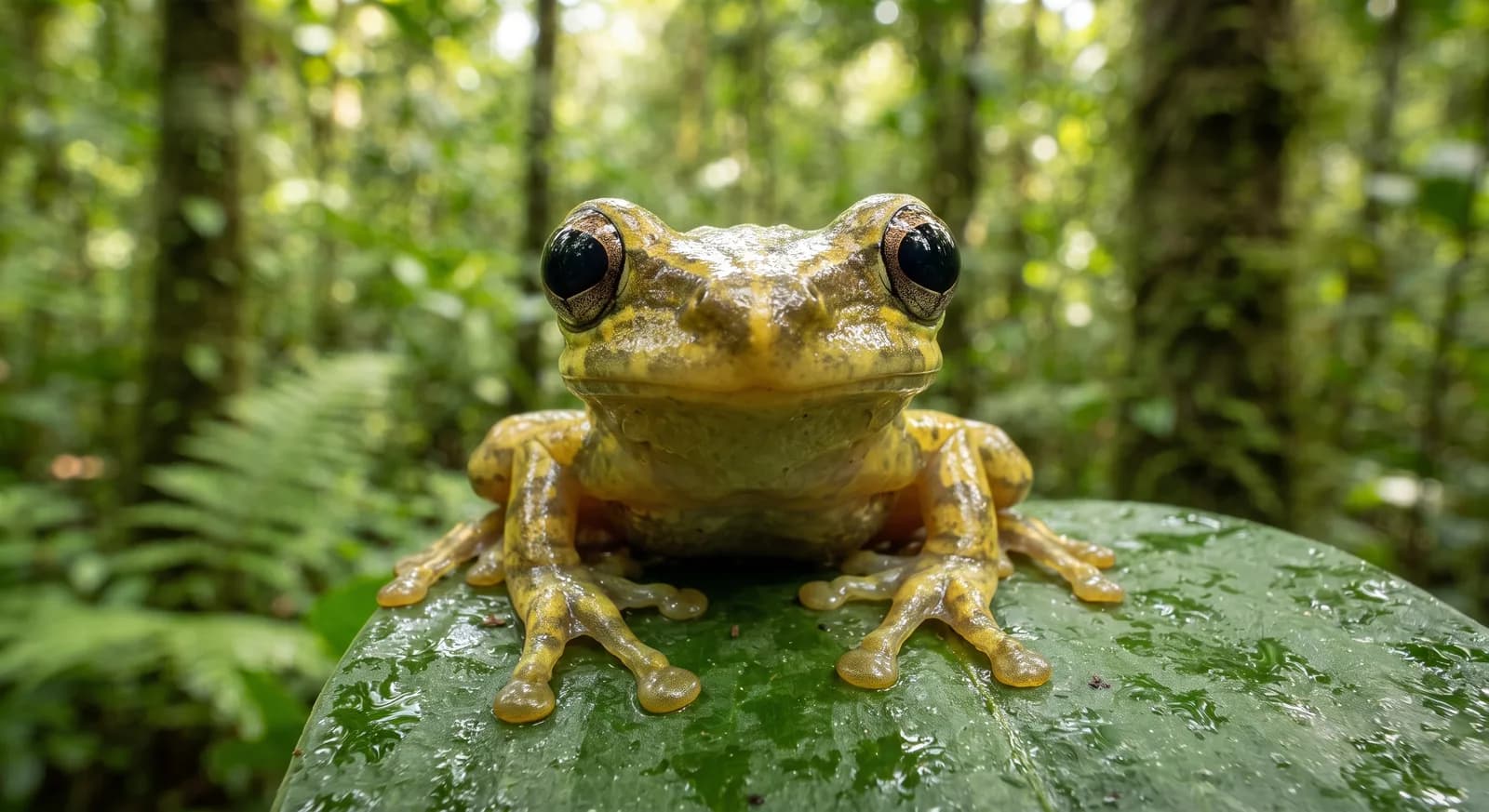
American Green Treefrog

Dryophytes cinereus

Least Concern

The species is abundant and widely distributed; it faces no significant short-term risk.

Spotted something wrong?

The American green treefrog is an icon of the south-eastern United States: bright green with a white stripe along the flank, it is the state amphibian in some states and a regular presence on porches and windows, where it hunts the insects drawn in by the light. Its massed calling is one of the characteristic sounds of summer nights in the South.

Size

3 cm – 6 cm

Life expectancy

6 years

Diet

Insectivore

Feeds mainly on insects and other invertebrates.

Activity

Nocturnal

Active mainly at night.

Social structure

Colony

Lives in large concentrations, often for breeding reasons.

Sighting difficulty

Easy

Temperate forestFreshwater
1countries7same family

Fun facts

  • It gathers at house windows and street lamps to hunt the insects drawn in by the light, behaviour that has made it one of the most familiar frogs in the south-eastern United States.
  • It is the state amphibian of Georgia and Louisiana, an uncommon distinction for a frog.
  • Its call sounds like a repeated nasal honk, and the choruses of hundreds of males in the southern marshes are so loud that they carry more than a kilometre.
  • It is the official state amphibian of Georgia and Louisiana.
  • Its call is a repeated nasal bark that carries a long way when given in chorus, which is why it is also known in English as the cowbell frog.
  • Males that fail to secure a territory adopt an alternative strategy: they stay silent beside a calling male and intercept the females that come to him. These are the so-called satellite males.
  • It perches on vertical surfaces using adhesive toe pads, and shifts in shade between bright green and greyish brown depending on temperature, humidity and its condition.
  • Its range is shifting northwards, and today it turns up in states where it was previously absent.
  • Its scientific name changed from Hyla cinerea to Dryophytes cinereus with the revision of the New World hylid treefrogs.

Life cycle and biology

Skeleton type
Vertebrate - internal bony skeleton (amphibian)
Habitat and environment
Wetlands, marshes, gardens and damp wooded areas of the south-eastern United States
Sexual maturity
12 months
Gestation / incubation
Larval development in pools and wetlands
Litter / clutch size
700 eggs

Sources consulted: https://es.wikipedia.org/wiki/Hyla_cinerea

Where to find it

Loading map…

Related species

Other species in the catalogue with the most in common with American Green Treefrog — same habitat, park, country, tags or family.

Same taxonomic family

Keep exploring

Based on what we already know about american green treefrog.

Comments

Share an experience, a fun fact or a tip for seeing the american green treefrog.

Be the first to comment.

See full glossary
This page in other languages: Español · Deutsch · Français · Português · Italiano
See its range on the interactive map→
Least Concern

Gray Treefrog

Dryophytes versicolor

Least Concern

Cuban Treefrog

Osteopilus septentrionalis

Least Concern

Common Tree Frog

Hyla arborea

Least Concern

Stripeless Treefrog

Hyla meridionalis

Small-headed TreefrogLeast Concern

Small-headed Treefrog

Dendropsophus microcephalus

Least Concern

Mission Golden-eyed Treefrog

Trachycephalus resinifictrix

CountriesUnited States
TagsInsectivore
Insectivore
Nocturnal
Colonial
Amphibian
Temperate forest
Freshwater
United States