 Least Concern
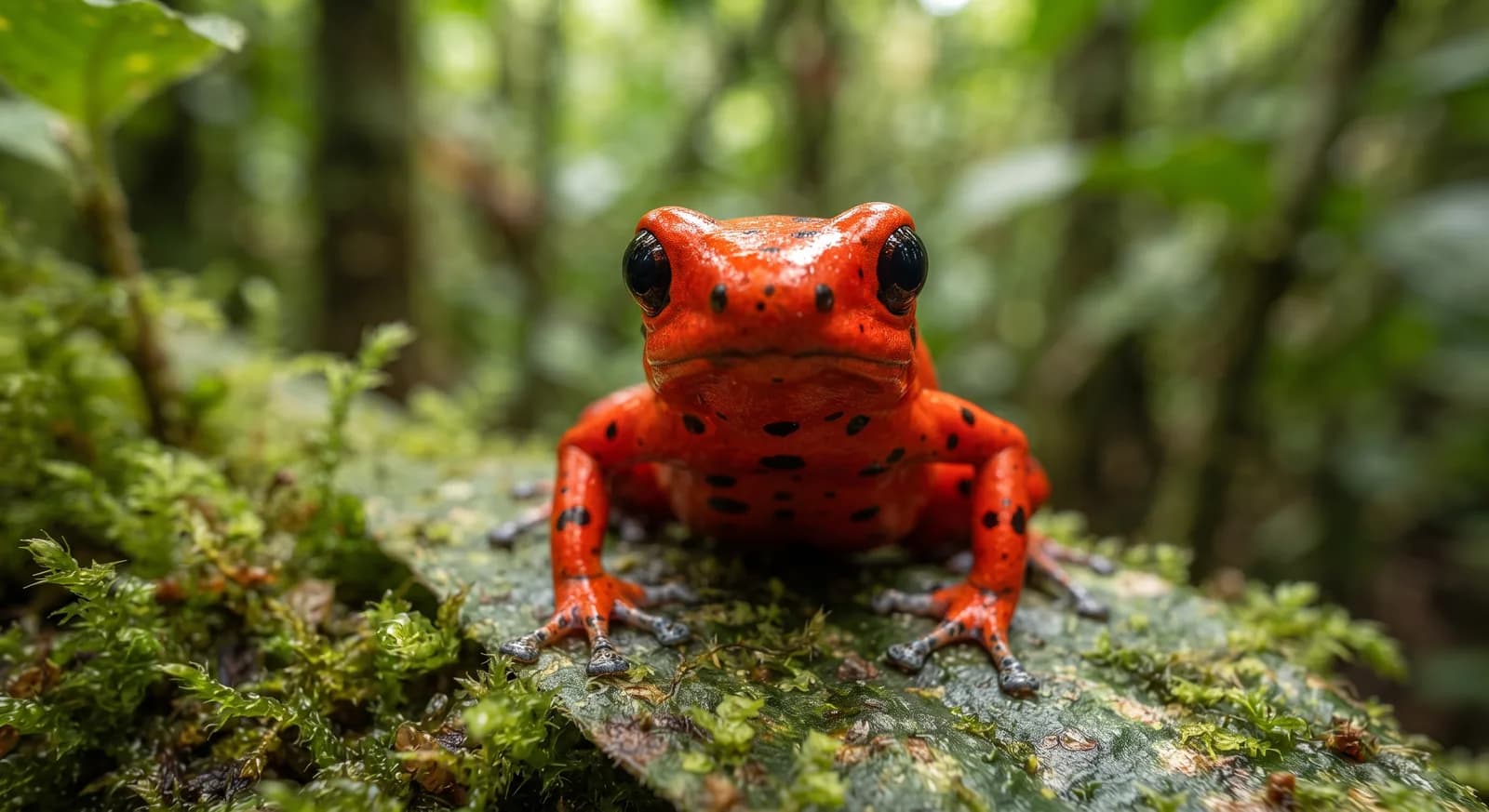
Strawberry Poison Frog
Oophaga pumilio
One of the 47 frogs on WAnimals
Amphibians · Anura · Dendrobatidae
Phyllobates terribilis
At very high risk of extinction in the wild in the near future.
Considered the most poisonous animal in the world for its size, it warns predators of its toxicity with its striking yellow colouring.
Weight
1 g – 2 g
Size
4 cm – 6 cm
Life expectancy
10 years
Diet
Insectivore
Feeds mainly on insects and other invertebrates.
Activity
Diurnal
Active mainly during the day.
Social structure
Solitary
Lives and hunts alone, joining others only to breed.
Sighting difficulty
Hard
Estimated population
No published global figure: it is abundant within its range, but that range covers less than 5,000 km² on the Pacific coast of Colombia, concentrated in the upper basin of the Saija river
Sources consulted: Dimensions.com; Animal Diversity Web; National Geographic; The Animal Facts; Wikipedia (Golden poison frog); Citizen Conservation breeding guidelines; IUCN SSC Amphibian Specialist Group 2017, IUCN Red List (En peligro): población en descenso continuo por deforestación, conversión a cultivos, minería y contaminación por pesticidas || IUCN Red List, evaluación de Phyllobates terribilis; Animal Diversity Web
Best time: All year round, after rain
Other species in the catalogue with the most in common with Golden Poison Frog — same habitat, park, country, tags or family.
The golden poison frog is classified as endangered. Organisations such as Fundación ProAves work specifically on its conservation and that of its habitat; looking into their programmes is a good starting point if you want to get involved.
Visit the Fundación ProAves websiteBased on what we already know about golden poison frog.
Share an experience, a fun fact or a tip for seeing the golden poison frog.
Be the first to comment.