Skip to content
WAnimals
  • Map
  • Species
  • Parks
  • Diving
Log inCreate account
WAnimals

The guide for travellers and animal lovers: discover, plan and share your wild adventures around the world.

Discover wildlife

  • Species
  • Ecosystems
  • Glossary
  • Tags

Explore places

  • Map
  • Countries
  • Parks
  • Diving

Plan experiences

  • Guides

Learn

  • Blog

Resources

  • About us
  • How we build our profiles
  • Help centre
  • Contact
  • Install the app

Follow us

Account

  • Log in
  • Create account

© 2026 WAnimals. All rights reserved.

Terms of servicePrivacyCookiesLegal notice
MapSpeciesParksDiving
  1. Home
  2. Species
  3. Northern Hairy-nosed Wombat

One of the 3 wombats on WAnimals

Mammals · Diprotodontia · Vombatidae

Northern Hairy-nosed Wombat

Lasiorhinus krefftii

Critically Endangered

At extremely high risk of imminent extinction in the wild.

Spotted something wrong?

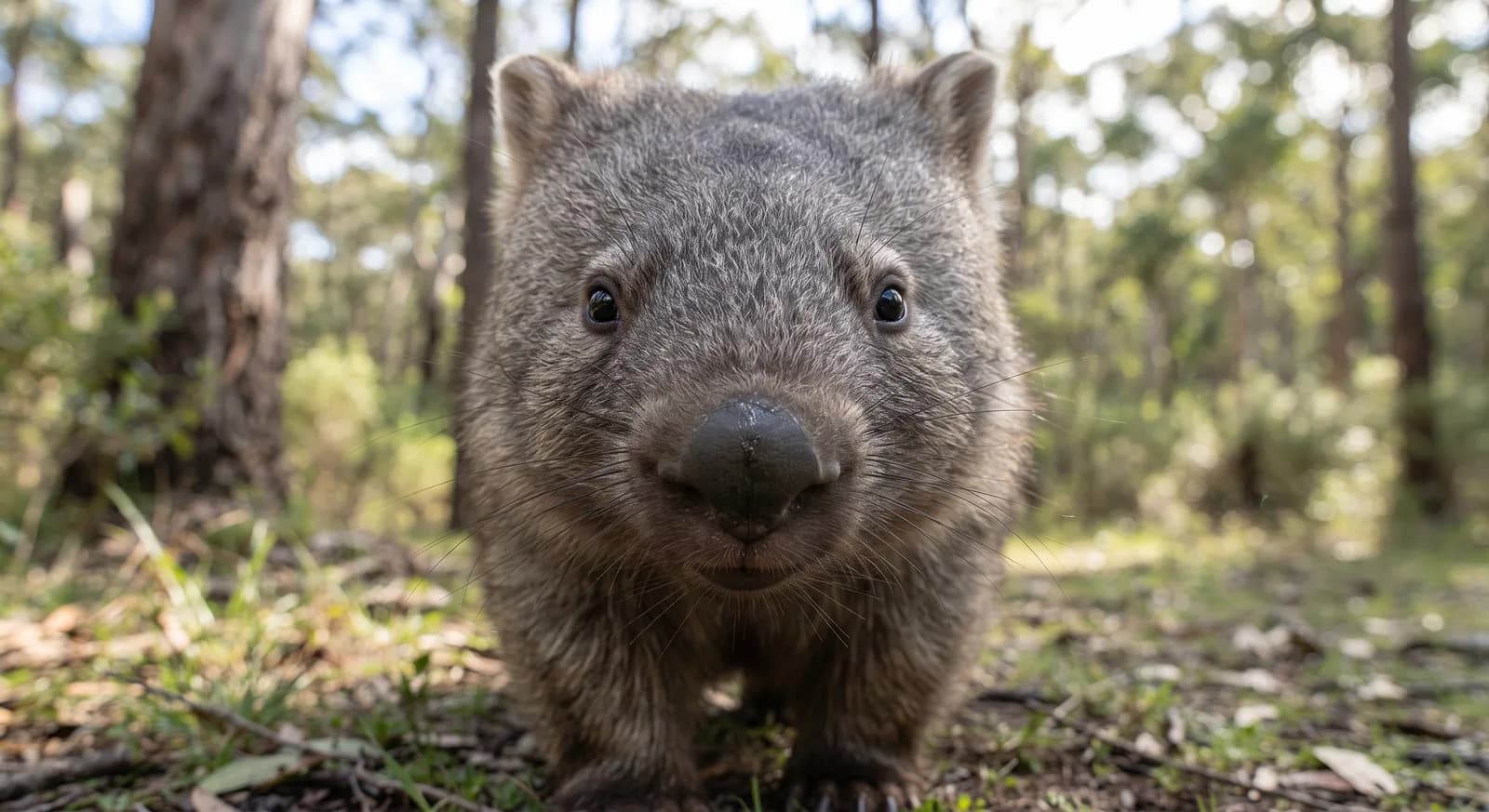
The northern hairy-nosed wombat is one of the rarest mammals in the world. It is a heavily built burrowing marsupial, with a muzzle covered in fine hair and powerful claws with which it opens burrow systems tens of metres long. It is herbivorous and nocturnal, and its extremely slow metabolism lets it survive on very poor grasses. For decades the whole species was reduced to a single population in Epping Forest National Park, in Queensland; satellite colonies have now been established to spread the risk.

Weight

25 kg – 40 kg

Size

1 m – 1.2 m

Life expectancy

25 years

Diet

Herbivore

Feeds mainly on plants.

Activity

Nocturnal

Active mainly at night.

Social structure

Colony

Lives in large concentrations, often for breeding reasons.

Estimated population

Some 300 individuals

DesertGrassland
1countries2same family

Fun facts

  • It produces cube-shaped droppings, an oddity explained by the uneven elasticity of the walls of its gut, which stops them rolling off when it leaves them on rocks and logs to mark territory.
  • It came so close to the end that in the 1980s little more than thirty living animals were counted, all in a single park, and the whole species depended on there being no serious fire or drought.

Life cycle and biology

Skeleton type
Vertebrate - internal bony skeleton (mammal)
Habitat and environment
Semi-arid grassland with deep sandy soils and scattered eucalypts, in Queensland
Sexual maturity
19.3 months
Gestation / incubation
21 days
Litter / clutch size
1

Sources consulted: IUCN Red List · Animal Diversity Web · Wikipedia (es)

Where to find it

Loading map…

Related species

Other species in the catalogue with the most in common with Northern Hairy-nosed Wombat — same habitat, park, country, tags or family.

Same taxonomic family
Related to
Related to
Related to
Related to

How to help

The northern hairy-nosed wombat is classified as critically endangered. Organisations such as the IUCN, WWF and the Wildlife Conservation Society work specifically on its conservation and that of its habitat; looking into their programmes is a good starting point if you want to get involved.

Keep exploring

Based on what we already know about northern hairy-nosed wombat.
Share an experience, a fun fact or a tip for seeing the northern hairy-nosed wombat.
See full glossary
This page in other languages: Español · Deutsch · Français · Português · Italiano
See its range on the interactive map→
Near Threatened

Southern Hairy-nosed Wombat

Lasiorhinus latifrons

Bare-nosed WombatLeast Concern

Bare-nosed Wombat

Vombatus ursinus

Red KangarooLeast Concern

Red Kangaroo

Osphranter rufus

Vulnerable

Greater Bilby

Macrotis lagotis

Western Gray KangarooLeast Concern

Western Gray Kangaroo

Macropus fuliginosus

Least Concern

Honey Possum

Tarsipes rostratus

CountriesAustralia
TagsHerbivore
Herbivore
Nocturnal
Colonial
Critically Endangered
Desert
Grassland
Mammal
Australia