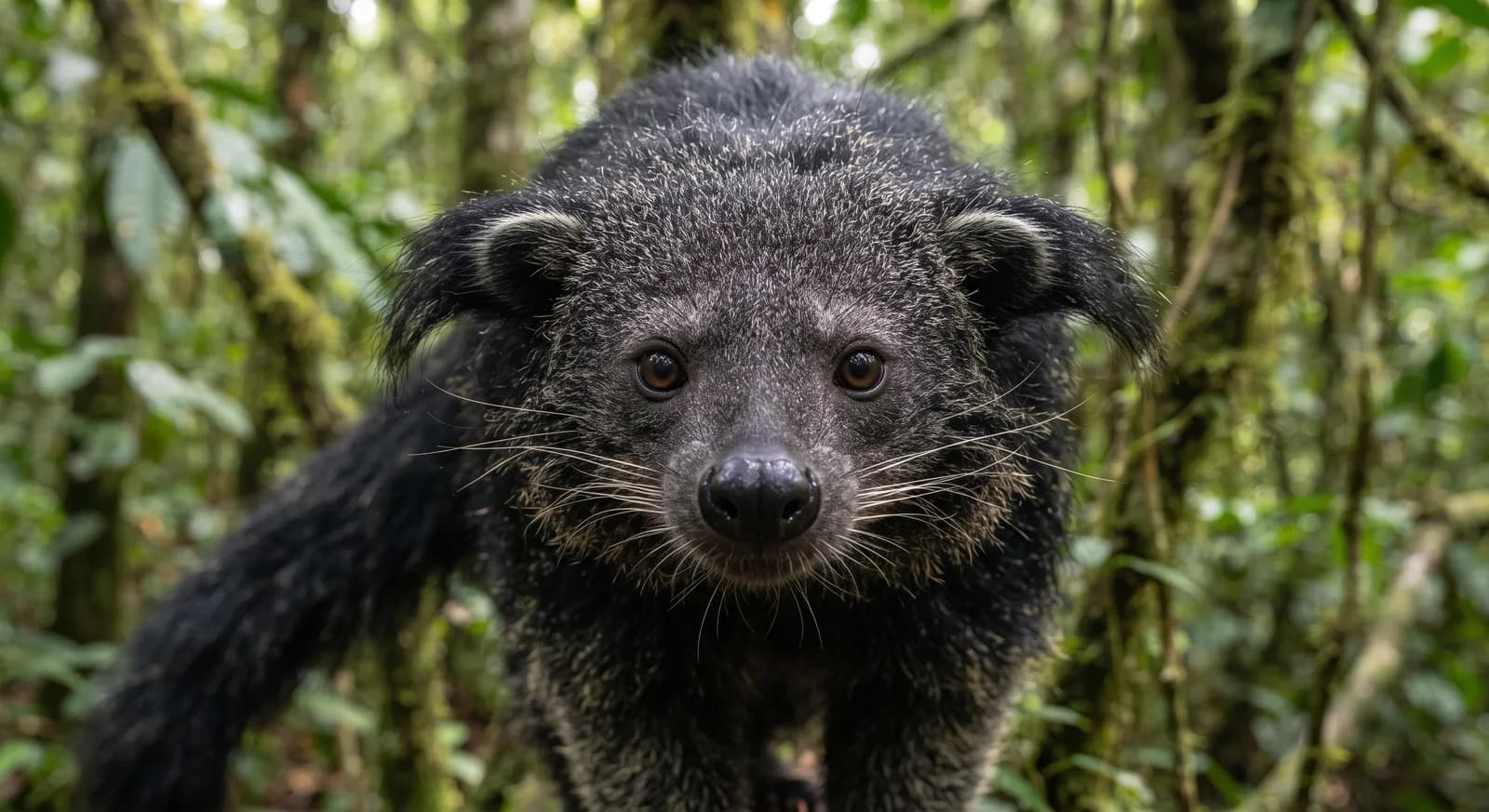
 Vulnerable
Binturong
Arctictis binturong
One of the 2 flying lemurs on WAnimals
Mammals · Dermoptera · Cynocephalidae
Cynocephalus volans
The species is abundant and widely distributed; it faces no significant short-term risk.
Although commonly called a flying lemur, it is neither a lemur nor able to fly: it glides on a broad membrane of skin running from its neck to the tip of its tail and its toes.
Weight
1 kg – 1.7 kg
Size
33 cm – 38 cm
Life expectancy
10 years
Diet
Herbivore
Feeds mainly on plants.
Activity
Nocturnal
Active mainly at night.
Social structure
Solitary
Lives and hunts alone, joining others only to breed.
Sighting difficulty
Easy
Sources consulted: World Species; JungleDragon; AnAge (genomics.senescence.info); Alchetron; GBIF; Animal Diversity Web; Animalia.bio; Animal Fact (Colugos); Britannica
Best time: All year round on Mindanao and other islands of the southern Philippines, at dusk; by day it stays clamped to a trunk, perfectly camouflaged.
The pins mark the parks where its presence is documented.
Parks and dive sites where this species has been documented.
Other species in the catalogue with the most in common with Philippine Flying Lemur — same habitat, park, country, tags or family.
Based on what we already know about philippine flying lemur.
Share an experience, a fun fact or a tip for seeing the philippine flying lemur.
Be the first to comment.