Skip to content
WAnimals
  • Map
  • Species
  • Parks
  • Diving
Log inCreate account
WAnimals

The guide for travellers and animal lovers: discover, plan and share your wild adventures around the world.

Discover wildlife

  • Species
  • Ecosystems
  • Glossary
  • Tags

Explore places

  • Map
  • Countries
  • Parks
  • Diving

Plan experiences

  • Guides

Learn

  • Blog

Resources

  • Help centre
  • Contact
  • Install the app

Follow us

Account

  • Log in
  • Create account

© 2026 WAnimals. All rights reserved.

About usHow we build our profilesTerms of servicePrivacyLegal notice
MapSpeciesParksDiving
  1. Home
  2. Species
  3. Common House Gecko

Reptiles · Squamata · Gekkonidae

Common House Gecko

Hemidactylus frenatus

Least Concern

The species is abundant and widely distributed; it faces no significant short-term risk.

Spotted something wrong?

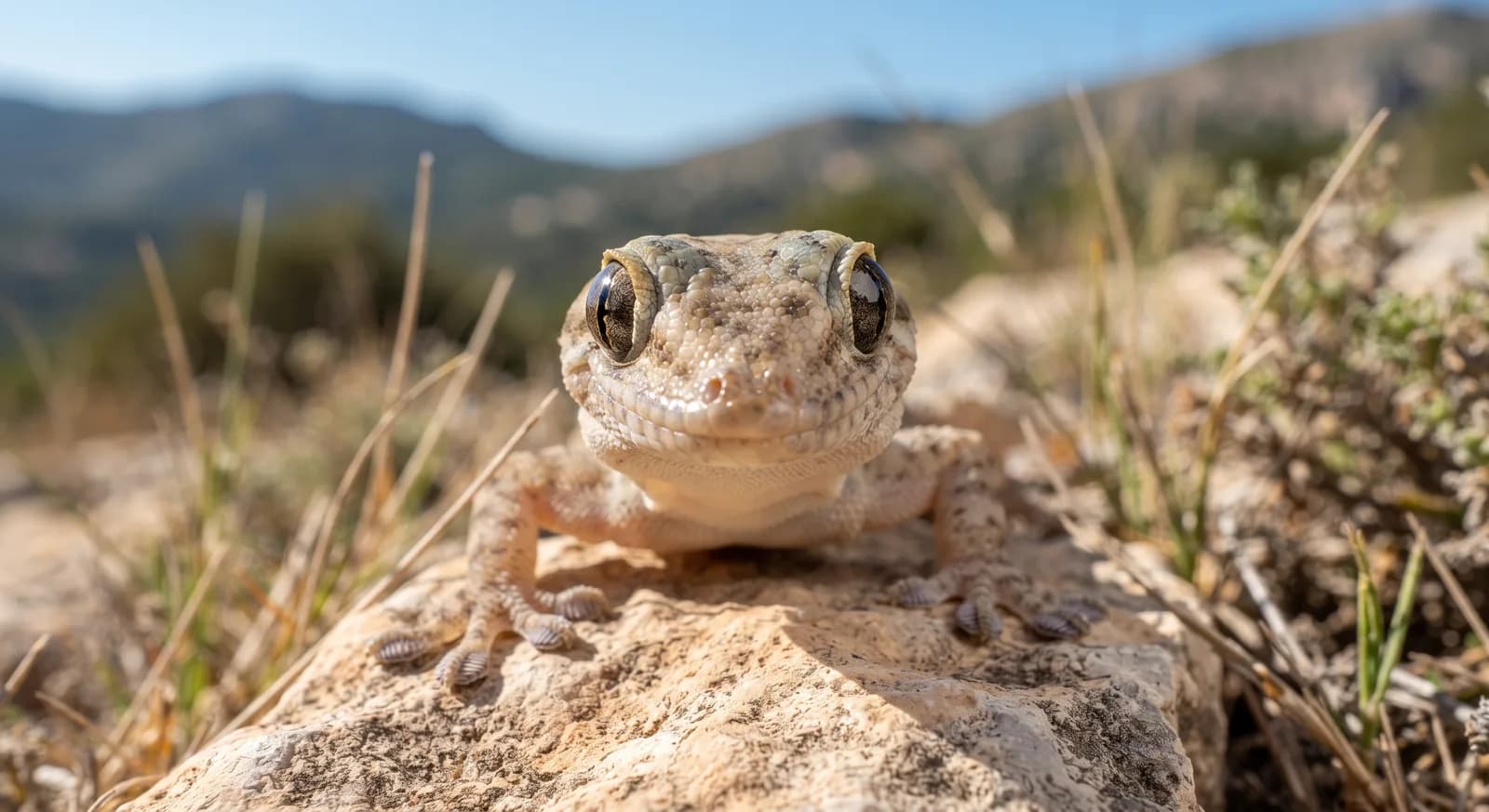
The common house gecko is a gecko of the family Gekkonidae. It is native to South-East Asia and to some Pacific islands. It has been introduced across much of the tropical world: in Latin America from Mexico to Argentina; in the United States in Florida; in Africa in Madagascar; on some Indian Ocean islands and in Australia.

Weight

3 g on average

Size

7 cm – 15 cm

Life expectancy

5 years

Diet

Insectivore

Feeds mainly on insects and other invertebrates.

Activity

Nocturnal

Active mainly at night.

Social structure

Solitary

Lives and hunts alone, joining others only to breed.

Sighting difficulty

Easy

RainforestTemperate forestGrassland
101countries28parks5same family

Fun facts

  • It is one of the most effective invasive species in the world among reptiles: it travels in containers and cargo, and wherever it arrives it displaces the native geckos through direct competition and aggression, a pattern documented on dozens of islands and in dozens of cities.
  • Its call is unmistakable: a series of dry clicks given at night from the walls, which has earned it onomatopoeic names in several Asian languages.
  • It can establish a population from a single accidentally transported egg, because the females store sperm for months and can lay several times after a single mating.

Life cycle and biology

Skeleton type
Vertebrate - internal bony skeleton (reptile)
Habitat and environment
Buildings, walls, gardens and degraded woodland in warm regions worldwide
Size at birth
About 2 cm of body on hatching
Sexual maturity
12 months
Gestation / incubation
58 days
Litter / clutch size
2

Sources consulted: https://es.wikipedia.org/wiki/Hemidactylus_frenatus

Where to find it

Best time: All year round across much of the tropics, at night, around house lights and street lamps.

Loading map…

Where to see it

Parks and dive sites where this species has been documented — showing 10 of 28.

Related species

Other species in the catalogue with the most in common with Common House Gecko — same habitat, park, country, tags or family.

Same taxonomic family
Shares a park
Shares a park
Shares a park

Keep exploring

Based on what we already know about common house gecko.

Comments

Share an experience, a fun fact or a tip for seeing the common house gecko.

Be the first to comment.

One of the 3 house geckos on WAnimals
See full glossary
This page in other languages: Español · Deutsch · Français · Português · Italiano

The pins mark the parks where its presence is documented.

See its range on the interactive map→
KomodoIndonesia
EvergladesUnited States
Hawaii VolcanoesUnited States
AldabraSeychelles
Gunung LeuserIndonesia
Khao YaiThailand
KinabaluMalaysia
Ulu TemburongBrunei
Bukit Timah Nature ReserveSingapore
BakoMalaysia
See all 28 parks
Turkish GeckoLeast Concern

Turkish Gecko

Hemidactylus turcicus

Not Evaluated

Tokay Gecko

Gekko gecko

Least Concern

Common Flat-tail Gecko

Uroplatus fimbriatus

Least Concern

Big Brown Bat

Eptesicus fuscus

Least Concern

Greater False Vampire

Megaderma lyra

Least Concern

Common Nighthawk

Chordeiles minor

CountriesIndonesia
ParksKomodoIndonesia
TagsInsectivore
Insectivore
Nocturnal
Solitary
Reptile
Rainforest
Temperate forest
Grassland

Asia28

Africa24

Oceania21

North America16

South America12

Indonesia
United States
Malaysia
Philippines
Seychelles
Thailand
Bahrain
Bangladesh
Bhutan
Brunei
Cambodia
China
India
Indonesia
Iran
Japan
Kuwait
Malaysia
Maldives
Myanmar
Nepal
Oman
Pakistan
Philippines
Qatar
Saudi Arabia
Singapore
Sri Lanka
Taiwan
Thailand
Timor-Leste
United Arab Emirates
Vietnam
Yemen
Angola
Cameroon
Comoros
Côte d’Ivoire
Djibouti
Egypt
Eritrea
Gabon
Ghana
Kenya
Madagascar
Malawi
Mauritius
Mayotte
Mozambique
Nigeria
Réunion
Seychelles
Somalia
South Africa
Sudan
Tanzania
Zambia
Zimbabwe
American Samoa
Australia
Cook Islands
Fiji
French Polynesia
Guam
Kiribati
Marshall Islands
Micronesia
Nauru
New Caledonia
New Zealand
Niue
Northern Mariana Islands
Palau
Papua New Guinea
Samoa
Solomon Islands
Tonga
Tuvalu
Vanuatu
Bahamas
Belize
Costa Rica
Cuba
Dominican Republic
El Salvador
Guatemala
Haiti
Honduras
Jamaica
Mexico
Nicaragua
Panama
Puerto Rico
Trinidad and Tobago
United States
Argentina
Bolivia
Brazil
Colombia
Ecuador
French Guiana
Guyana
Paraguay
Peru
Suriname
Uruguay
Venezuela