One of the 3 house geckos on WAnimals
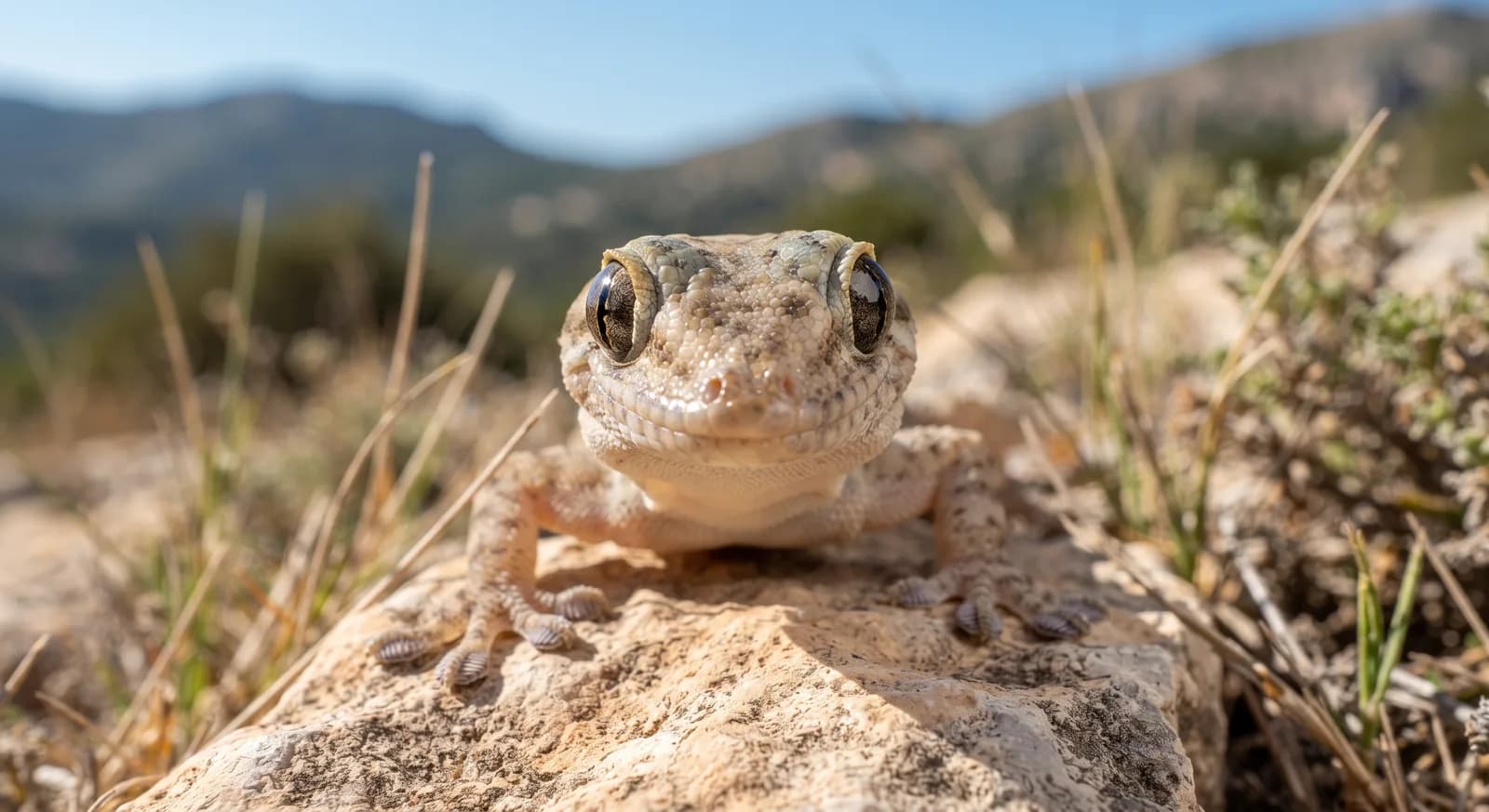
Reptiles · Squamata · Gekkonidae
Hemidactylus turcicus
The species is abundant and widely distributed; it faces no significant short-term risk.
In many Mediterranean cultures it is taboo to harm it, and it is traditionally valued as a natural check on household insects. It was introduced accidentally to Florida in 1915.
Weight
1 g – 2 g
Size
10 cm – 13 cm
Life expectancy
6 years
Diet
Insectivore
Feeds mainly on insects and other invertebrates.
Activity
Nocturnal
Active mainly at night.
Social structure
Solitary
Lives and hunts alone, joining others only to breed.
AI-generated images: illustrations, not photographs.
Sources consulted: PMC (age structure insular population study) · BioDB · Animal-pedia · Critter Science · AnAge (genomics.senescence.info) · Animal Diversity Web · ReptileDirect
Best time: All year round, at dusk, on walls and house fronts along the Mediterranean coast; it is smaller and pinker-skinned than the common wall gecko.
Parks and dive sites where this species has been documented — showing 10 of 44.
Other species in the catalogue with the most in common with Turkish Gecko — same habitat, park, country, tags or family.
Based on what we already know about turkish gecko.
The pins mark the parks where its presence is documented.