 Critically Endangered
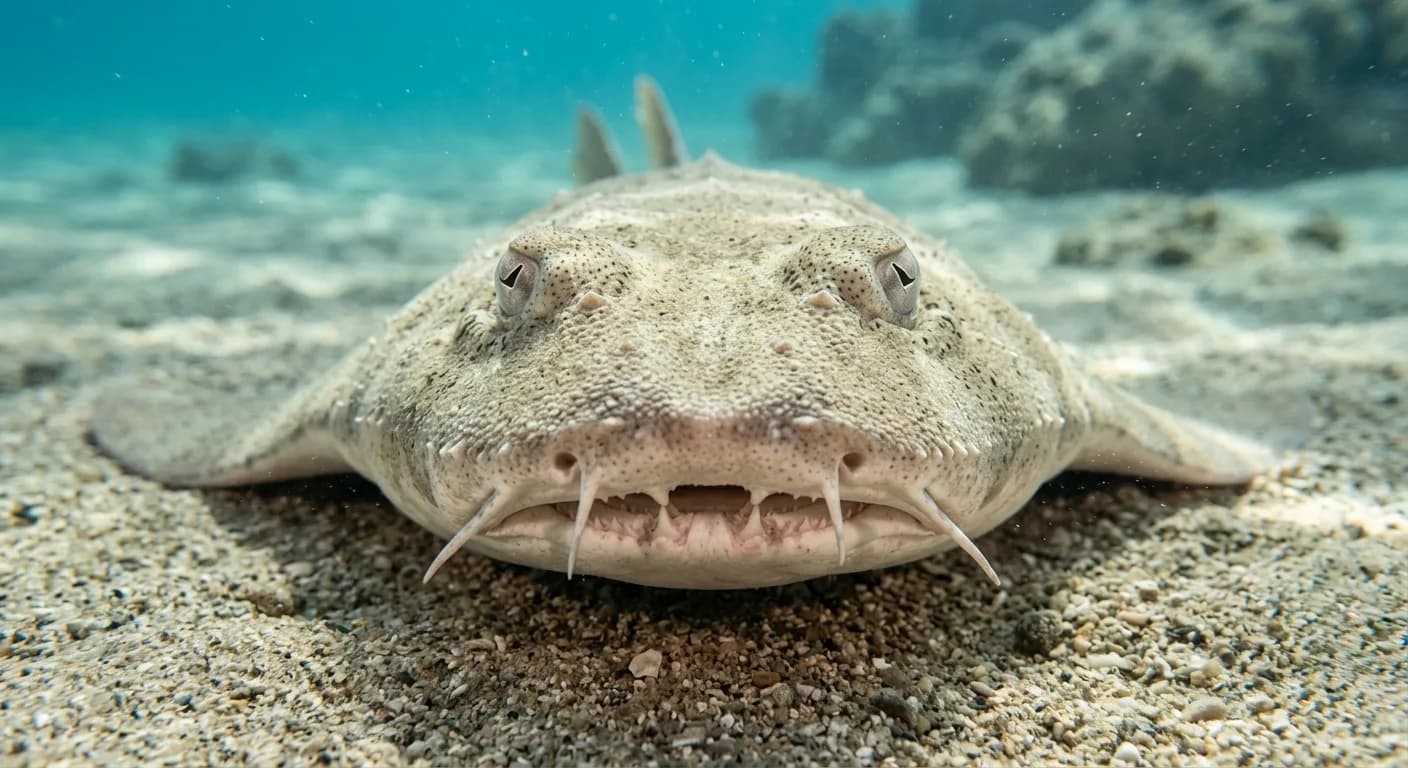
Angelshark
Squatina squatina
Europe
Montenegro packs high mountains, extreme canyons, glacial lakes, primeval forest and Mediterranean coast into less than fourteen thousand square kilometres. The canyon of the Tara River reaches close to 1,300 metres deep and is the deepest in Europe, cut into the limestone of the Durmitor massif. Biogradska Gora protects one of the last primeval forests on the continent, with trees half a millennium old around a glacial lake. Lake Skadar, the largest in the Balkans and shared with Albania, is a mosaic of reedbeds, water lilies and shallow water that works as one of the most important wetlands in the Mediterranean. On the coast, the Ulcinj salt pans concentrate tens of thousands of migrating birds each year between Europe and Africa, flamingos among them.
National animal: No official national animal; the double-headed eagle is the state's heraldic emblem
The Dalmatian pelican, the heaviest flying bird in the world along with the great bustard, breeds on Lake Skadar in one of the very few colonies left in Europe. Its local population fell to a handful of pairs and recovered thanks to floating nesting platforms, sheltered from floods and disturbance, on which the birds now raise their chicks.
Montenegro declared itself an ecological state in 1991, a commitment that has since coexisted with conflicts over hydroelectric schemes on the Tara and development on the coast. The Ulcinj salt pans won legal protection in 2019 after a long conservation campaign.
Skadar between April and June for pelicans and heron colonies. Ulcinj in spring and autumn for flamingos and waders. Durmitor in summer for chamois and golden eagle.
Where else might I want to travel?
Same region: The Balkans
Same region: The Balkans
Same region: The Balkans
Same region: The Balkans
556 species found
Based on what we already know about Montenegro.