Bivalves · Unionida · Unionidae
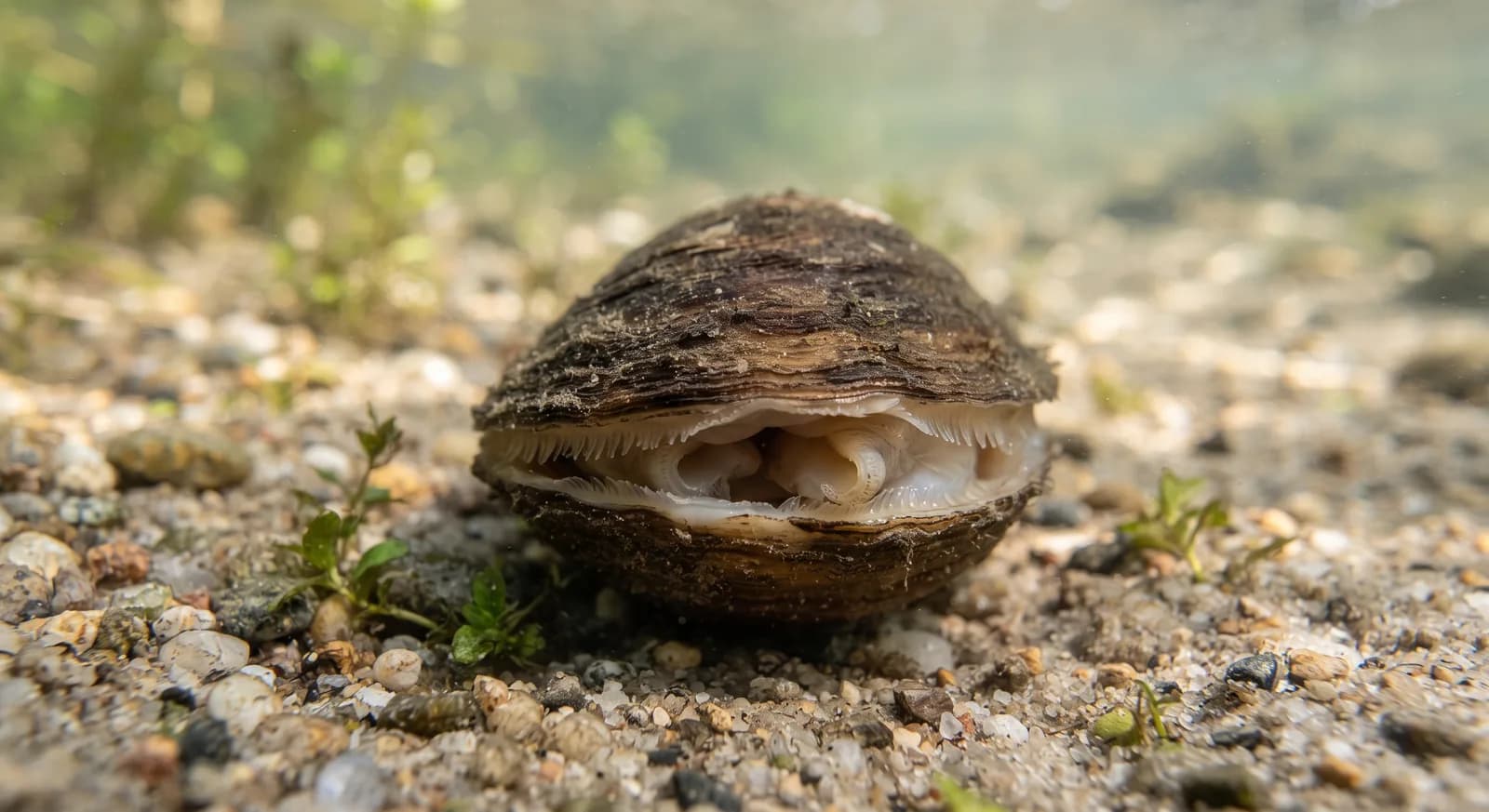
Margaritifera margaritifera
At very high risk of extinction in the wild in the near future.
A river mussel of extraordinarily long life that inhabits clean, nutrient-poor watercourses of the northern hemisphere. It filters up to 50 litres of water a day, and its presence is an indicator of excellent river quality. Its life cycle depends entirely on Atlantic salmon and brown trout: the larvae, called glochidia, must attach to the gills of a salmonid and spend between nine and twelve months there before dropping to the gravel bed. Its populations have fallen by more than 90% in Europe over the past century.
Size
9 cm – 16 cm
Life expectancy
100 years
Diet
Omnivore
Combines animal and plant food depending on availability.
Social structure
Colony
Lives in large concentrations, often for breeding reasons.
AI-generated images: illustrations, not photographs.
Sources consulted: Lista Roja de la UICN · Geist (2010), Hydrobiologia · Directiva Hábitats de la UE · Ministerio para la Transición Ecológica de España
Parks and dive sites where this species has been documented — showing 10 of 87.
Other species in the catalogue with the most in common with Freshwater Pearl Mussel — same habitat, park, country, tags or family.
The freshwater pearl mussel is classified as endangered. Organisations such as the IUCN, WWF and the Wildlife Conservation Society work specifically on its conservation and that of its habitat; looking into their programmes is a good starting point if you want to get involved.
It's documented in 10 protected areas — one reason why protecting these places matters for its conservation.
Based on what we already know about freshwater pearl mussel.
The pins mark the parks where its presence is documented.