 Critically Endangered
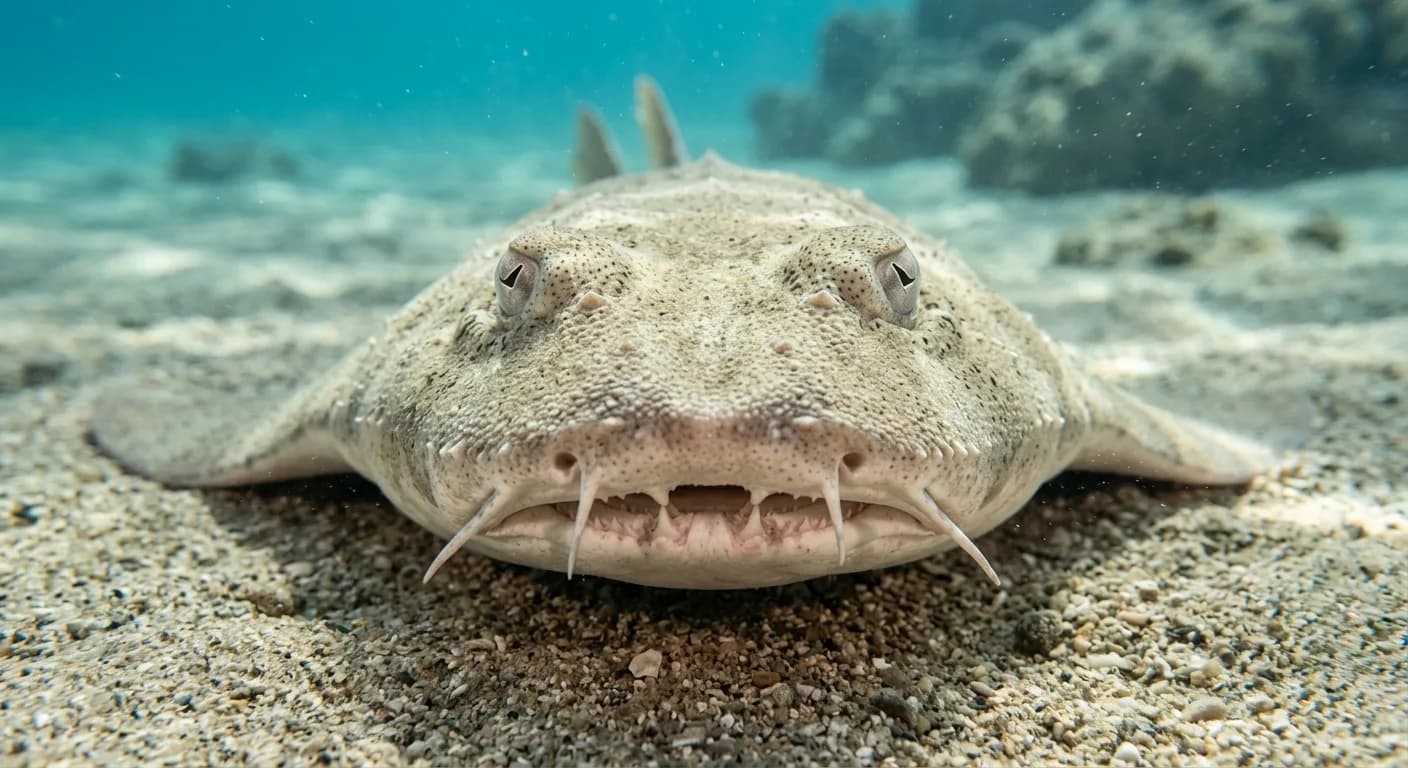
Angelshark
Squatina squatina
Europe
Albania is a rugged country, with mountains covering almost three quarters of its territory and a coast that brings together lagoons, dunes and the one point where the Adriatic narrows facing Italy. The Albanian Alps, known as the Accursed Mountains, keep glacial valleys, beech forests and a fauna that includes brown bear, wolf, Balkan chamois and, very scarce, the Balkan lynx. The great tectonic lakes of Ohrid, Prespa and Skadar, shared with its neighbours, provide exceptional aquatic biodiversity. On the coast, the Karavasta lagoon, separated from the Adriatic by a belt of dunes and pines, holds one of the few Dalmatian pelican colonies in the Mediterranean, and Butrint park combines wetlands, holm oak woods and ancient ruins. Albania's rivers are the last great unregulated watercourses in Europe.
National animal: The golden eagle, to the point that the country's name in Albanian means land of the eagles
In March 2023 the Vjosa River was declared Europe's first wild river national park: some two hundred and seventy kilometres flowing without a single dam from the Greek mountains to the Adriatic, with braided channels, gravel islands and riverside woodland. It holds more than 1,100 species, among them otters, terrapins and dozens of fish, and serves as the last example of what the continent's great rivers used to be.
Protecting the Vjosa against dozens of hydroelectric schemes is the most significant conservation milestone in the Balkans of the past decade. Hunting has been banned under successive moratoria since 2014 to halt the decline of the birdlife.
Karavasta between April and July for Dalmatian pelicans. Valbona and Theth in summer for mountain wildlife. Butrint and the bay of Narta in winter for flamingos and waterbirds.
Where else might I want to travel?
Same region: The Balkans
Same region: The Balkans
Same region: The Balkans
Same region: The Balkans
550 species found
Based on what we already know about Albania.