Skip to content
WAnimals
  • Map
  • Species
  • Parks
  • Diving
Log inCreate account
WAnimals

The guide for travellers and animal lovers: discover, plan and share your wild adventures around the world.

Discover wildlife

  • Species
  • Ecosystems
  • Glossary
  • Tags

Explore places

  • Map
  • Countries
  • Parks
  • Diving

Plan experiences

  • Guides

Learn

  • Blog

Resources

  • Help centre
  • Contact
  • Install the app

Follow us

Account

  • Log in
  • Create account

© 2026 WAnimals. All rights reserved.

About usHow we build our profilesTerms of servicePrivacyLegal notice
MapSpeciesParksDiving
  1. Home
  2. Species
  3. Blue Whale

Blue Whale (Balaenoptera musculus)

Mammals · Artiodactyla · Balaenopteridae

Blue Whale

Balaenoptera musculus

Endangered

At very high risk of extinction in the wild in the near future.

Spotted something wrong?

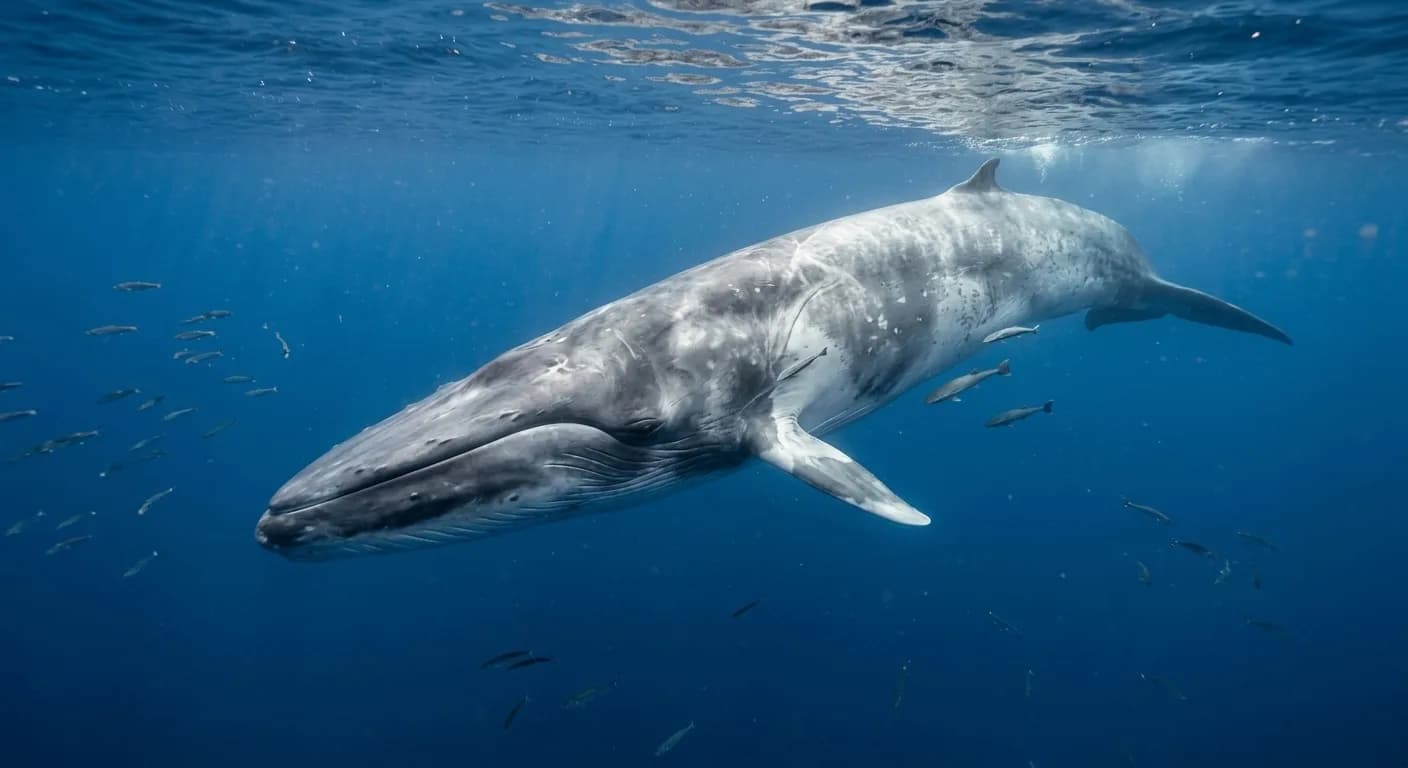
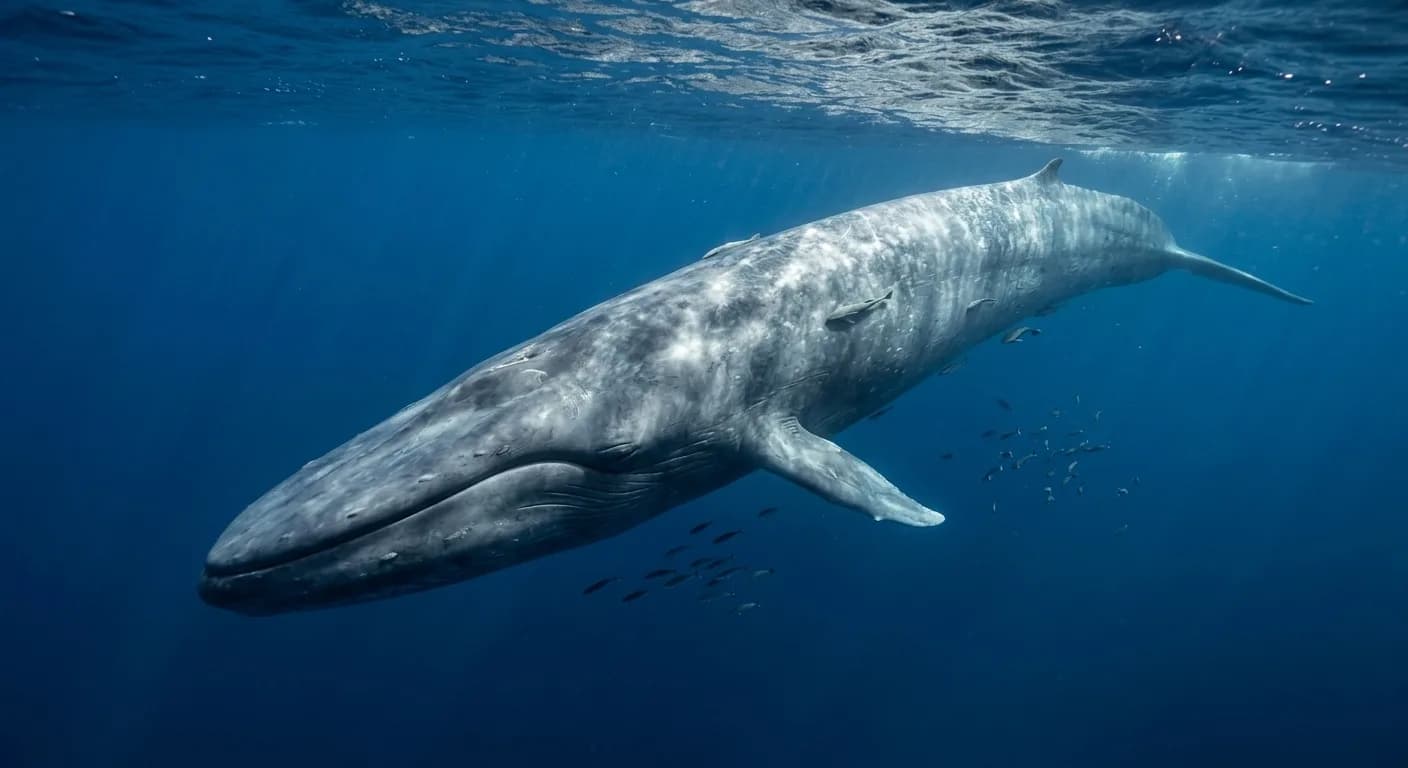
It is the largest animal ever to have lived on this planet, bigger even than the largest dinosaurs known. It feeds almost entirely on krill, filtering up to 8 tonnes a day.

Weight

100 t – 150 t

Size

21 m – 30 m

Life expectancy

90 years
Diet

Omnivore

Combines animal and plant food depending on availability.

Activity

Irregular activity

Active at irregular times, by day or night depending on circumstances.

Social structure

Solitary

Lives and hunts alone, joining others only to breed.

Sighting difficulty

Hard

Estimated population

10,000 - 25,000 animals

Ocean
128countries5parks13dive sites5same family2natural phenomena2featured routes

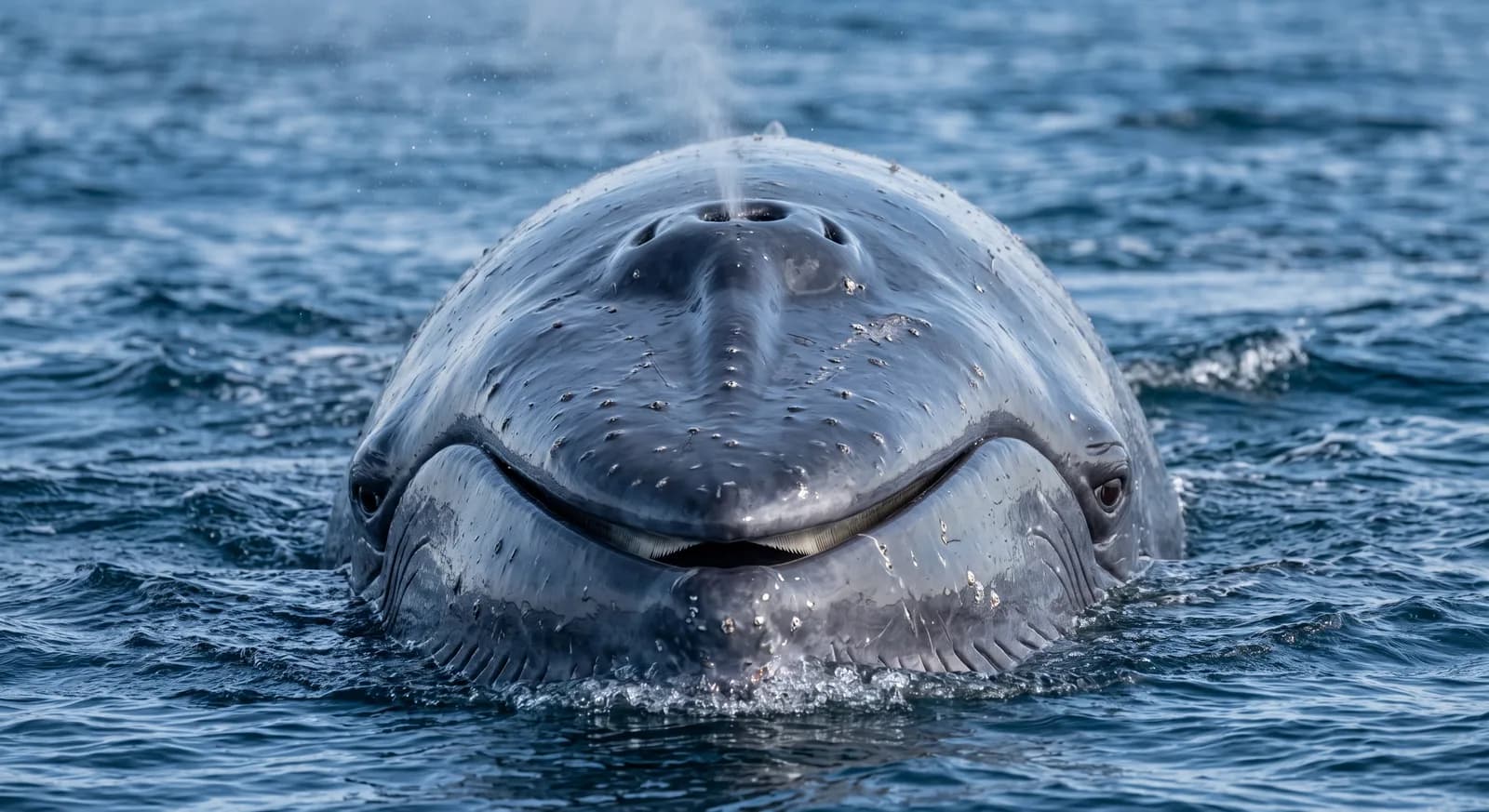
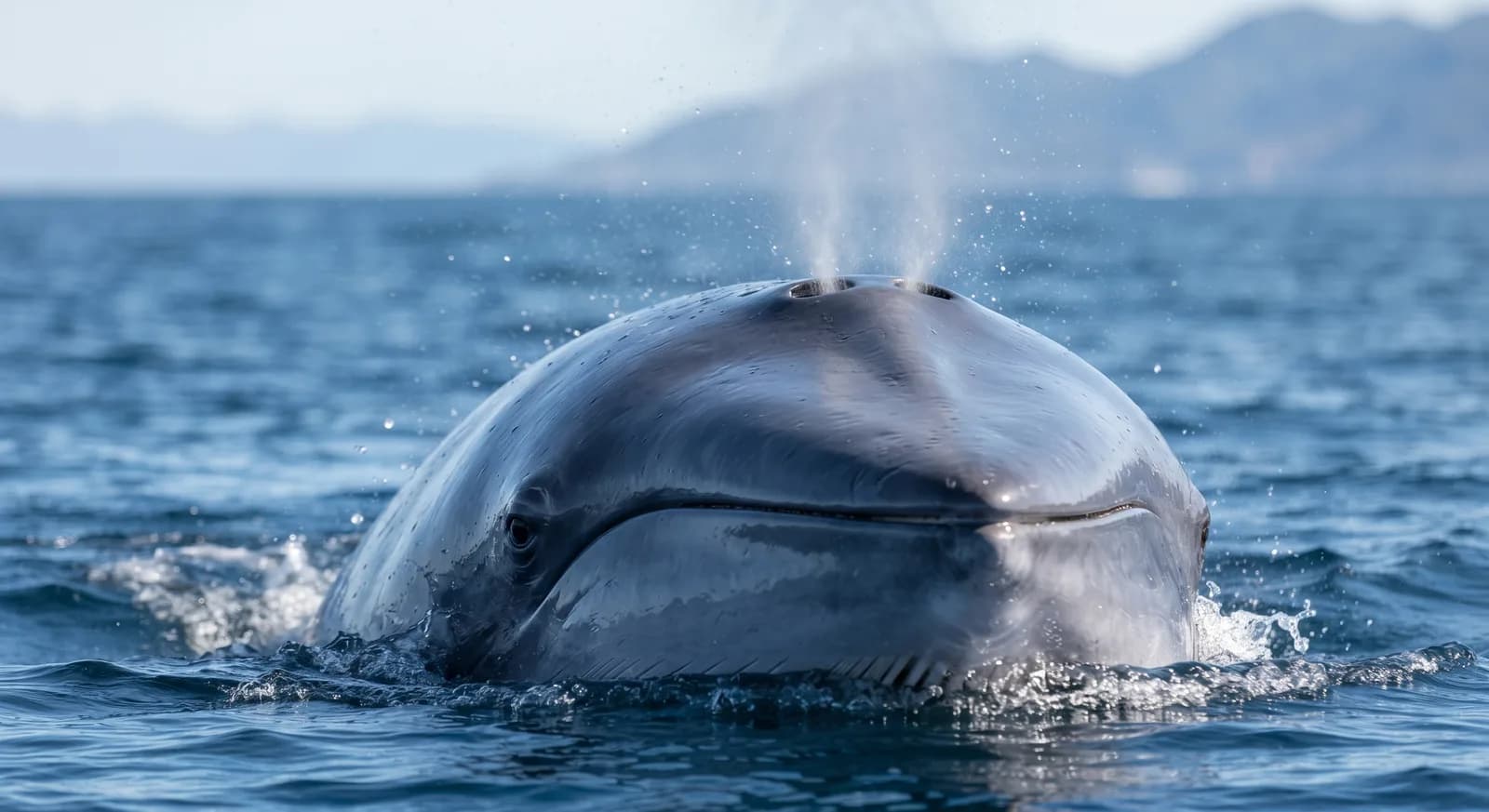
AI-generated images: illustrations, not photographs.

Fun facts

  • It can weigh up to 150 tonnes and measure over 30 metres long.
  • An estimated 10,000 to 25,000 are left worldwide.
  • It migrates between polar waters, where it feeds, and temperate or tropical waters, where it breeds.
  • anatomíaIts heart can weigh around 180 kg and beats only 2 to 8 times a minute on a deep dive.

Life cycle and biology

Skeleton type
Vertebrate - internal bony skeleton (mammal)
Habitat and environment
Every ocean except the Arctic; it migrates between polar feeding grounds and tropical breeding grounds
Birth weight
2.5-4 tonnes and ~7 m long at birth
Size at birth
2.5-4 tonnes and ~7 m at birth
Gestation / incubation
10-12 months (~11-12 months)
Litter / clutch size
1 young per birth, with intervals of 2-3 years

Sources consulted: iNaturalist; Britannica; A-Z Animals; AnAge (genomics.senescence.info); KnowScape.blog; A-Z Animals (gestation period)

Where to find it

Loading map…

Where to see it

Parks and dive sites where this species has been documented — showing 15 of 18.

Related species

Other species in the catalogue with the most in common with Blue Whale — same habitat, park, country, tags or family.

Same taxonomic family
Shares a park
Shares a park

How to help

The blue whale is classified as endangered. Organisations such as the IUCN, WWF and the Wildlife Conservation Society work specifically on its conservation and that of its habitat; looking into their programmes is a good starting point if you want to get involved.

It's documented in 5 protected areas — one reason why protecting these places matters for its conservation.

Related guides

Keep exploring

Based on what we already know about blue whale.

Comments

Share an experience, a fun fact or a tip for seeing the blue whale.

Be the first to comment.

One of the 7 whales on WAnimals
See full glossary
This page in other languages: Español · Deutsch · Français · Português · Italiano

The pins mark the parks and dive sites where its presence is documented.

See its range on the interactive map→
Channel IslandsUnited States
El VizcainoMexico
Guadalupe IslandMexico
ChiloeChile
Nino Konis Santana National ParkTimor-Leste
Channel Islands National ParkUnited States
La Jolla CoveUnited States
Guadalupe Island (great white shark)Mexico
Cabo Pulmo National ParkMexico
Pigeon IslandSri Lanka
Monterey Bay (Point Lobos)United States
Punta de ChorosChile
Azores (Princess Alice Bank)Portugal
South GeorgiaSouth Georgia and South Sandwich Islands
Loreto Bay National ParkMexico
See all 13 dive sites
Humpback WhaleLeast Concern

Humpback Whale

Megaptera novaeangliae

Sei WhaleEndangered

Sei Whale

Balaenoptera borealis

Minke WhaleLeast Concern

Minke Whale

Balaenoptera acutorostrata

Fin WhaleEndangered

Fin Whale

Balaenoptera physalus

Killer WhaleEndangered

Killer Whale

Orcinus orca

Green TurtleEndangered

Green Turtle

Chelonia mydas

Where to dive with Blue Whale7 places
CountriesMexico
ParksChannel IslandsUnited States
TagsOmnivore
Omnivore
Variable activity
Solitary
Endangered
Ocean
Mammal

Asia34

Africa27

Europe27

Oceania17

South America11

North America9

Antarctica3

Mexico
United States
Sri Lanka
Chile
Indonesia
Portugal
Bahrain
Bangladesh
Brunei
Cambodia
China
India
Indonesia
Iran
Iraq
Israel
Japan
Kuwait
Lebanon
Malaysia
Maldives
Myanmar
North Korea
Oman
Pakistan
Philippines
Qatar
Russia
Saudi Arabia
Singapore
South Korea
Sri Lanka
Syria
Taiwan
Thailand
Timor-Leste
Türkiye
United Arab Emirates
Vietnam
Yemen
Algeria
Angola
Cabo Verde
Comoros
Djibouti
Egypt
Eritrea
Gabon
Ghana
Kenya
Libya
Madagascar
Mauritania
Mauritius
Mayotte
Morocco
Mozambique
Namibia
Nigeria
Réunion
Senegal
Seychelles
Somalia
South Africa
Sudan
Tanzania
Tunisia
Albania
Belgium
Bosnia and Herzegovina
Croatia
Cyprus
Denmark
Estonia
Finland
France
Germany
Greece
Iceland
Ireland
Italy
Latvia
Lithuania
Malta
Monaco
Montenegro
Netherlands
Norway
Poland
Portugal
Slovenia
Spain
Sweden
United Kingdom
Australia
Cook Islands
Fiji
French Polynesia
Guam
Kiribati
Marshall Islands
Micronesia
New Caledonia
New Zealand
Northern Mariana Islands
Palau
Papua New Guinea
Samoa
Solomon Islands
Tonga
Vanuatu
Argentina
Brazil
Chile
Colombia
Ecuador
Falkland Islands
Guyana
Peru
Suriname
Uruguay
Venezuela
Bahamas
Bermuda
Canada
Costa Rica
Cuba
Greenland
Mexico
Panama
United States
Antarctica
French Southern Territories
South Georgia and South Sandwich Islands