 Critically Endangered
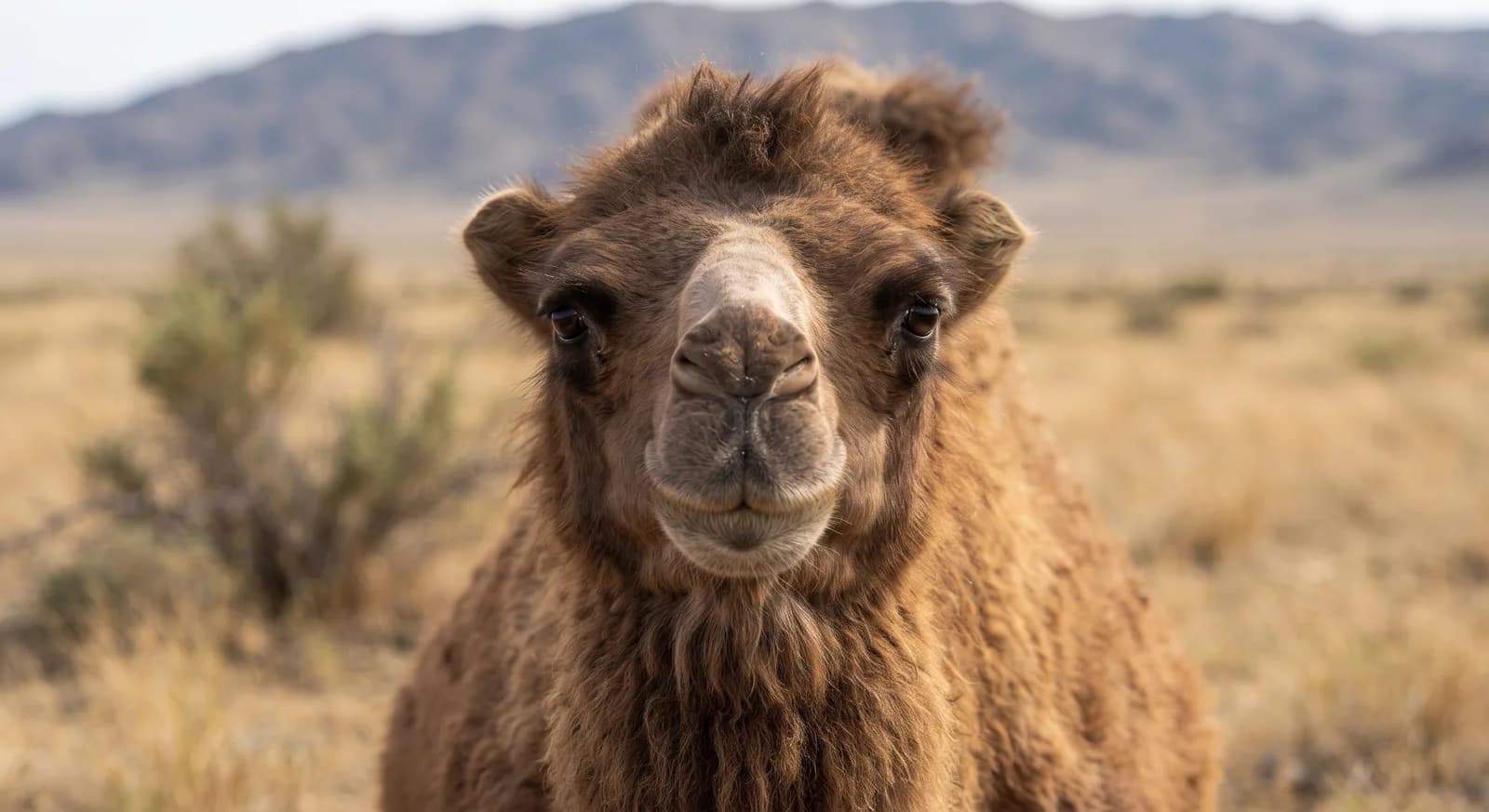
Bactrian Camel
Camelus bactrianus
Asia
Iran is one of the most diverse countries in western Asia because it combines two mountain ranges that act as a barrier and a refuge, the Zagros and the Alborz, with two seas and two great interior deserts. On the northern slope of the Alborz, facing the Caspian, grow the Hyrcanian forests, a relict temperate rainforest tens of millions of years old that survived the glaciations and keeps trees absent from the rest of Eurasia. Inland, the Dasht-e Kavir and the Dasht-e Lut alternate between salt crusts, yardangs and dune fields, and in the Lut the highest surface temperatures on the planet have been recorded. The south descends to the Persian Gulf and the Sea of Oman, with mangroves, reefs and turtle nesting beaches. Iran is home to the largest Persian leopard population in the world.
National animal: The Persian lion, now extinct in the country, is the historic emblem; the Asiatic cheetah is the national conservation symbol
The Asiatic cheetah, which once ranged from India to the Arabian Peninsula, survives today only in Iran, with a few dozen animals scattered across the arid plains of the centre and east. Its situation is so critical that at the 2014 football World Cup the Iranian squad wore its image printed on their shirts to draw attention to the species, and its monitoring relies almost entirely on camera traps.
Lake Urmia, one of the largest salt lakes in the world, has shrunk drastically through irrigation and dams, affecting flamingos and the brine shrimp they feed on. The Persian fallow deer was believed extinct until it was rediscovered in Khuzestan in the 1950s.
Turan and Kavir in winter for Asiatic cheetah and onager. The Hyrcanian forests in autumn for woodland birds and deer. Miankaleh between November and February for wintering waterbirds.
Where else might I want to travel?
Same region: Middle East and Western Asia
Same region: Middle East and Western Asia
Same region: Middle East and Western Asia
253 species found
Based on what we already know about Iran.