Reptiles · Testudines · Cheloniidae
Eretmochelys imbricata
At extremely high risk of imminent extinction in the wild.
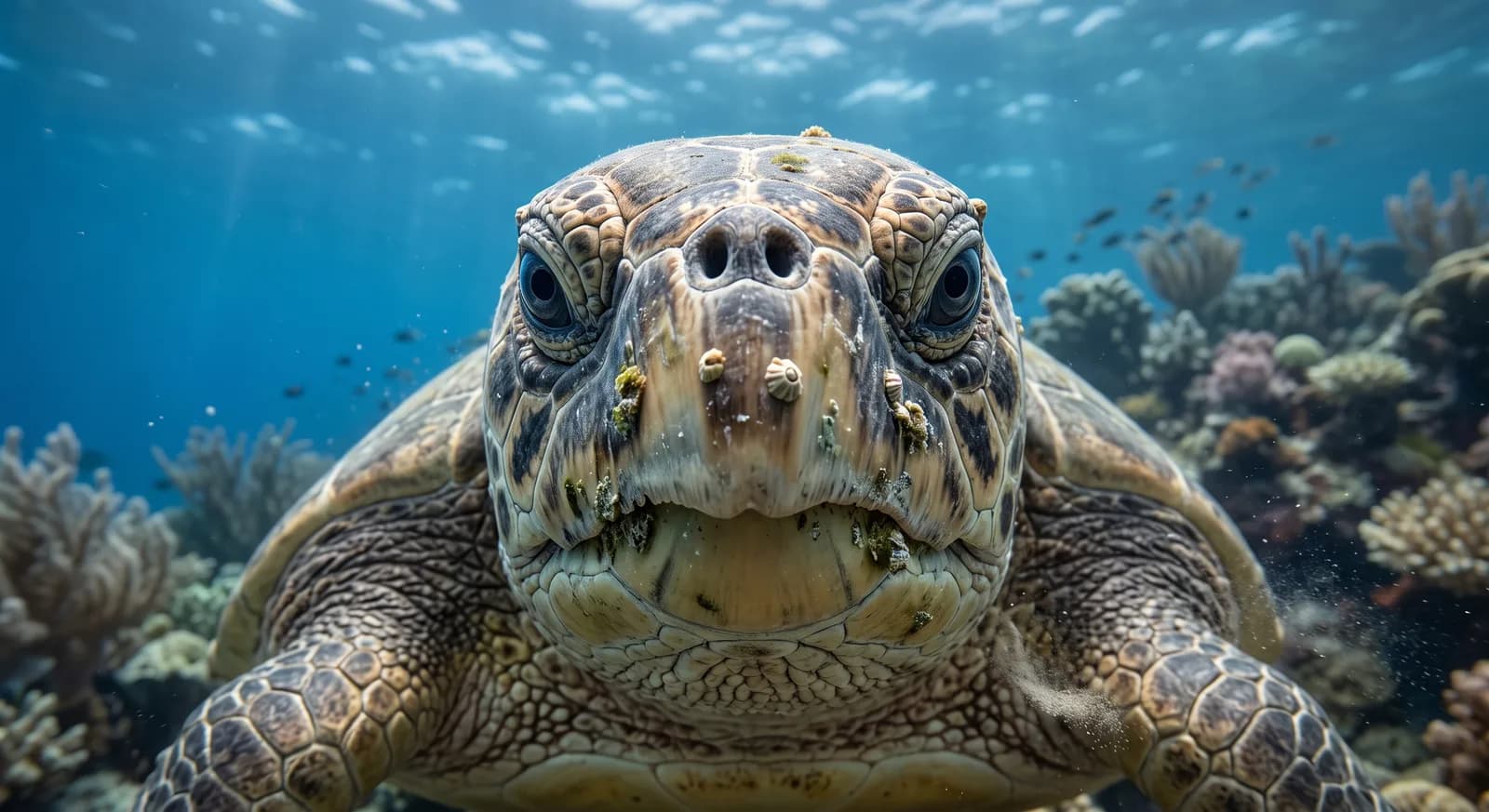
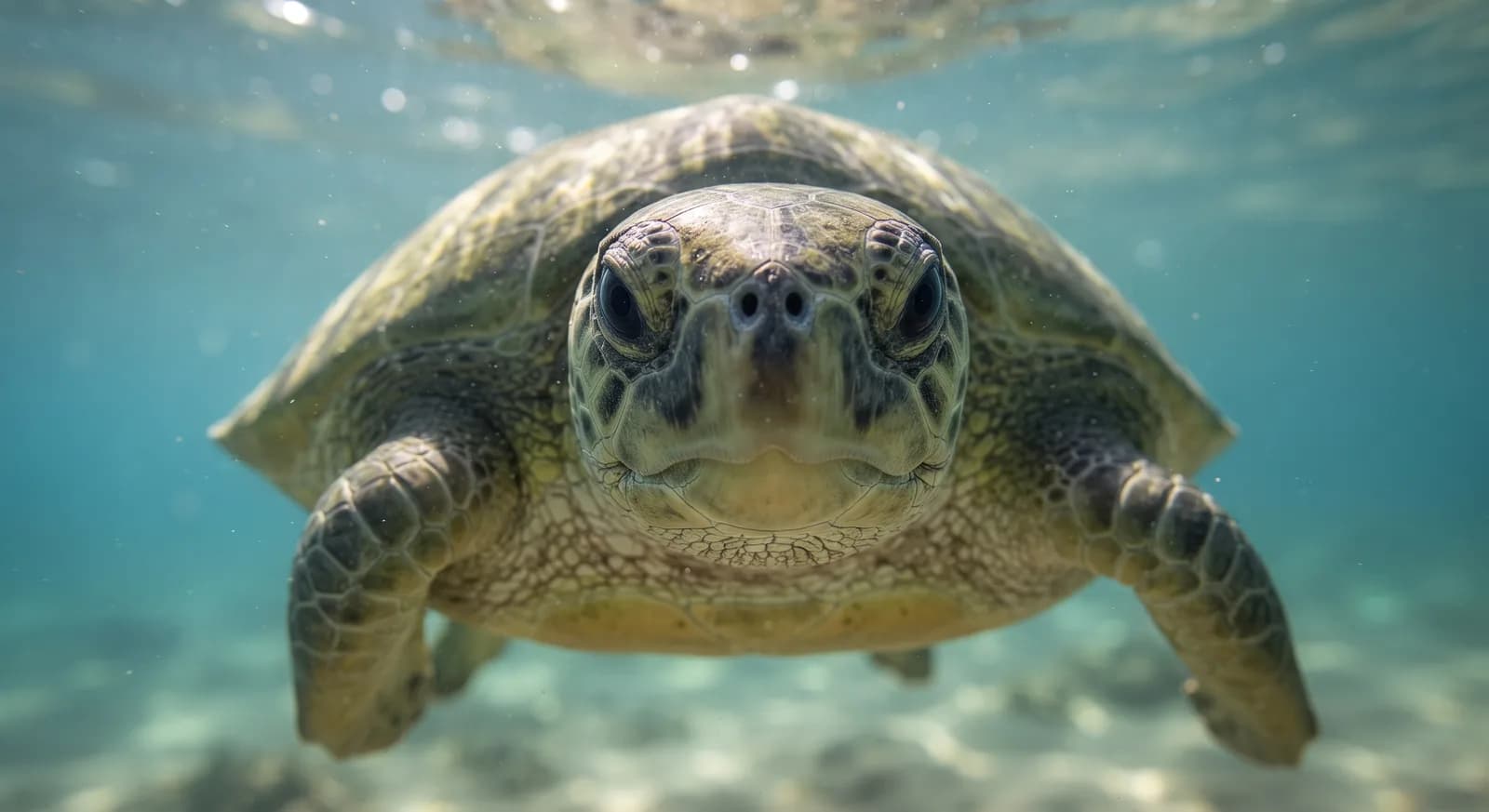
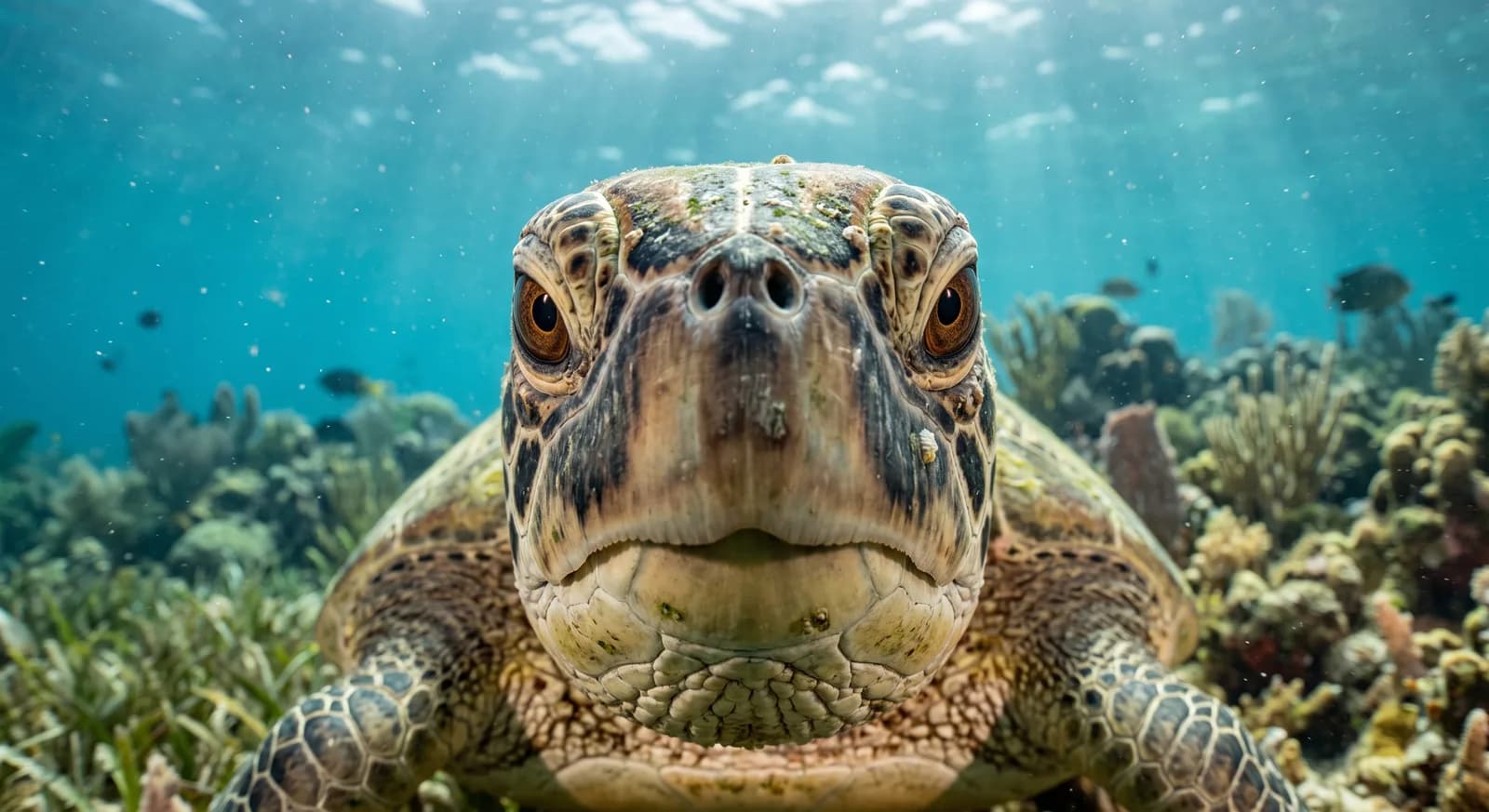
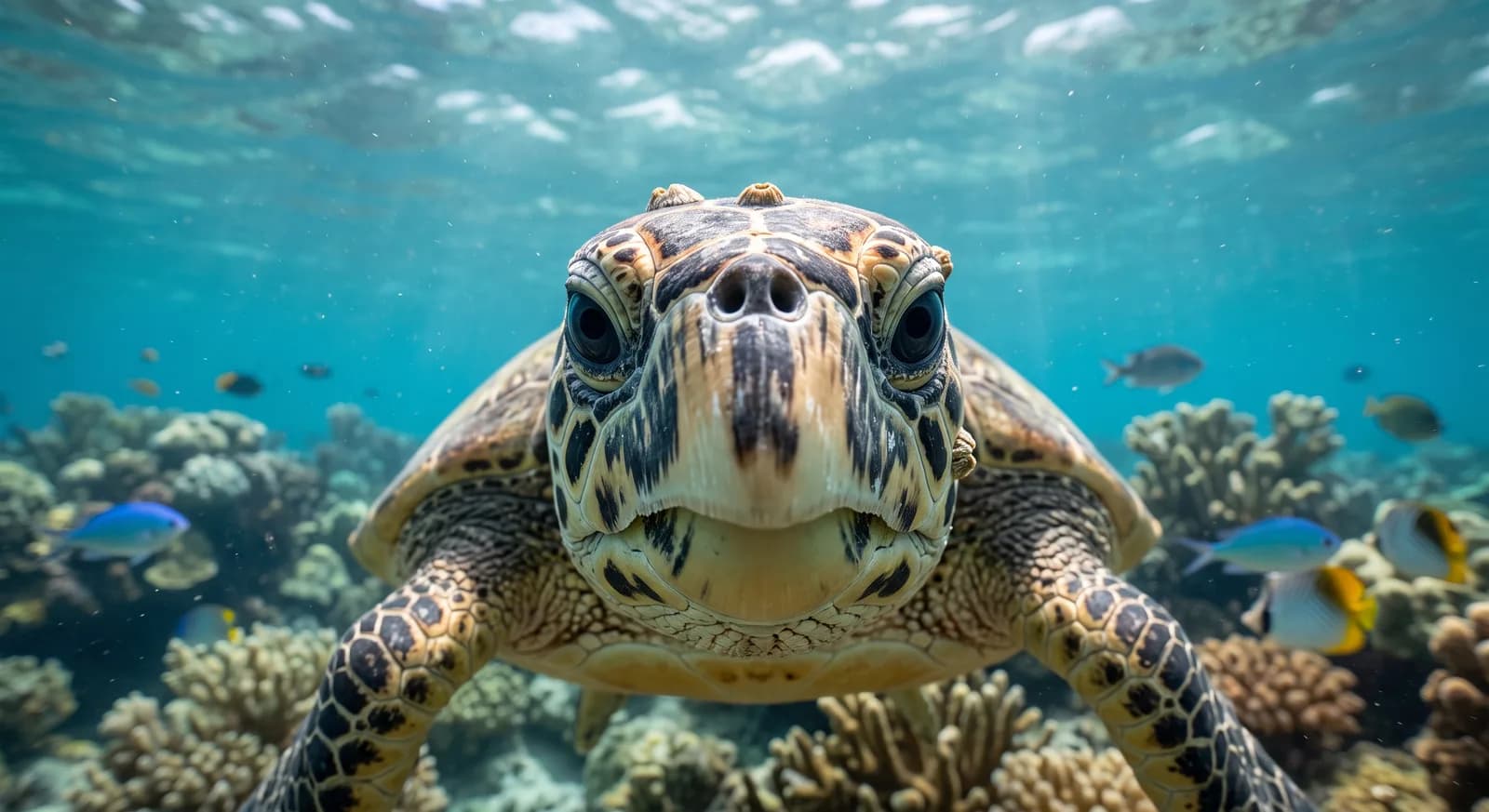
A sea turtle with a narrow, elongated head ending in a hooked beak like a bird of prey's, from which it takes its name. It is the only sea turtle whose shell scutes overlap like roof tiles, and the rear edge is serrated.
Weight
45 kg – 90 kg
Size
70 cm – 95 cm
Life expectancy
50 years
Diet
Carnivore
Feeds mainly on other animals.
Activity
Diurnal
Active mainly during the day.
Social structure
Solitary
Lives and hunts alone, joining others only to breed.
Sighting difficulty
Very hard
Estimated population
No global estimate of individuals. Only five regional populations still have more than 1,000 females nesting a year: the Seychelles, Mexico, Indonesia and two in Australia
AI-generated images: illustrations, not photographs.
Sources consulted: IUCN Red List / Meylan & Donnelly 1999 (Chelonian Conservation and Biology 3(2)); NOAA Fisheries; U.S. Fish & Wildlife Service; Animal Diversity Web; CMS (Convención sobre Especies Migratorias); WIDECAST; Olive Ridley Project; SWOT - State of the World's Sea Turtles
Best time: The nesting season, between April and November depending on the locality
Parks and dive sites where this species has been documented — showing 20 of 426.
Other species in the catalogue with the most in common with Hawksbill Turtle — same habitat, park, country, tags or family.
The hawksbill turtle is classified as critically endangered. Organisations such as the IUCN, WWF and the Wildlife Conservation Society work specifically on its conservation and that of its habitat; looking into their programmes is a good starting point if you want to get involved.
It's documented in 14 protected areas — one reason why protecting these places matters for its conservation.
Based on what we already know about hawksbill turtle.
Share an experience, a fun fact or a tip for seeing the hawksbill turtle.
Be the first to comment.
The pins mark the parks and dive sites where its presence is documented.