 Critically Endangered
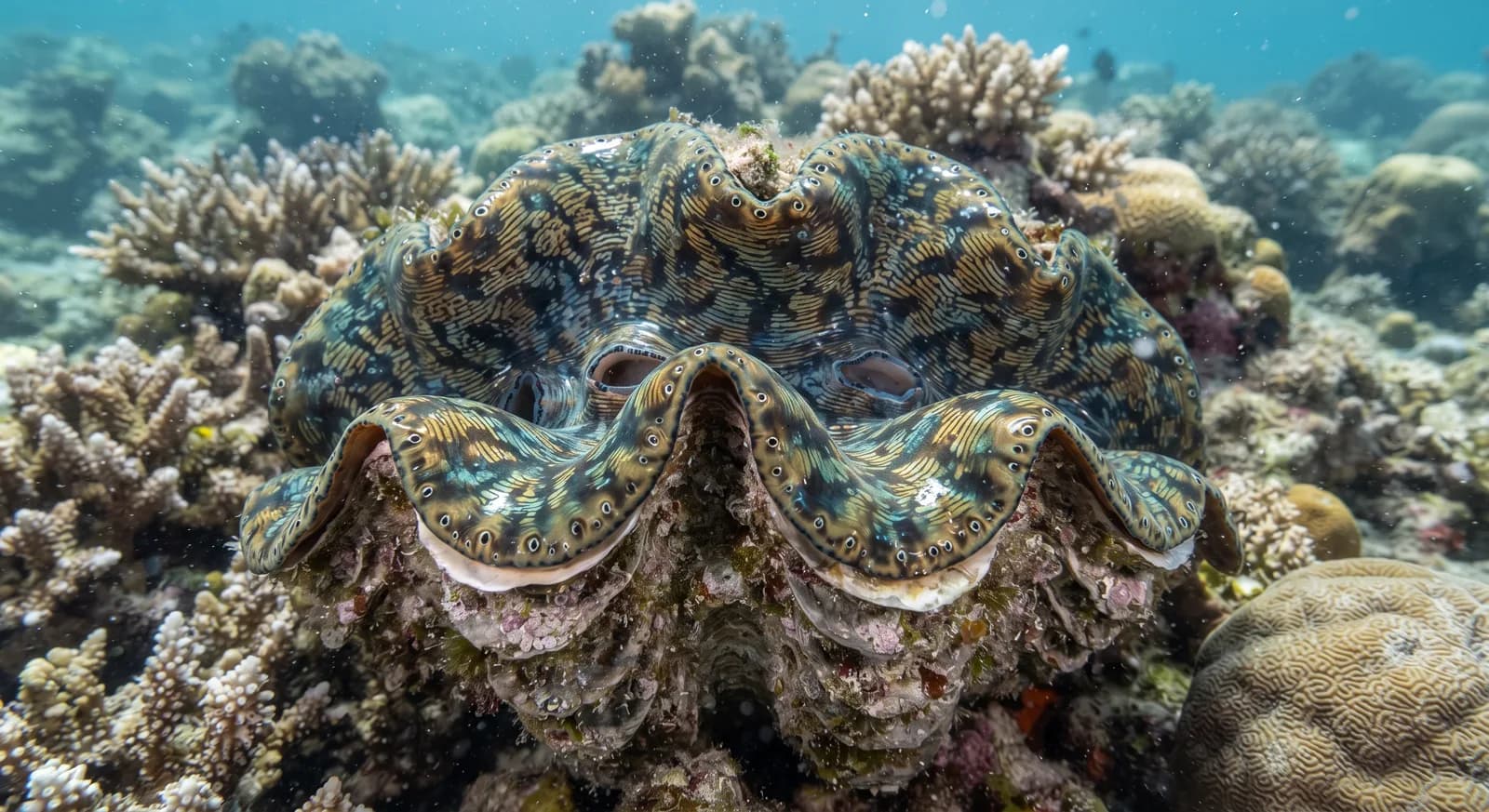
Giant Clam
Tridacna gigas
Oceania
Nauru is the smallest island republic in the world, a single raised atoll of twenty-one square kilometres with no rivers and no natural lakes apart from the brackish Buada lagoon. A narrow coastal strip of sand and coconut palms surrounds a central plateau that makes up four fifths of the island and that was dug out for a century to extract phosphate, leaving a landscape of bare limestone pinnacles. The reefs that ring the island drop away abruptly into deep water very close to shore, which brings oceanic fish in near the coast and draws seabirds. Rehabilitation projects are trying to return soil and vegetation to the interior plateau to make it habitable again.
National animal: No official national animal; the frigatebird appears on the state coat of arms and is the bird bound up with local tradition
The phosphate that briefly made Nauru one of the richest countries on the planet per head of population was no ordinary mineral: it came from the accumulation over millennia of the droppings of seabirds that nested on the island, transformed by time and rain. Working that fossil guano stripped eighty per cent of the territory and left the interior of the island unusable, in one of the most extreme cases in the world of a country transformed by the biology of its birds.
The rehabilitation of the mined plateau is the country's greatest environmental challenge and is advancing very slowly because of the cost of replacing soil. The Nauru reed warbler, a small bird that lives nowhere else in the world, has survived the destruction of the interior by taking refuge in the coastal vegetation.
The Anibare coast year-round for seabirds and reefs. The Buada lagoon for waterbirds. The interior plateau at dusk for frigatebirds in flight.
Where else might I want to travel?
Same region: Oceania
Same region: Oceania
Same region: Oceania
Same region: Oceania
114 species found
Based on what we already know about Nauru.