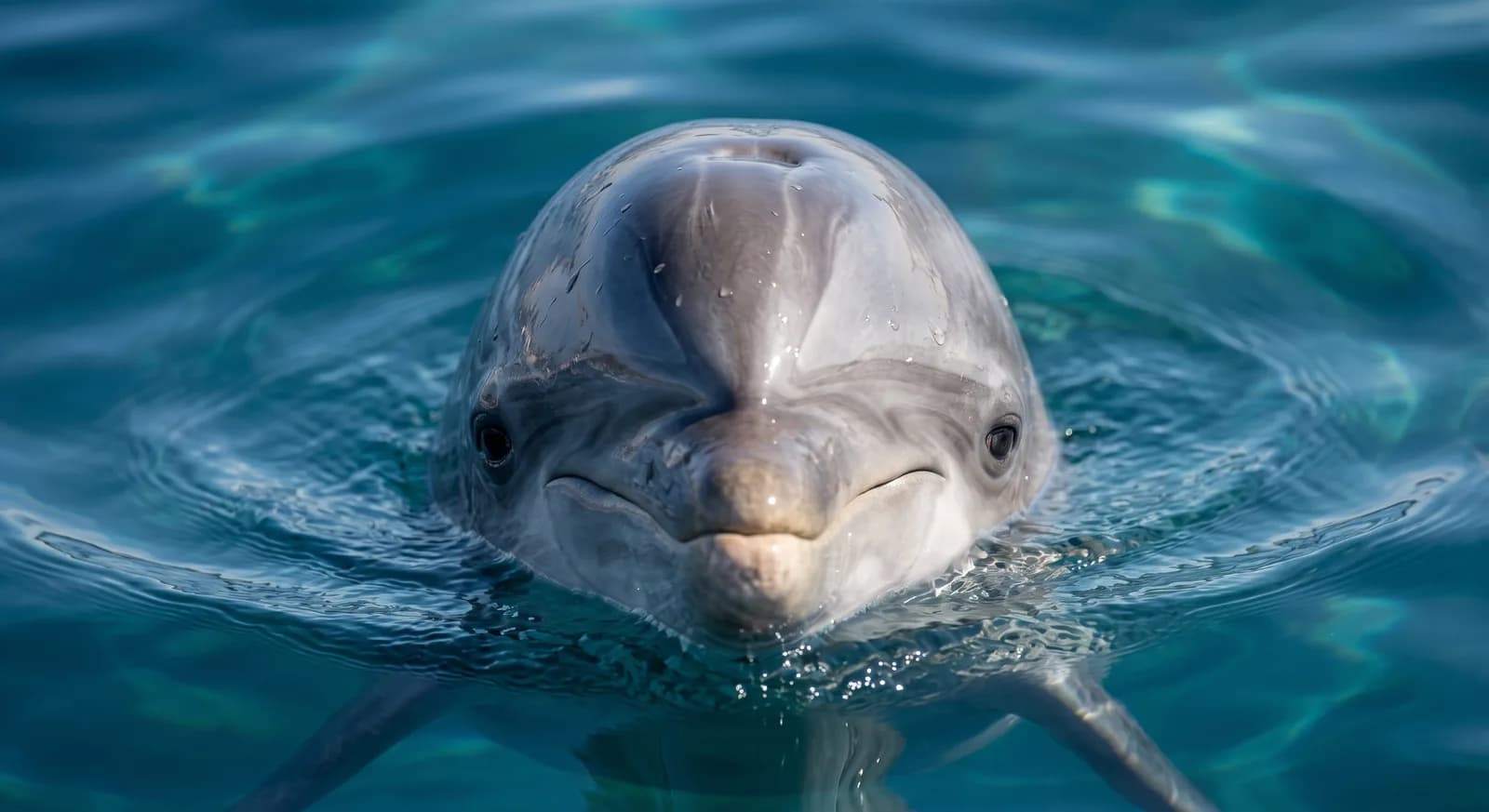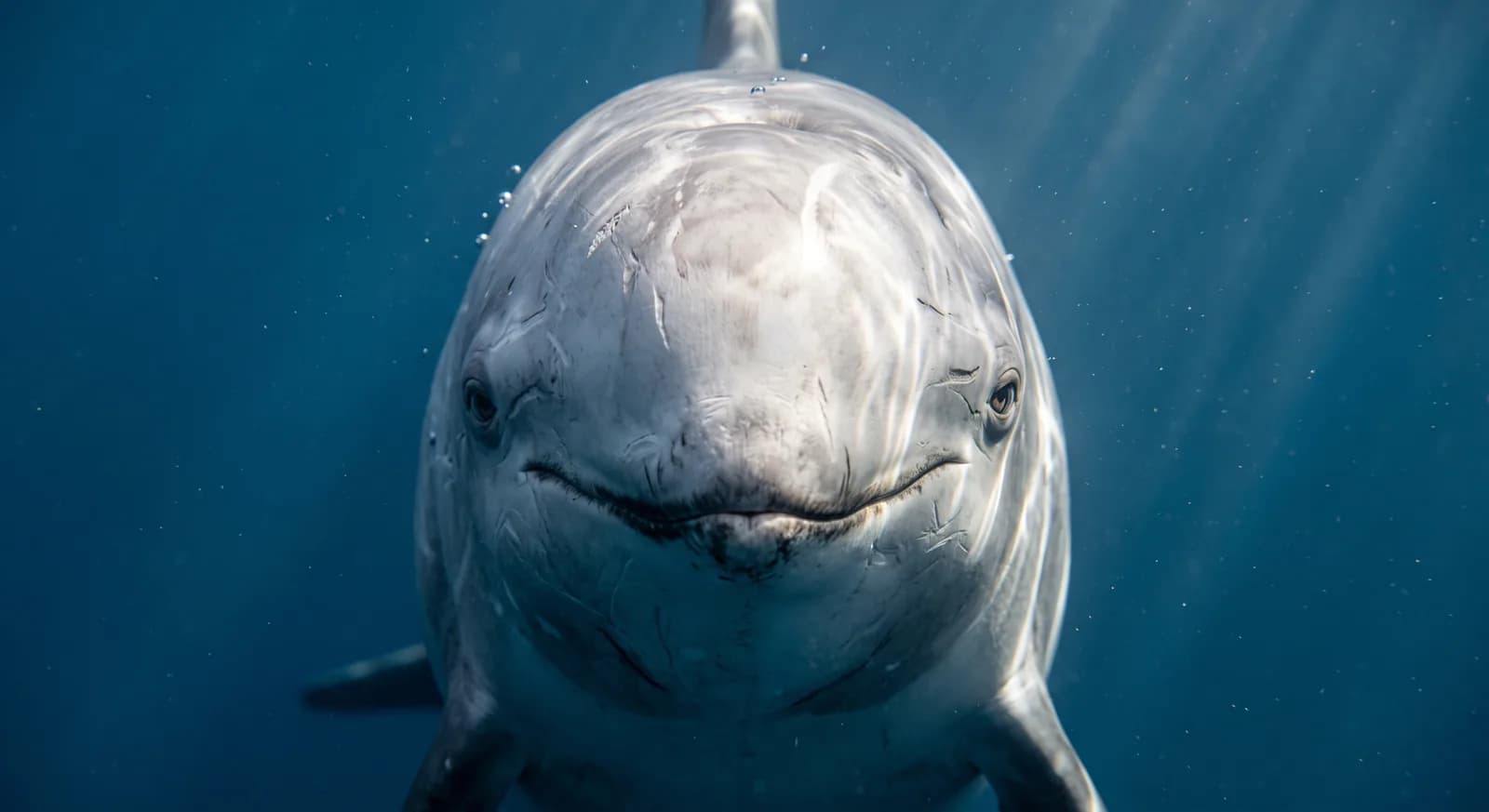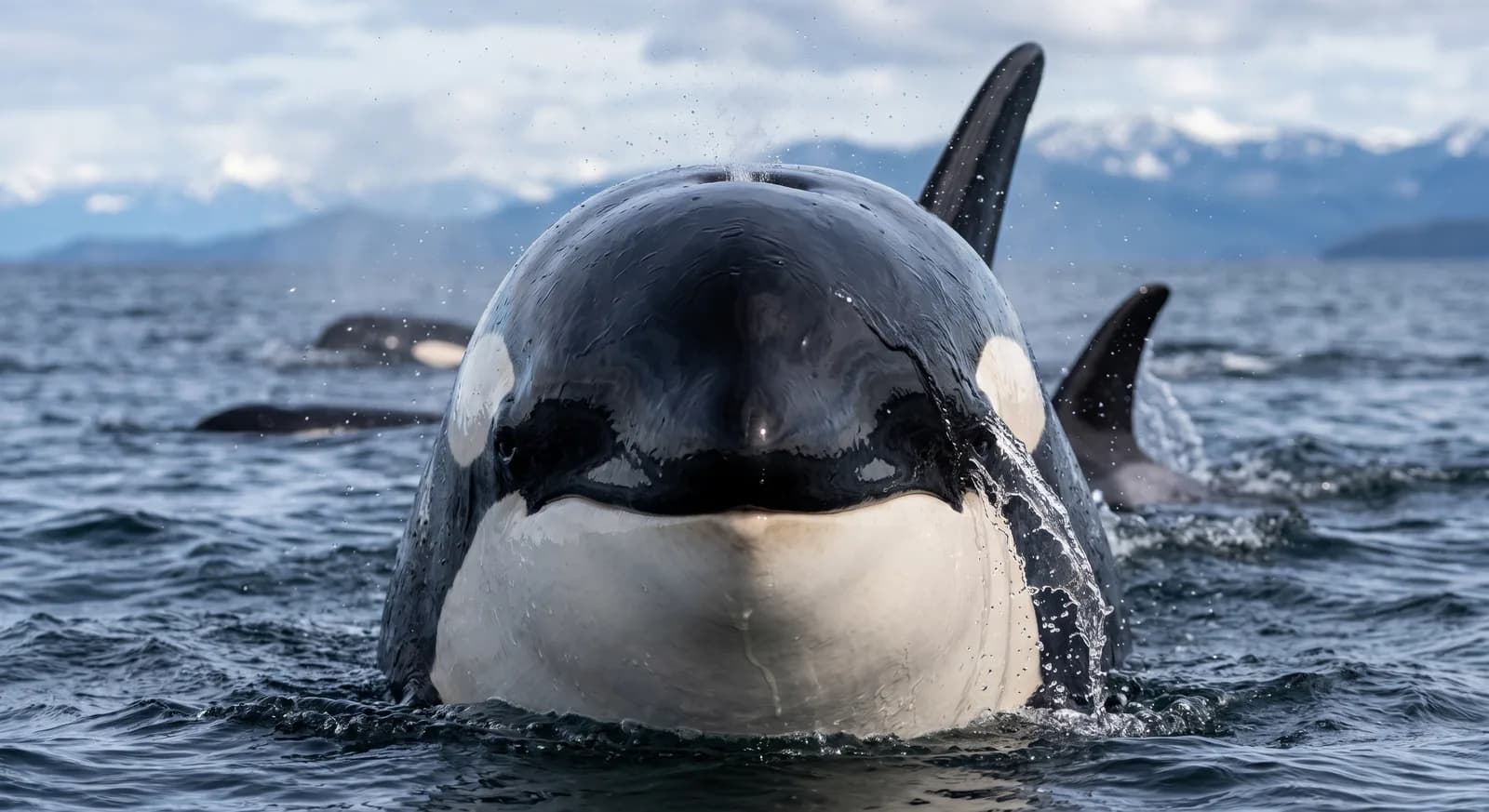
Mammals · Artiodactyla · Delphinidae
Orcinus orca
At very high risk of extinction in the wild in the near future.
It lives in matriarchal pods where leadership passes down the female line. Females go through the menopause at around 40, a phenomenon that is extremely rare in the animal kingdom.
Weight
7.5 t – 10 t
Size
4.6 m – 6.2 m
Life expectancy
50 years
Diet
Carnivore
Feeds mainly on other animals.
Activity
Irregular activity
Active at irregular times, by day or night depending on circumstances.
Social structure
Hierarchical pack
Lives in an organised hierarchical group, typical of cooperative hunters.
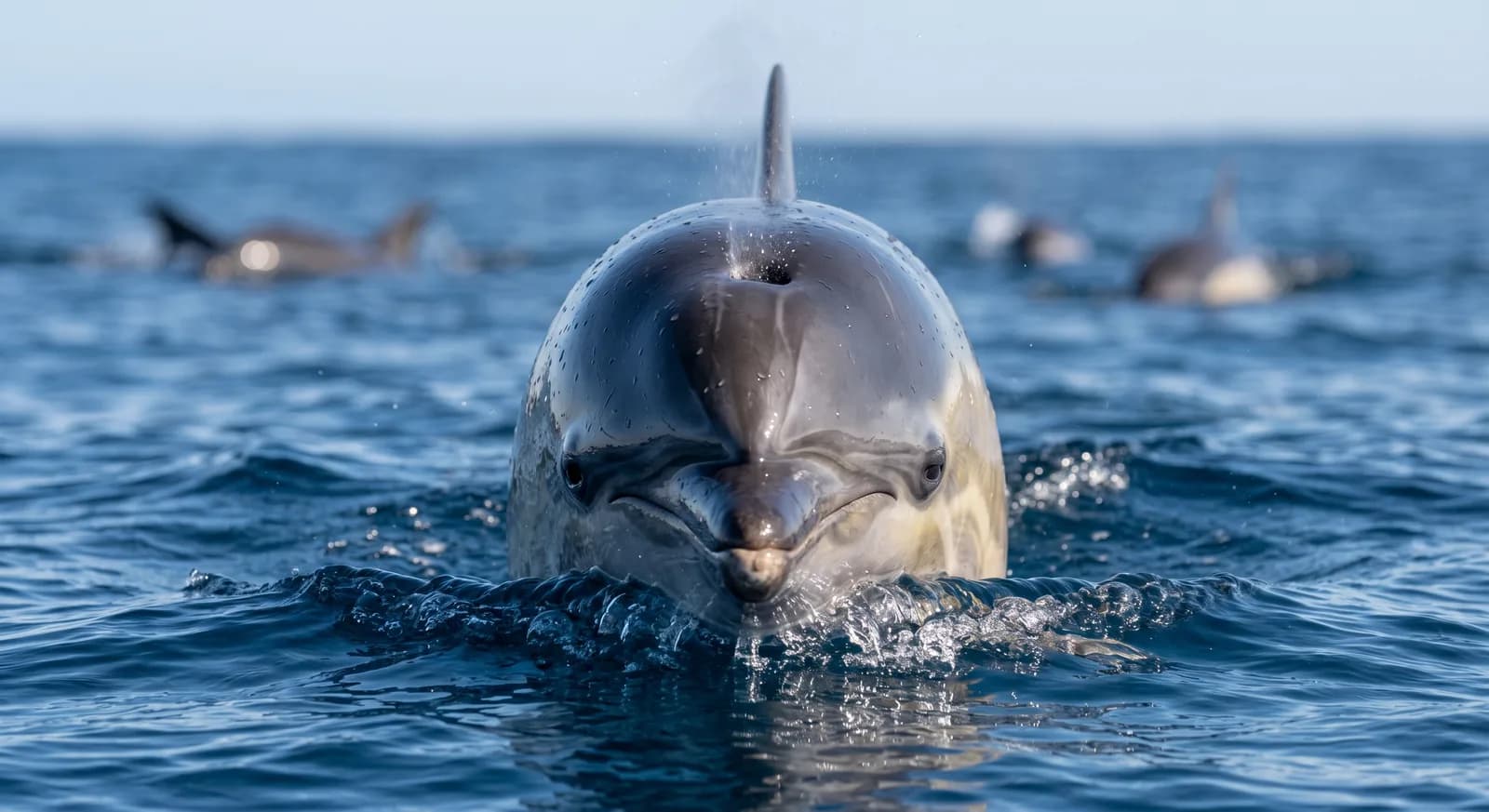
AI-generated images: illustrations, not photographs.
Sources consulted: SeaWorld/United Parks · A-Z Animals · US FWS · Texas Tech NSRL Mammals of Texas · Dolphins World · Biology Insights · Alaska Department of Fish and Game
Parks and dive sites where this species has been documented — showing 20 of 73.
Other species in the catalogue with the most in common with Killer Whale — same habitat, park, country, tags or family.
The killer whale is classified as endangered. Organisations such as the IUCN, WWF and the Wildlife Conservation Society work specifically on its conservation and that of its habitat; looking into their programmes is a good starting point if you want to get involved.
It's documented in 12 protected areas — one reason why protecting these places matters for its conservation.
Based on what we already know about killer whale.
The pins mark the parks and dive sites where its presence is documented.