 Critically Endangered
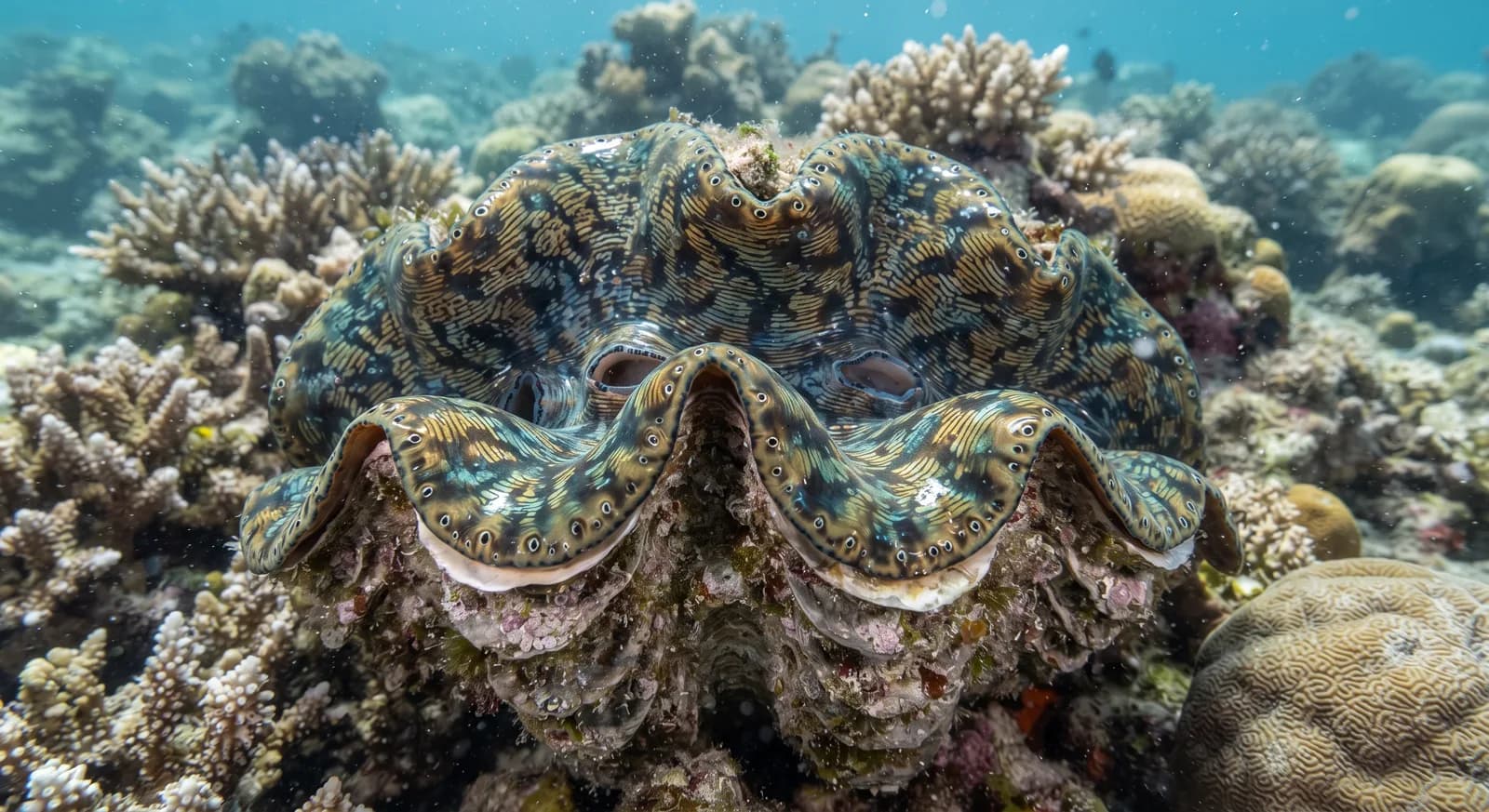
Giant Clam
Tridacna gigas
Asia
Yemen is the wettest and most mountainous corner of the Arabian peninsula: the western highlands rise above three thousand metres and receive monsoon rains that have allowed a terraced agriculture more than two thousand years old and groves of juniper and acacia. To the east extends the Hadhramaut, with immense wadis that carry water only after storms, and to the north the sand of the Rub al-Khali. The country retains relict populations of Arabian leopard, Nubian ibex, gazelles and hamadryas baboons. But its natural jewel lies more than three hundred kilometres off the coast: the Socotra archipelago, separated from the continent millions of years ago, has become one of the places with the highest proportion of endemic species on the planet and an evolutionary laboratory comparable to those of the great oceanic islands.
National animal: The Arabian leopard serves as the national emblematic animal
Socotra is so ancient and so isolated that close to a third of its plants and a good part of its reptiles exist nowhere else in the world. Its best-known image is the dragon's blood tree, with a crown shaped like an inverted umbrella and red resin, but the island also holds endemic birds such as the Socotra starling and the Socotra grosbeak, and a reptile community that is almost entirely endemic.
Socotra is a World Heritage Site and is threatened by invasive species, by overgrazing by goats that prevents the regeneration of its emblematic trees and by increasingly intense cyclones. The conflict has drastically reduced environmental management on the mainland.
Socotra between October and April, outside the windy season, for endemic flora and birds. The Detwah coast for seabirds and waders. The western mountains at dawn for baboons and ibex.
199 species found
Based on what we already know about Yemen.