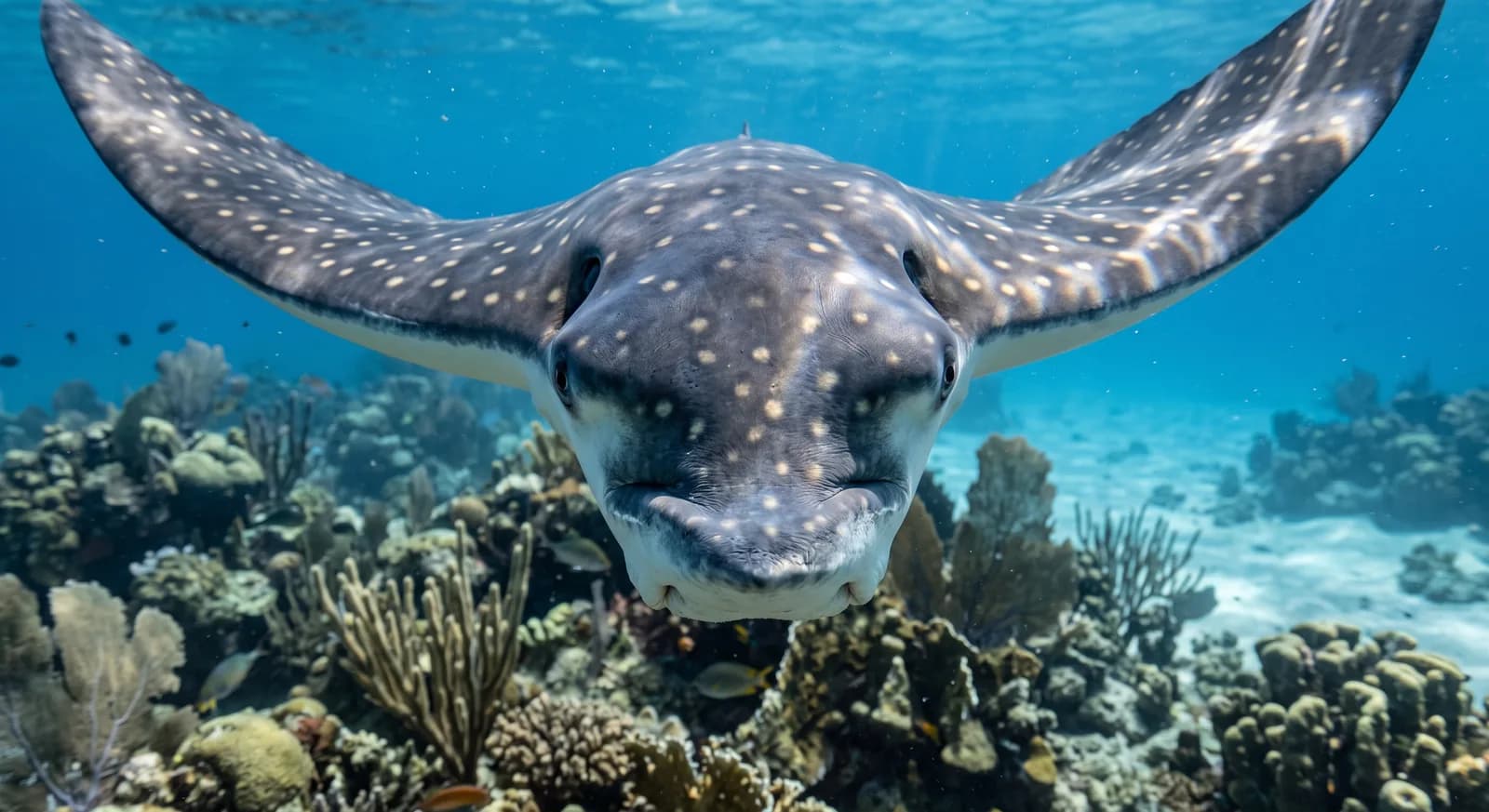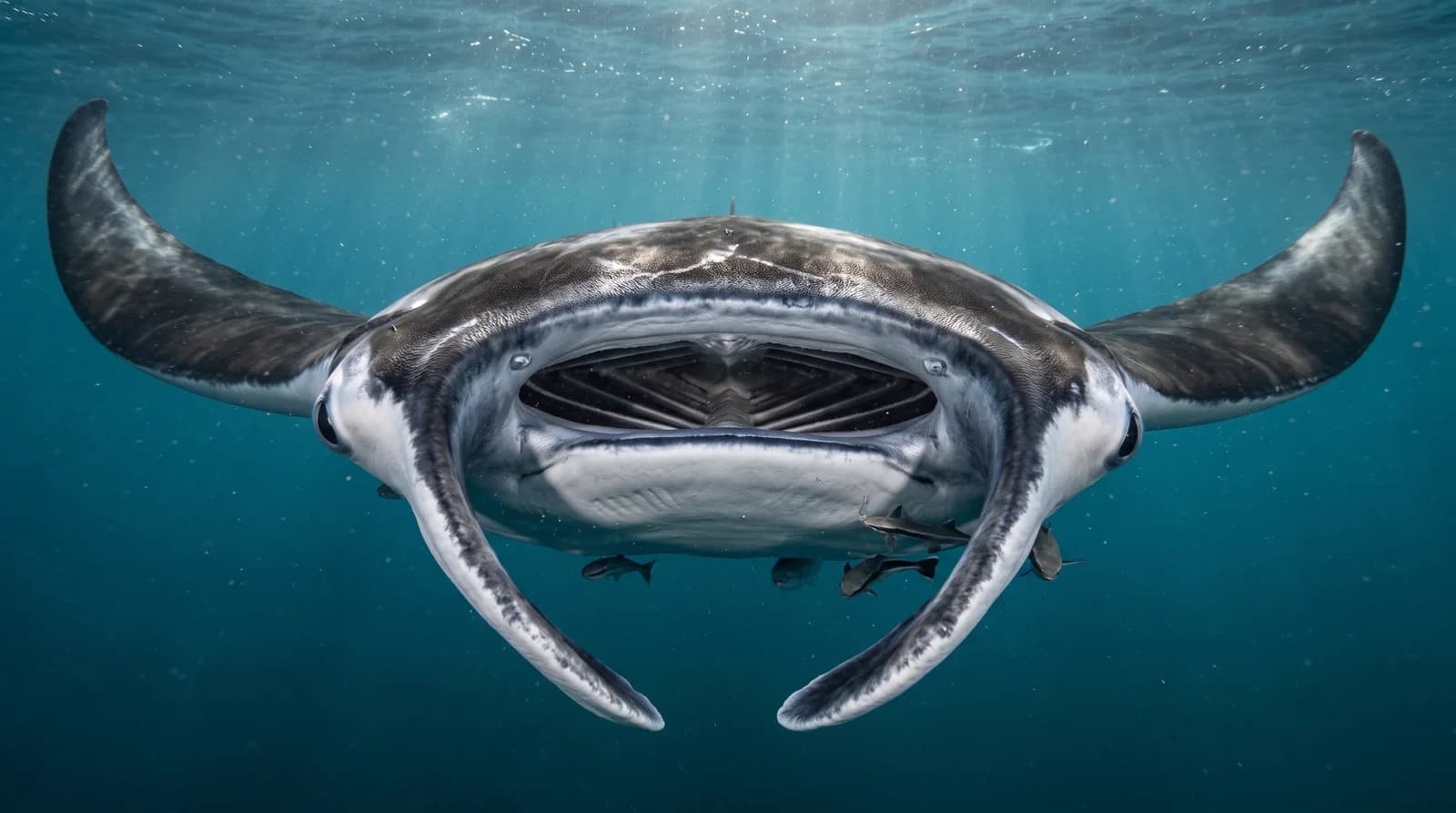
Cartilaginous fish · Myliobatiformes · Mobulidae
Mobula birostris
At very high risk of extinction in the wild in the near future.
It has the largest brain-to-body ratio of any known fish. Its extremely low reproductive rate makes it acutely vulnerable to overfishing and bycatch.
Weight
up to 3 t
Size
4.5 m – 9 m
Life expectancy
45 years
Diet
Omnivore
Combines animal and plant food depending on availability.
Activity
Irregular activity
Active at irregular times, by day or night depending on circumstances.
Social structure
Solitary
Lives and hunts alone, joining others only to breed.
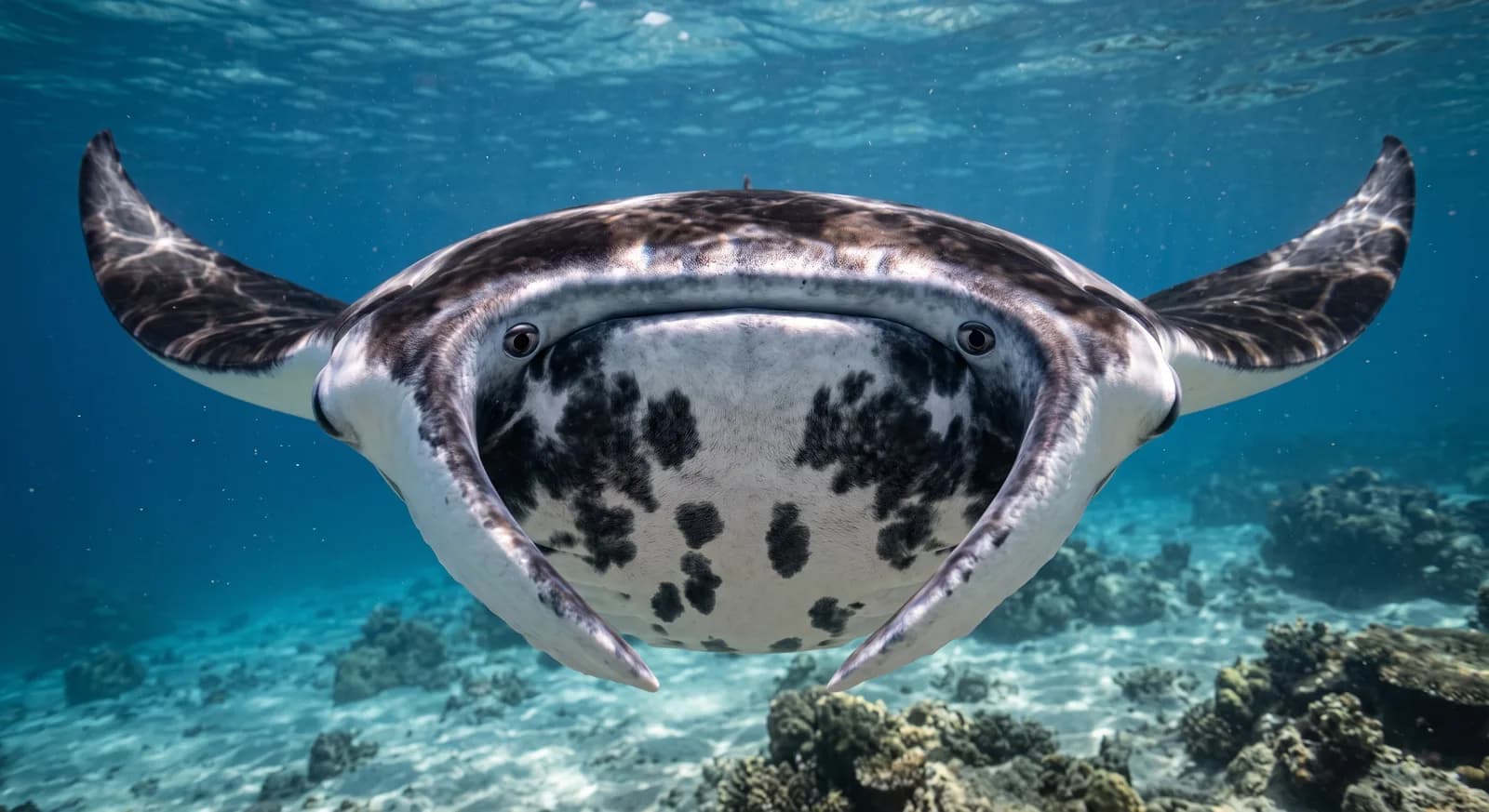
AI-generated images: illustrations, not photographs.
Sources consulted: Animalia.bio · A-Z Animals · Dimensions.com · Australian Geographic · Manta Watch NZ · Namubak · Manta Trust · Grokipedia (Giant oceanic manta ray) · NOAA Fisheries
Parks and dive sites where this species has been documented — showing 20 of 47.
Other species in the catalogue with the most in common with Giant Manta — same habitat, park, country, tags or family.
The giant manta is classified as endangered. Organisations such as the IUCN, WWF and the Wildlife Conservation Society work specifically on its conservation and that of its habitat; looking into their programmes is a good starting point if you want to get involved.
It's documented in 19 protected areas — one reason why protecting these places matters for its conservation.
Based on what we already know about giant manta.
The pins mark the parks and dive sites where its presence is documented.