 Critically Endangered
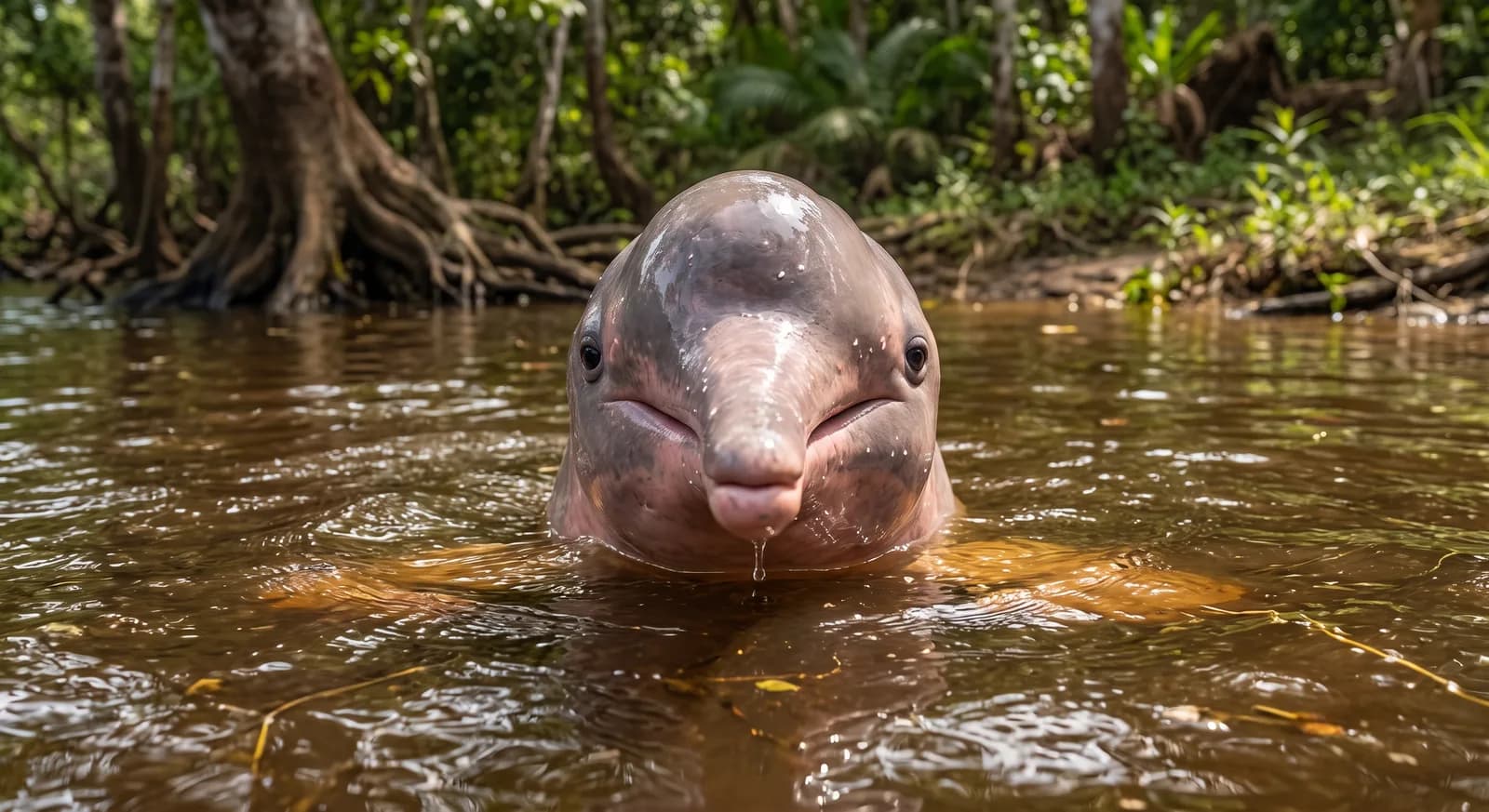
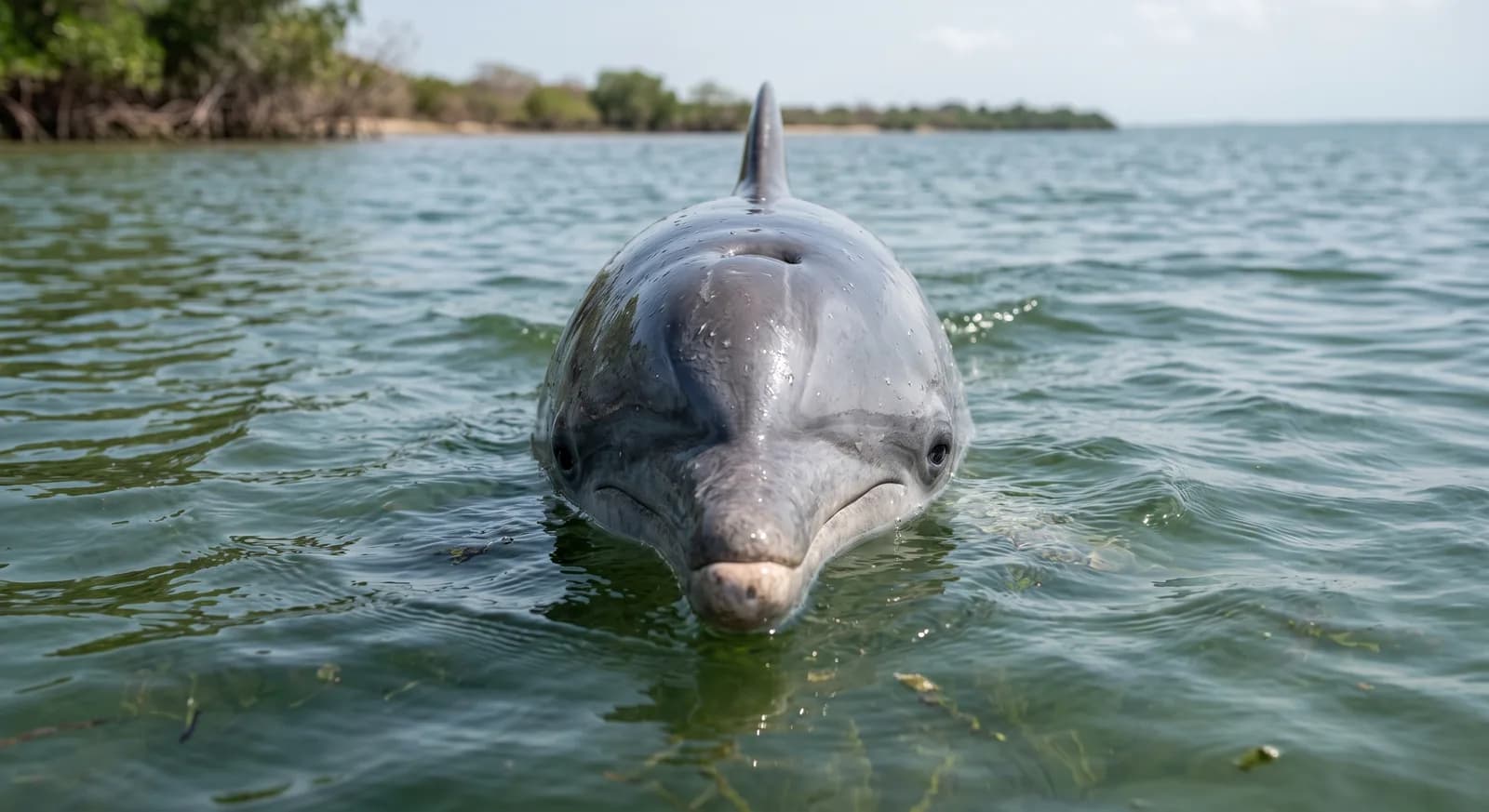
Atlantic Humpback Dolphin
Sousa teuszii
South America
Suriname is the country with the highest proportion of forest cover in the world: around ninety per cent of its territory is still covered by tropical rainforest, largely because almost all its population is concentrated in a narrow coastal strip. The interior, on the Guiana Shield, consists of continuous rainforest, granite inselbergs that rise from the canopy like bare domes, and rivers with rapids. The Central Suriname Nature Reserve protects an enormous block of forest virtually free of human alteration and is a World Heritage Site. On the coast, the mangroves and beaches of Galibi receive one of the greatest concentrations of leatherback turtle nesting in the western Atlantic, and the coastal plains host scarlet ibises and migratory waders.
National animal: No official national animal
The Surinam toad has one of the strangest reproductive strategies in the animal kingdom: after mating, the eggs stay stuck to the female's back and the skin grows around them until they are enclosed in small individual chambers. There they develop for months, with no free-swimming tadpole stage, until one day the mother's back opens and dozens of fully formed little toads emerge.
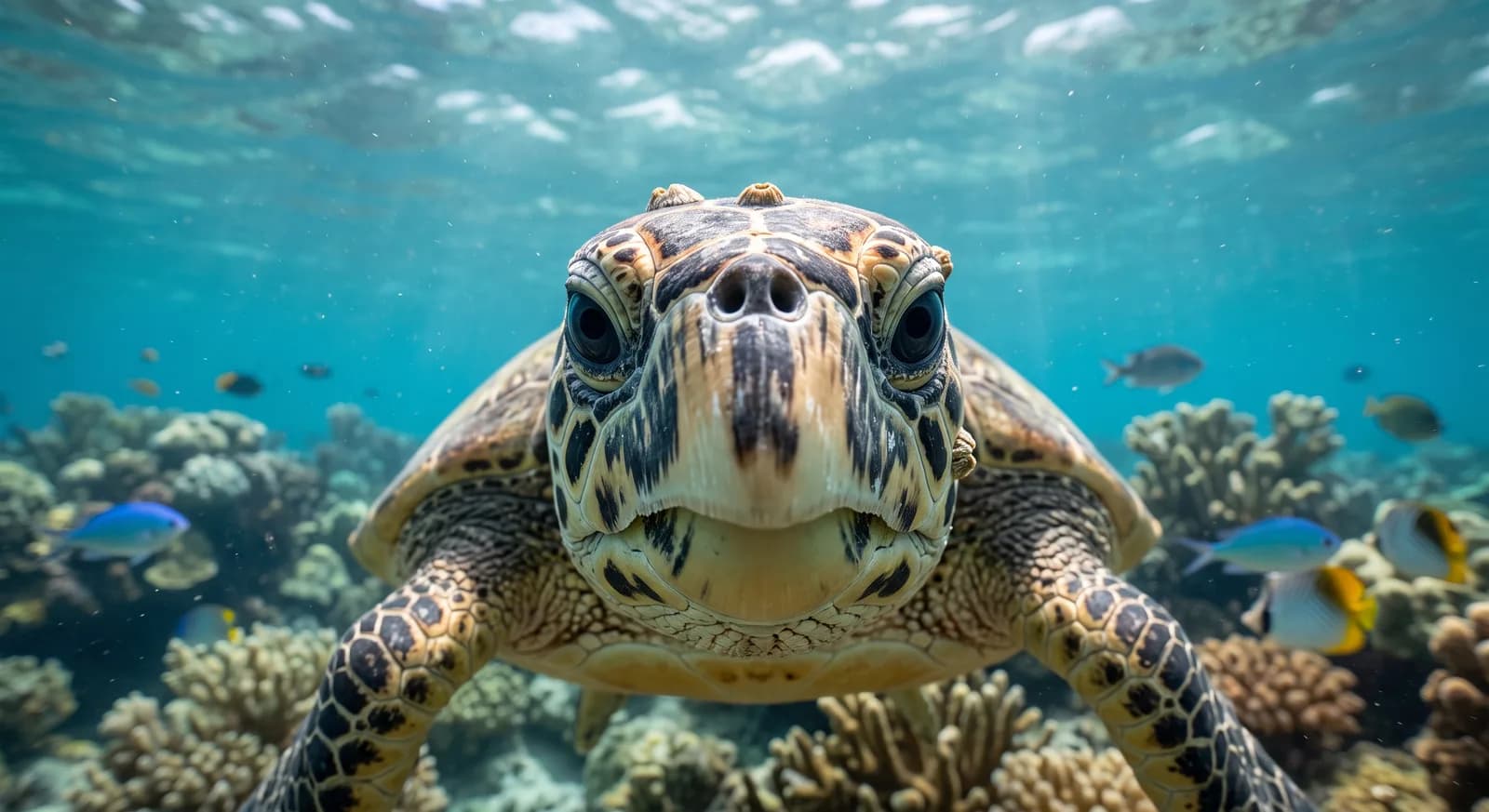
Galibi is one of the most important sites in the Atlantic for the leatherback turtle, and it is patrolled together with the Kalinya communities. Scientific expeditions of recent decades have described dozens of new species in the interior, a sign of how little explored it still is.
Galibi between February and August for turtle nesting. Brownsberg year-round for primates and birds. The Coppename in the dry season for scarlet ibises and waders.
233 species found
Based on what we already know about Suriname.