 Critically Endangered
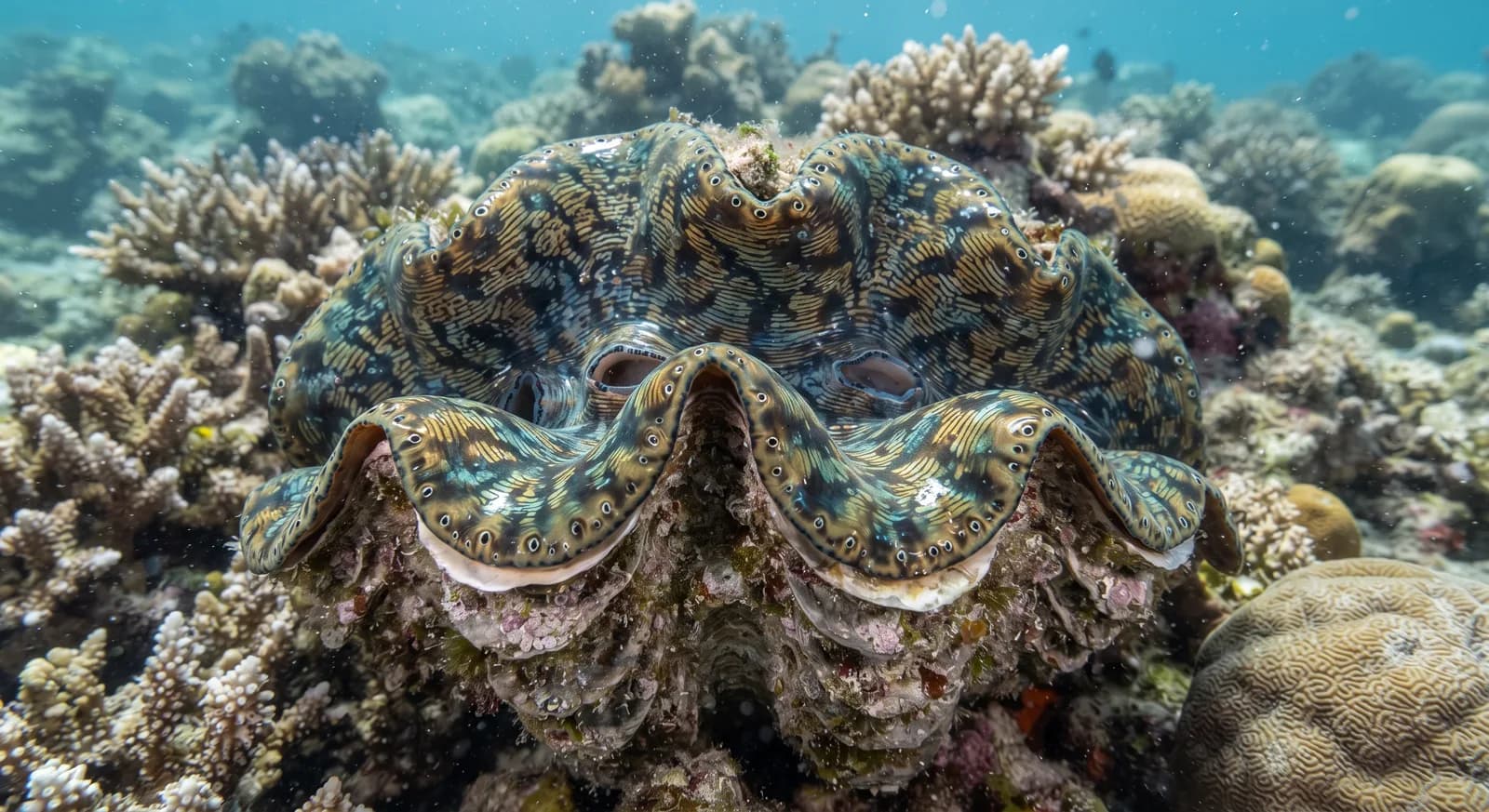
Giant Clam
Tridacna gigas
Oceania
Vanuatu is an archipelago of some eighty islands of volcanic origin lined up over a highly active subduction zone, with several volcanoes in permanent eruption, among them Yasur, one of the most accessible in the world. Its islands are covered in tropical rainforest and fringed by coral reefs and seagrass meadows where dugongs graze. Volcanic activity is not merely a geological spectacle: it shapes the ecology of the islands, fertilises the soils and supplies heat to the ground. The land fauna is of Melanesian origin, with fruit bats, fruit doves, megapodes and the coconut crab, the largest land arthropod on the planet, able to open coconuts with its claws and to climb palm trees.
National animal: No official national animal; the boar's tusk, a traditional symbol of status, appears on the flag
The Vanuatu megapode has handed incubation over to the volcano: instead of sitting on its eggs, it buries them in ash and sand warmed by geothermal activity and abandons them. The chicks hatch underground fully feathered, dig their own way to the surface and are able to fly the same day, having never met their parents.
The country banned single-use plastics in 2018, one of the earliest and strictest such measures in the world. Tropical cyclones, ever more intense, periodically flatten coastal forests and reefs and are the archipelago's main natural disturbance.
Vatthe year-round for rainforest birds and megapodes. The waters of Efate between July and October for humpback whales. The beaches of Malekula at nightfall for coconut crabs.
Where else might I want to travel?
Same region: Oceania
Same region: Oceania
Same region: Oceania
Same region: Oceania
135 species found
Based on what we already know about Vanuatu.