Skip to content
WAnimals
  • Map
  • Species
  • Parks
  • Diving
Log inCreate account
WAnimals

The guide for travellers and animal lovers: discover, plan and share your wild adventures around the world.

Discover wildlife

  • Species
  • Ecosystems
  • Glossary
  • Tags

Explore places

  • Map
  • Countries
  • Parks
  • Diving

Plan experiences

  • Guides

Learn

  • Blog

Resources

  • Help centre
  • Contact
  • Install the app

Follow us

Account

  • Log in
  • Create account

© 2026 WAnimals. All rights reserved.

About usHow we build our profilesTerms of servicePrivacyLegal notice
MapSpeciesParksDiving
  1. Home
  2. Species
  3. Staghorn Coral

Staghorn Coral (Acropora cervicornis)

Anthozoans · Scleractinia · Acroporidae

Staghorn Coral

Acropora cervicornis

Critically Endangered

At extremely high risk of imminent extinction in the wild.

Spotted something wrong?

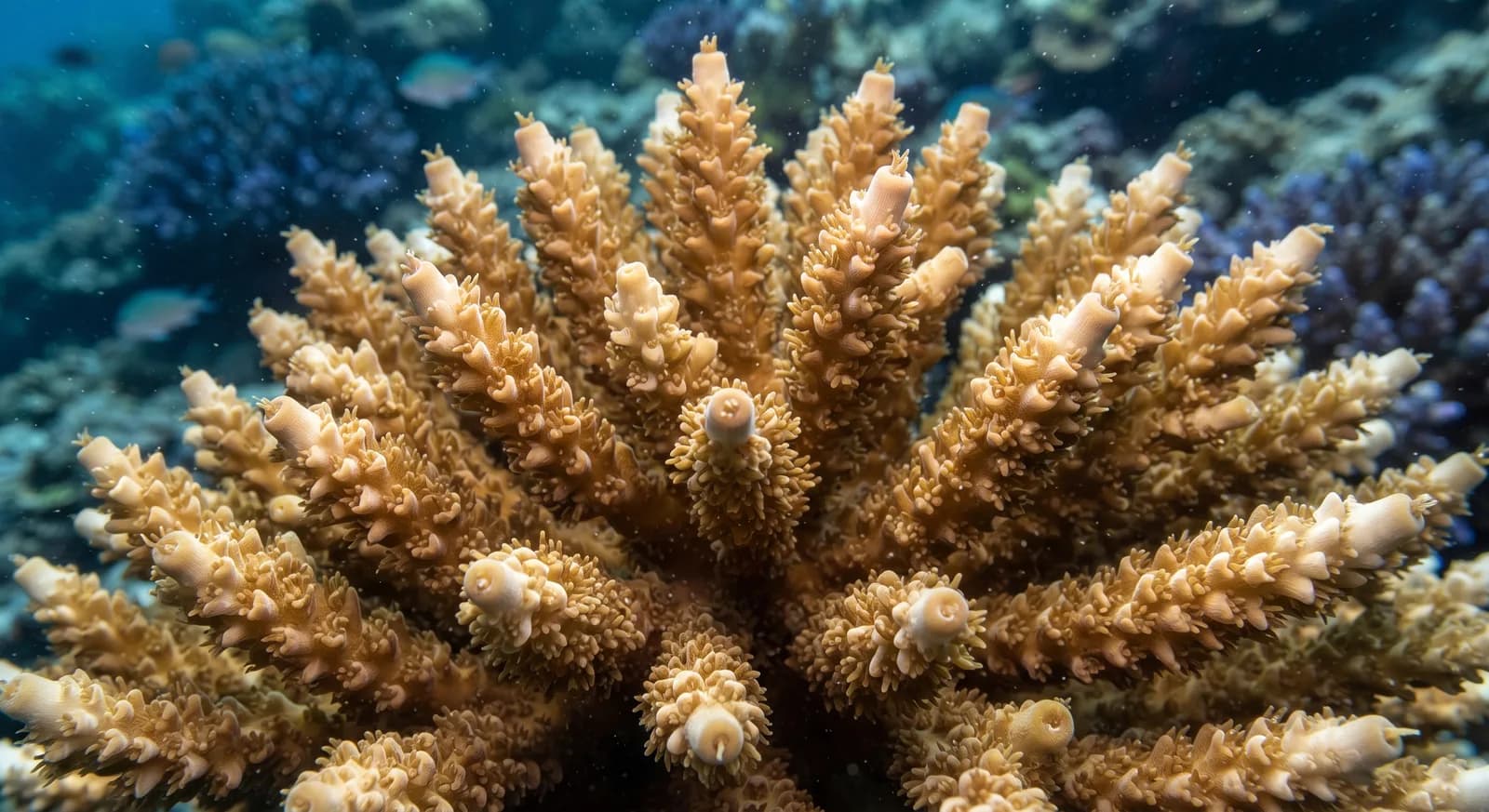
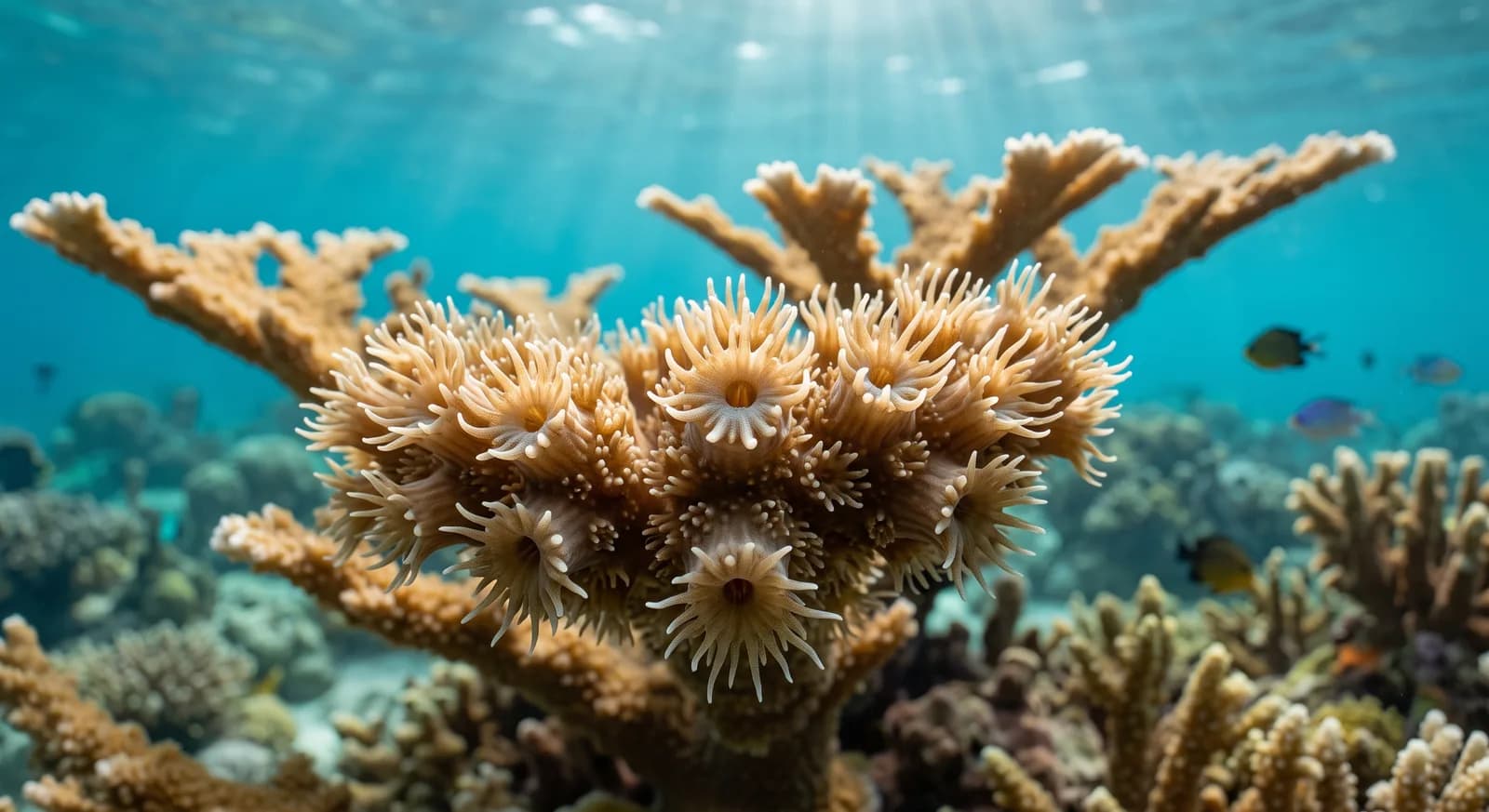
A branching stony coral with cylindrical branches that divide infrequently and recall the antlers of a deer. It forms dense thickets that over millennia built much of the structure of the Caribbean reefs.

Size

up to 2 m

Diet

Carnivore

Feeds mainly on other animals.

Activity

Nocturnal

Active mainly at night.
Social structure

Colony

Lives in large concentrations, often for breeding reasons.

Sighting difficulty

Very hard

Estimated population

A documented decline of at least 80% over three decades. A disease outbreak in the early 1980s wiped out close to 97% of its cover, abundance and occupied area

94countries18parks82dive sites1same family

AI-generated images: illustrations, not photographs.

Fun facts

  • reproducciónIt is a key reef-building species that breeds by releasing eggs and sperm together on a single night of the year, timed to the phases of the moon.
  • It is the fastest-growing coral in the western Atlantic: its branches lengthen by 10 to 20 cm a year.
  • It reproduces mainly asexually: branches that break off and reattach start new colonies, which allows a quick recovery from a storm but not from disease.
  • Together with elkhorn coral and the star corals, it built the Caribbean reefs over the past 5,000 years.
  • It was the main builder of the Caribbean's reefs, and its collapse is one of the best-documented ecological catastrophes of the sea.
  • In the early 1980s an unprecedented epidemic cost it around 97% of its cover, its abundance and its occupied area, within a few years and across the whole Caribbean at once.
  • That collapse did not just eliminate the coral: the three-dimensional structure of the shallow reef was lost, and with it the habitat of fish and invertebrates, along with the breakwater function that protected the coasts and allowed seagrass meadows and mangroves to exist behind them.
  • Its cylindrical branches grow 2 to 8 cm thick and can exceed two metres in length.
  • It grows very fast for a coral and reproduces by fragmentation, so it is the star species of restoration programmes: fragments are grown in underwater nurseries and transplanted onto the reef.
  • The results are uneven: in the Florida Keys projects, five-year survival ranged between 4 and 89% depending on the site.
  • And there is an irony to those nurseries: the main cause of death among the fragments transplanted in the Dominican Republic was predation by the bearded fireworm, Hermodice carunculata, which also has an entry in this catalogue.

Life cycle and biology

Skeleton type
Invertebrate - external calcareous skeleton of calcium carbonate (colonial cnidarian)
Habitat and environment
Fore reef, back reef and patch reefs of the Caribbean and the western Atlantic, between 0 and 30 m deep; the historic optimum band lay between 5 and 25 m
Size at birth
The zygote develops into a planktonic planula larva that spends days in the water column before settling
Sexual maturity
On reaching about 18 cm of colony height, between 3 and 8 years
Gestation / incubation
External fertilisation in the water column; the planula larvae spend several days in the plankton before attaching to hard substrate
Litter / clutch size
Broadcast spawning once a year. It is a simultaneous hermaphrodite: each colony produces both eggs and sperm, but does not self-fertilise

Sources consulted: IUCN Red List (e.T133381A3716457); NOAA Fisheries; U.S. Fish & Wildlife Service; SeaLifeBase; Lirman et al. 2014, PLOS ONE; Animal Diversity Web; Wallace 1999, Staghorn corals of the world

Where to find it

Best time: Visible all year round; the mass spawning happens once a year, in August or September, after the late-summer full moon

Loading map…

Where to see it

Parks and dive sites where this species has been documented — showing 20 of 100.

Related species

Other species in the catalogue with the most in common with Staghorn Coral — same habitat, park, country, tags or family.

Same taxonomic family
Shares a park
Shares a park
Shares a park
Shares a park
Shares a park

How to help

The staghorn coral is classified as critically endangered. Organisations such as the IUCN, WWF and the Wildlife Conservation Society work specifically on its conservation and that of its habitat; looking into their programmes is a good starting point if you want to get involved.

It's documented in 17 protected areas — one reason why protecting these places matters for its conservation.

Keep exploring

Based on what we already know about staghorn coral.

Comments

Share an experience, a fun fact or a tip for seeing the staghorn coral.

Be the first to comment.

One of the 9 corals on WAnimals
See full glossary
This page in other languages: Español · Deutsch · Français · Português · Italiano

The pins mark the parks and dive sites where its presence is documented.

See its range on the interactive map→
Bacalar ChicoBelize
GuanicaPuerto Rico
Ciénaga de ZapataCuba
JaraguaDominican Republic
Virgin Islands (St John)U.S. Virgin Islands
Tobago Main RidgeTrinidad and Tobago
Exuma Cays Land and Sea ParkBahamas
Los RoquesVenezuela
Great Barrier ReefAustralia
CahuitaCosta Rica
Great Blue HoleBelize
Half Moon Caye WallBelize
Turneffe AtollBelize
Palancar ReefMexico
Isla Mujeres (whale shark)Mexico
Bloody Bay WallCayman Islands
USS Kittiwake wreckCayman Islands
Stingray CityCayman Islands
Tiger BeachBahamas
Jardines de la ReinaCuba
See all 18 parks
See all 82 dive sites
Elkhorn CoralCritically Endangered

Elkhorn Coral

Acropora palmata

Grooved Brain CoralCritically Endangered

Grooved Brain Coral

Diploria labyrinthiformis

Common Sea FanNot Evaluated

Common Sea Fan

Gorgonia ventalina

Hawksbill TurtleCritically Endangered

Hawksbill Turtle

Eretmochelys imbricata

Oceanic Whitetip SharkCritically Endangered

Oceanic Whitetip Shark

Carcharhinus longimanus

Great HammerheadCritically Endangered

Great Hammerhead

Sphyrna mokarran

CountriesMexico
ParksBacalar ChicoBelize
TagsCarnivore
Carnivore
Nocturnal
Colonial
Critically Endangered
Cnidarian
Coral

North America32

Asia24

Oceania20

Africa15

South America3

Mexico
Belize
Cayman Islands
Cuba
Dominican Republic
Bahamas
Anguilla
Antigua and Barbuda
Aruba
Bahamas
Barbados
Belize
Bermuda
British Virgin Islands
Cayman Islands
Costa Rica
Cuba
Curaçao
Dominica
Dominican Republic
El Salvador
Grenada
Guadeloupe
Guatemala
Haiti
Honduras
Jamaica
Martinique
Mexico
Nicaragua
Panama
Puerto Rico
Saint Kitts and Nevis
Saint Lucia
Saint Vincent and Grenadines
Trinidad and Tobago
Turks and Caicos Islands
U.S. Virgin Islands
Bangladesh
Brunei
Cambodia
China
India
Indonesia
Israel
Japan
Jordan
Malaysia
Maldives
Myanmar
Oman
Pakistan
Philippines
Saudi Arabia
Singapore
Sri Lanka
Taiwan
Thailand
Timor-Leste
United Arab Emirates
Vietnam
Yemen
American Samoa
Australia
Cook Islands
Fiji
French Polynesia
Guam
Kiribati
Marshall Islands
Micronesia
Nauru
New Caledonia
Niue
Northern Mariana Islands
Palau
Papua New Guinea
Samoa
Solomon Islands
Tonga
Tuvalu
Vanuatu
Comoros
Djibouti
Egypt
Eritrea
Kenya
Madagascar
Mauritius
Mayotte
Mozambique
Réunion
Seychelles
Somalia
South Africa
Sudan
Tanzania
Colombia
Ecuador
Venezuela