 Not Evaluated
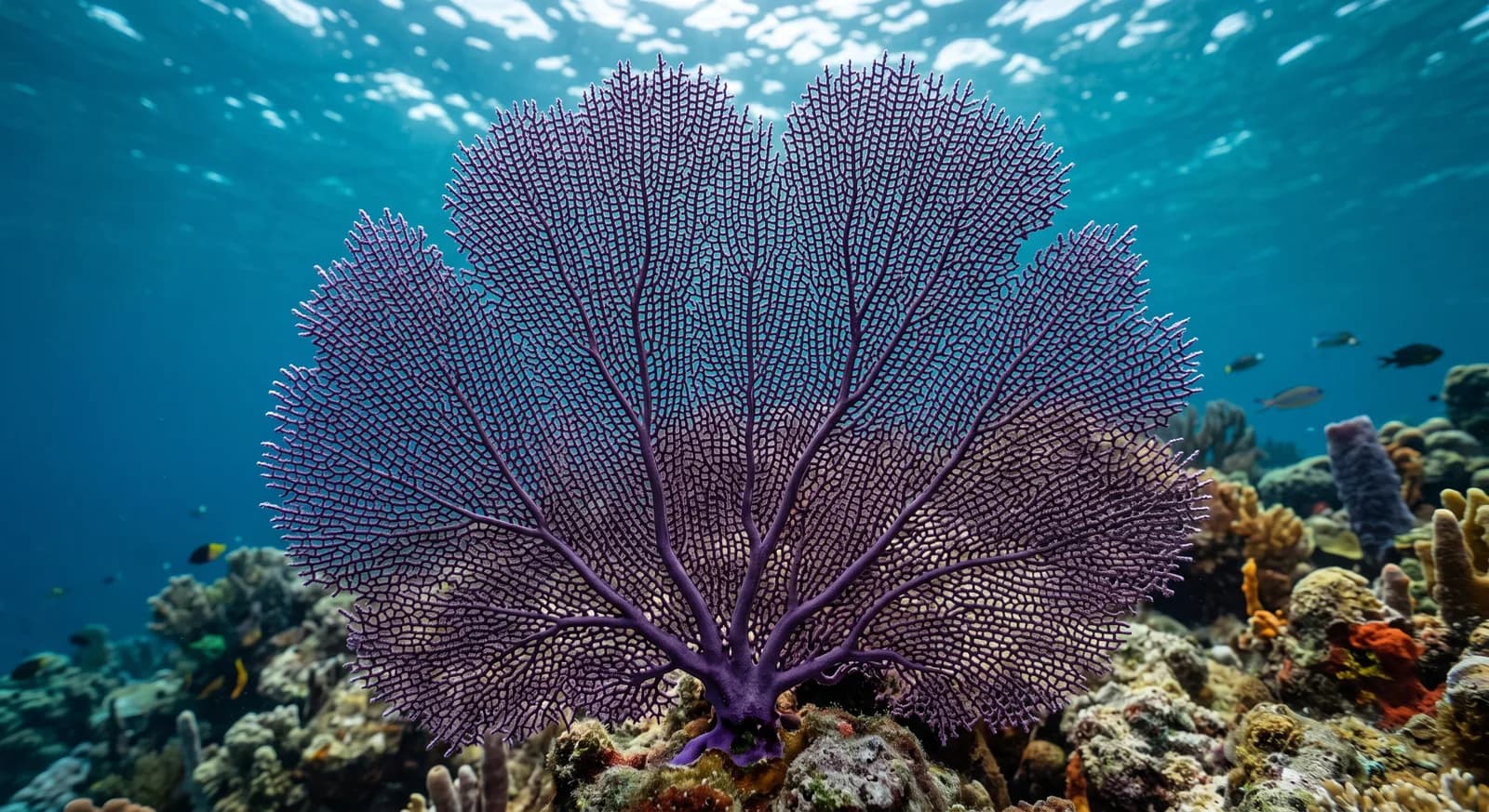
Common Sea Fan
Gorgonia ventalina
Near Great Blue Hole
A cave whose roof collapsed millennia ago and which then flooded. It forms an almost perfect circle some 300 m across at the surface and drops vertically to around 124-125 m. Recreational diving reaches 40 m, the depth at which the stalactites appear: the largest formations of their kind ever found underwater.
Depth
0–124 m
Recommended level
Advanced
Average visibility
30 m
Natural monument within the Belize Barrier Reef Reserve System
World Heritage Site (Belize Barrier Reef Reserve System, inscribed on 4 December 1996, with seven marine protected areas)
It was made famous by the visit of Cousteau's Calypso in 1970, and it was given its name by the British writer and diver Ned Middleton. It is a dive for the thrill, not for the wildlife: below 30 m narcosis is a real risk and the site has claimed lives. Belize has three of the only four true coral atolls in the western hemisphere: Lighthouse Reef, Turneffe and Glover's Reef. The property was on the List of World Heritage in Danger between 2009 and 2018; it was removed after Belize passed a moratorium banning oil exploration throughout its maritime zone.
Sources consulted: Wikipedia (Half Moon Caye / Lighthouse Reef) · Hamanasi · Toucan Discovery · belizehub.com · williamdrumm.com
1 park within 30 km.
What is there to see on land, near this site?
1 km away
Which other dive sites are like this one?
Same country: Belize
Same country: Belize
Same country: Belize
Based on what we already know about this dive site.
Water temperature
27 °C
Current
Weak
Access
Liveaboard/Boat
Best season
April-June
Route duration
2–3 days
Recommended certification
Deep Diver
Approx. price
200 USD / dive
Same country: Belize
 Belize