Skip to content
WAnimals
  • Map
  • Species
  • Parks
  • Diving
Log inCreate account
WAnimals

The guide for travellers and animal lovers: discover, plan and share your wild adventures around the world.

Discover wildlife

  • Species
  • Ecosystems
  • Glossary
  • Tags

Explore places

  • Map
  • Countries
  • Parks
  • Diving

Plan experiences

  • Guides

Learn

  • Blog

Resources

  • Help centre
  • Contact
  • Install the app

Follow us

Account

  • Log in
  • Create account

© 2026 WAnimals. All rights reserved.

About usHow we build our profilesTerms of servicePrivacyLegal notice
MapSpeciesParksDiving
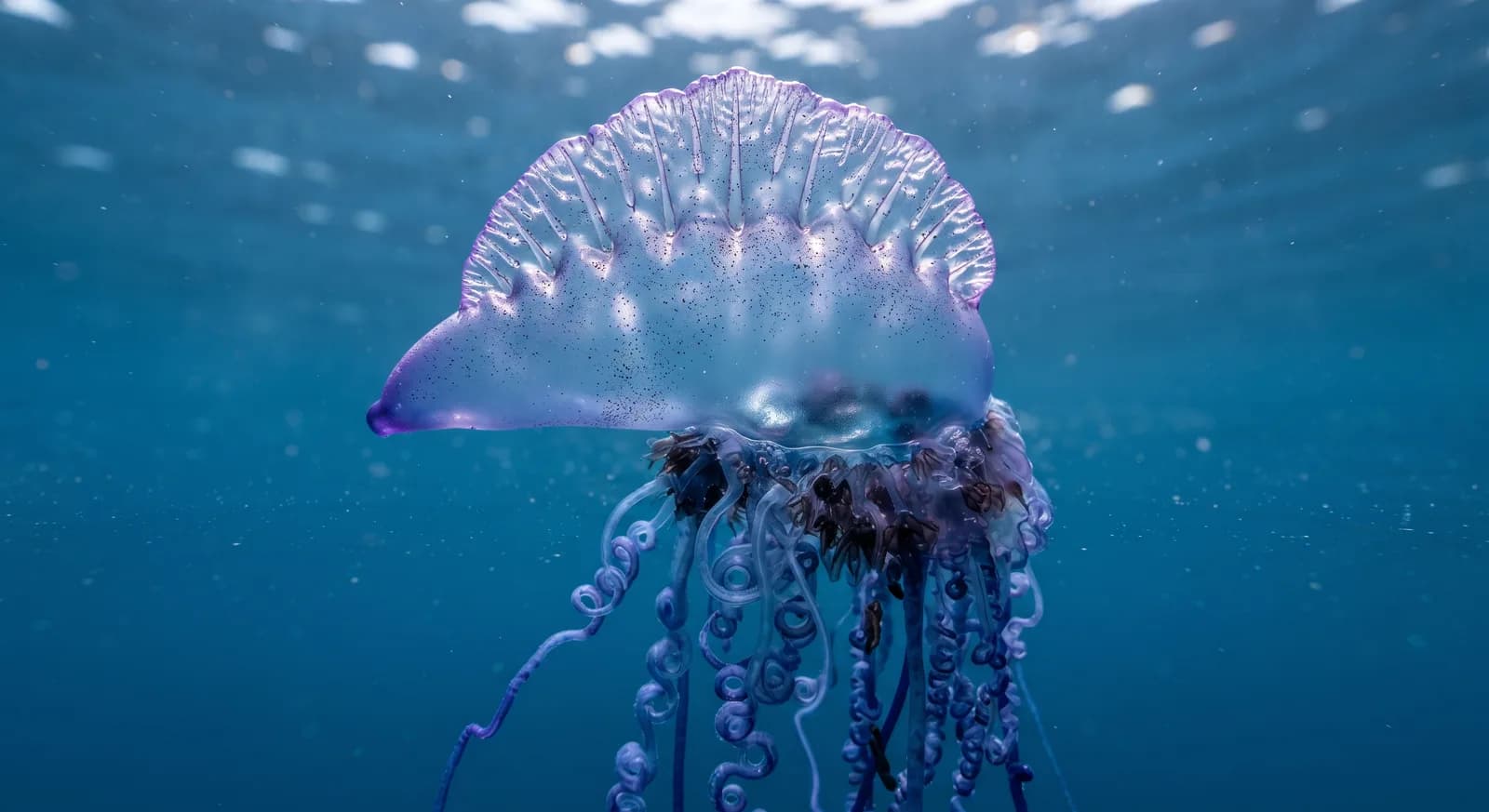
  1. Portuguese Man-of-war
Portuguese Man-of-war (Physalia physalis)

Hydrozoans · Siphonophorae · Physaliidae

Portuguese Man-of-war

Physalia physalis

Not Evaluated

It has not yet been assessed against the IUCN criteria.

Spotted something wrong?

It is not one animal but a colony of four kinds of specialised, genetically identical organisms (zooids) that function as a single being.

Size

up to 30 cm

Life expectancy

1 year

Diet

Carnivore

Feeds mainly on other animals.
Activity

Irregular activity

Active at irregular times, by day or night depending on circumstances.

Social structure

Solitary

Lives and hunts alone, joining others only to breed.

Sighting difficulty

Unknown

Ocean
157countries53parks209dive sites

AI-generated images: illustrations, not photographs.

Fun facts

  • It is not one animal but a colony of specialised zooids working as a single organism.
  • Its tentacles can trail as far as 50 metres.
  • Although it looks like a jellyfish, it is in fact a siphonophore, a different group of cnidarians.
  • biologíaIt is not one animal but a colony of specialised organisms (zooids) that work together as though they were one.
  • It is not a jellyfish: it is a siphonophore, a colony of specialised individuals called zooids that cannot live apart. Some form the float, others catch prey, others digest and others reproduce.
  • The gas-filled float acts as a sail. Because it leans to the left or the right depending on the individual, half the population sails downwind one way and half the other, which stops them all from stranding on the same shore.
  • Its fishing tentacles can trail tens of metres below the surface.
  • The sting is still painful long after the animal has died, even stranded on the sand.
  • The first Nobel Prize connected with jellyfish went in 1913 to Charles Richet for the discovery of anaphylaxis, made with Paul Portier and arising from experiments with Portuguese man o' war venom.

Life cycle and biology

Skeleton type
Invertebrate - no skeleton, a gelatinous colony of specialised organisms
Habitat and environment
Warm tropical and subtropical waters of every ocean, especially the Gulf Stream, the Gulf of Mexico, the Caribbean and the Sargasso Sea
Birth weight
A planula larva ~2 mm long
Size at birth
A planula larva ~2 mm long (the same figure as above)
Sexual maturity
Not applicable in the usual sense (a colonial organism that reproduces by asexual budding from the polyp stage)
Gestation / incubation
No gestation; it develops from a planula larva to an attached polyp and then, by budding, to a mature colony
Litter / clutch size
Not quantified precisely in the sources consulted

Sources consulted: University of West Indies (OGATT); National Geographic; Ocean Info; NOAA Ocean Service; Wikipedia (Physalia physalis); Nature Scientific Reports (morphology study)

Where to find it

Loading map…

Where to see it

Parks and dive sites where this species has been documented — showing 20 of 262.

Related species

Other species in the catalogue with the most in common with Portuguese Man-of-war — same habitat, park, country, tags or family.

Shares a park
Shares a park
Shares a park
Shares a park
Shares a park
Shares a park

Keep exploring

Based on what we already know about portuguese man-of-war.

Comments

Share an experience, a fun fact or a tip for seeing the portuguese man-of-war.

Be the first to comment.

Home
Species
See full glossary
This page in other languages: Español · Deutsch · Français · Português · Italiano

The pins mark the parks and dive sites where its presence is documented.

See its range on the interactive map→
EvergladesUnited States
Sian Ka'anMexico
Bacalar ChicoBelize
GuanicaPuerto Rico
JaraguaDominican Republic
Virgin Islands (St John)U.S. Virgin Islands
Tobago Main RidgeTrinidad and Tobago
BonaireNetherlands
Exuma Cays Land and Sea ParkBahamas
Fernando de NoronhaBrazil
Great Blue HoleBelize
Half Moon Caye WallBelize
Turneffe AtollBelize
Klein BonaireNetherlands
Palancar ReefMexico
Isla Mujeres (whale shark)Mexico
Bloody Bay WallCayman Islands
USS Kittiwake wreckCayman Islands
Stingray CityCayman Islands
Tiger BeachBahamas
See all 53 parks
See all 209 dive sites
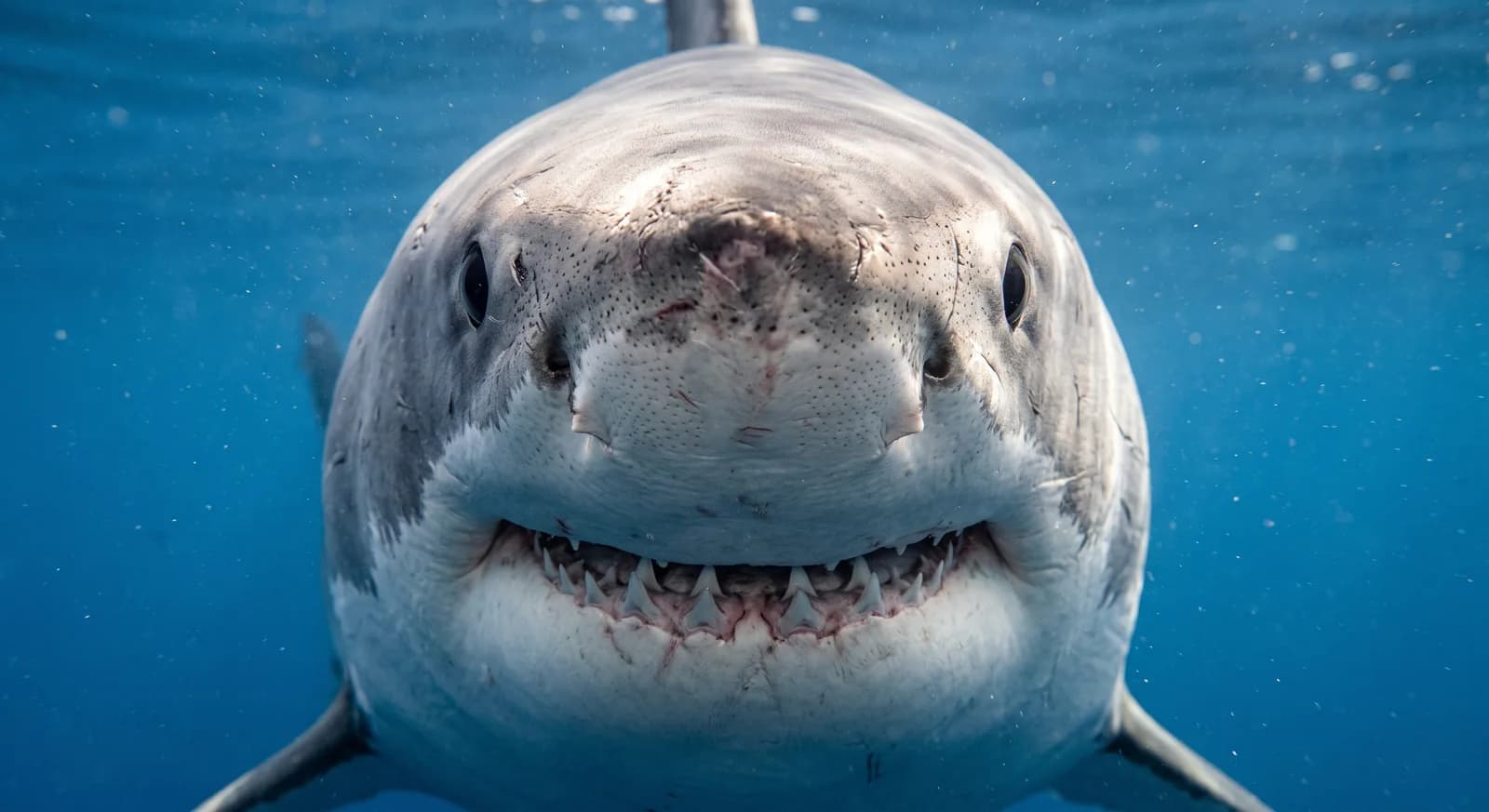
Great White SharkVulnerable

Great White Shark

Carcharodon carcharias

Harbor SealLeast Concern

Harbor Seal

Phoca vitulina

Harbor PorpoiseLeast Concern

Harbor Porpoise

Phocoena phocoena

Leatherback Sea TurtleVulnerable

Leatherback Sea Turtle

Dermochelys coriacea

Endangered

Shortfin Mako

Isurus oxyrinchus

Vulnerable

Porbeagle

Lamna nasus

CountriesSpain
ParksEvergladesUnited States
TagsCarnivore
Carnivore
Variable activity
Solitary
Ocean
Cnidarian

Africa40

North America34

Asia29

Europe22

Oceania21

South America11

Spain
United States
Italy
Mexico
United Kingdom
Greece
Algeria
Angola
Benin
Cabo Verde
Cameroon
Comoros
Côte d’Ivoire
Democratic Republic of the Congo
Djibouti
Egypt
Equatorial Guinea
Eritrea
Gabon
Gambia
Ghana
Guinea
Guinea-Bissau
Kenya
Liberia
Libya
Madagascar
Mauritania
Mauritius
Mayotte
Morocco
Mozambique
Namibia
Nigeria
Republic of the Congo
Réunion
São Tomé and Príncipe
Senegal
Seychelles
Sierra Leone
Somalia
South Africa
Sudan
Tanzania
Togo
Tunisia
Anguilla
Antigua and Barbuda
Aruba
Bahamas
Barbados
Belize
Bermuda
British Virgin Islands
Canada
Cayman Islands
Costa Rica
Cuba
Curaçao
Dominica
Dominican Republic
El Salvador
Grenada
Guadeloupe
Guatemala
Haiti
Honduras
Jamaica
Martinique
Mexico
Nicaragua
Panama
Puerto Rico
Saint Kitts and Nevis
Saint Lucia
Saint Vincent and Grenadines
Trinidad and Tobago
Turks and Caicos Islands
U.S. Virgin Islands
United States
Bahrain
Bangladesh
Brunei
Cambodia
China
India
Indonesia
Iran
Israel
Kuwait
Lebanon
Malaysia
Maldives
Myanmar
Oman
Pakistan
Philippines
Qatar
Saudi Arabia
Singapore
Sri Lanka
Syria
Taiwan
Thailand
Timor-Leste
Türkiye
United Arab Emirates
Vietnam
Yemen
Albania
Belgium
Bosnia and Herzegovina
Croatia
Cyprus
Denmark
France
Germany
Greece
Iceland
Ireland
Italy
Malta
Monaco
Montenegro
Netherlands
Norway
Portugal
Slovenia
Spain
Sweden
United Kingdom
American Samoa
Australia
Cook Islands
Fiji
French Polynesia
Guam
Kiribati
Marshall Islands
Micronesia
Nauru
New Caledonia
New Zealand
Niue
Northern Mariana Islands
Palau
Papua New Guinea
Samoa
Solomon Islands
Tonga
Tuvalu
Vanuatu
Argentina
Brazil
Chile
Colombia
Ecuador
French Guiana
Guyana
Peru
Suriname
Uruguay
Venezuela