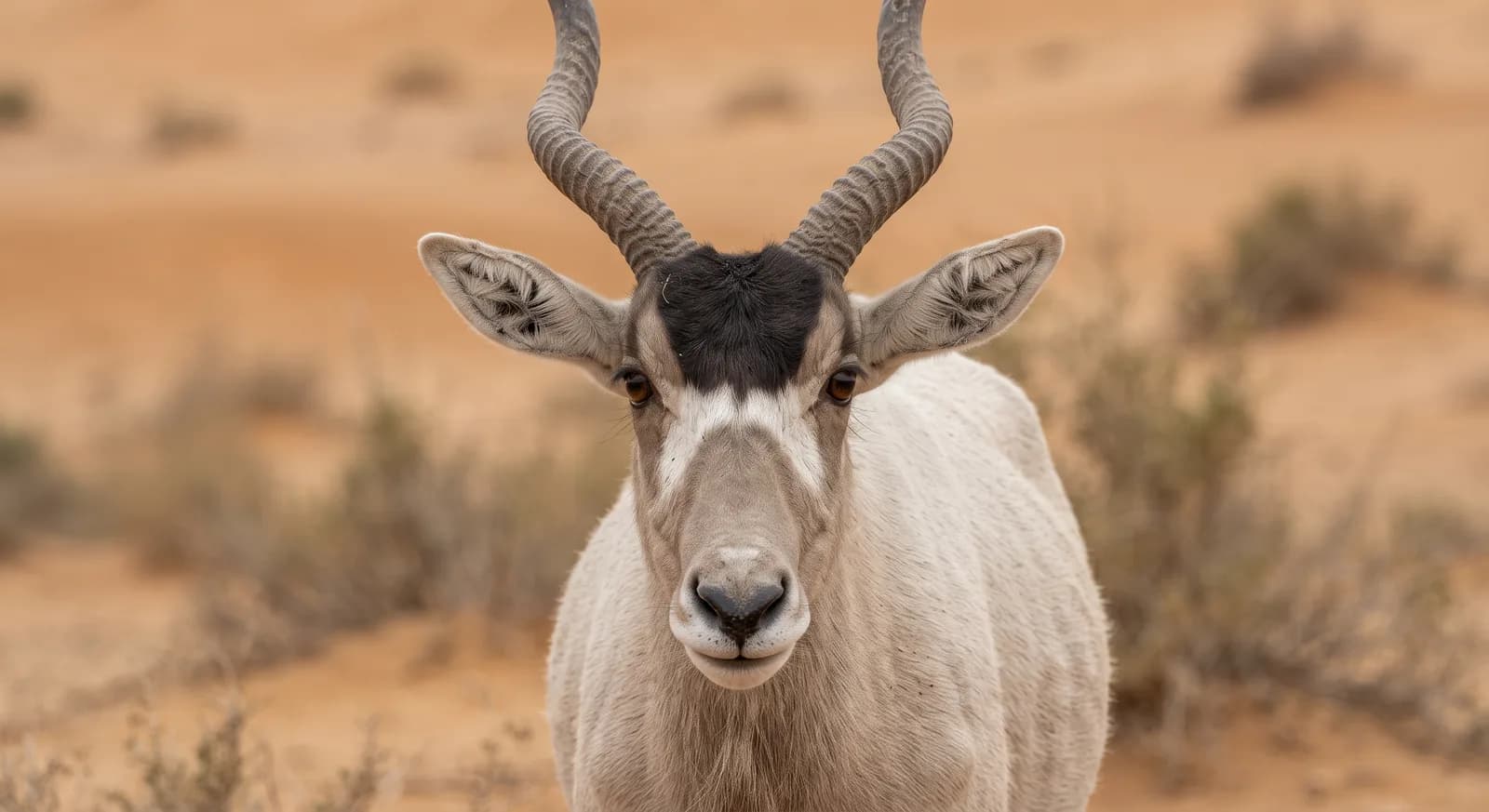
 Critically Endangered
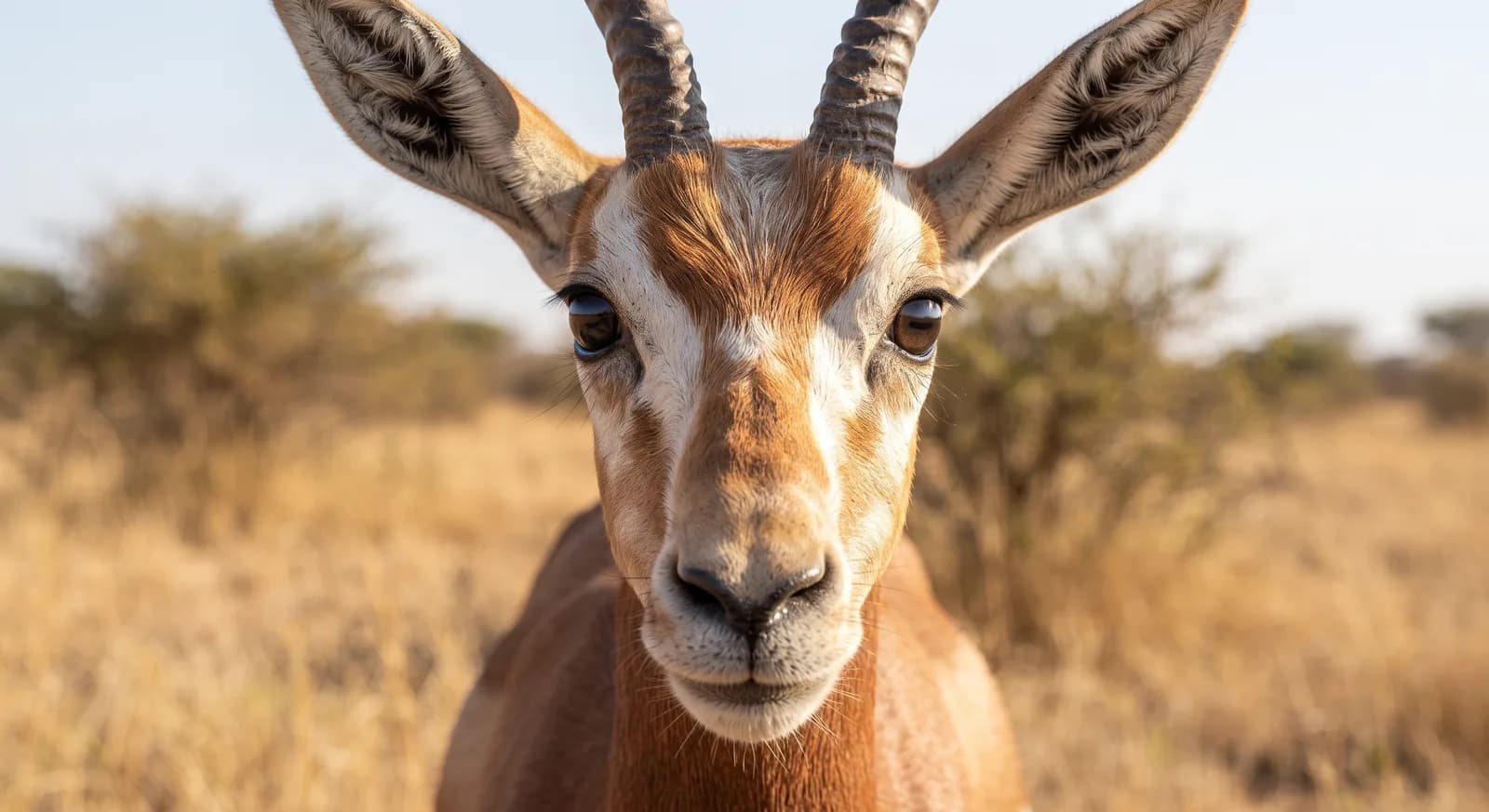
Addax
Addax nasomaculatus
Africa
Morocco is the most mountainous country in North Africa, and that backbone explains its natural wealth: the Rif and the three Atlas chains hold back the Atlantic moisture and create islands of forest on the very threshold of the Sahara. The Middle Atlas grows the largest Atlas cedar woods in the world, the habitat of the Barbary macaque, the only primate that lives naturally north of the desert. Towards the south and east, the vegetation opens out into esparto steppe, stony hamada and dune erg, with dorcas gazelles, fennec foxes and horned vipers. The Atlantic coast, washed by cold and productive waters, sustains the largest argan woodland on the planet and wetlands such as Souss-Massa and the Merja Zerga lagoon, stopovers for birds migrating between Europe and sub-Saharan Africa.
National animal: The Barbary lion, extinct in the wild, is the national emblematic animal and appears in the country's symbolism
In southwestern Morocco it is common to see goats perched in the branches of argan trees, several metres off the ground, eating the fruit. It is no trick: the goats climb up by themselves, taking advantage of the tree's twisted, thorny form. For a long time it was believed that the seeds they passed were used to make the oil, though it is now known that overgrazing damages the argan woodland and livestock access is regulated.
Souss-Massa holds the largest wild colony of northern bald ibis left in the world, with hundreds of birds under permanent watch. The Barbary macaque suffers from the illegal capture of infants for the pet trade.
The cedar woods of Azrou and Ifrane year-round for macaques. Souss-Massa between February and June for the northern bald ibis in the breeding season. Merja Zerga in winter for flamingos and waders.
Where else might I want to travel?
Same region: North Africa
Same region: North Africa
Same region: North Africa
Same region: North Africa
468 species found
Based on what we already know about Morocco.