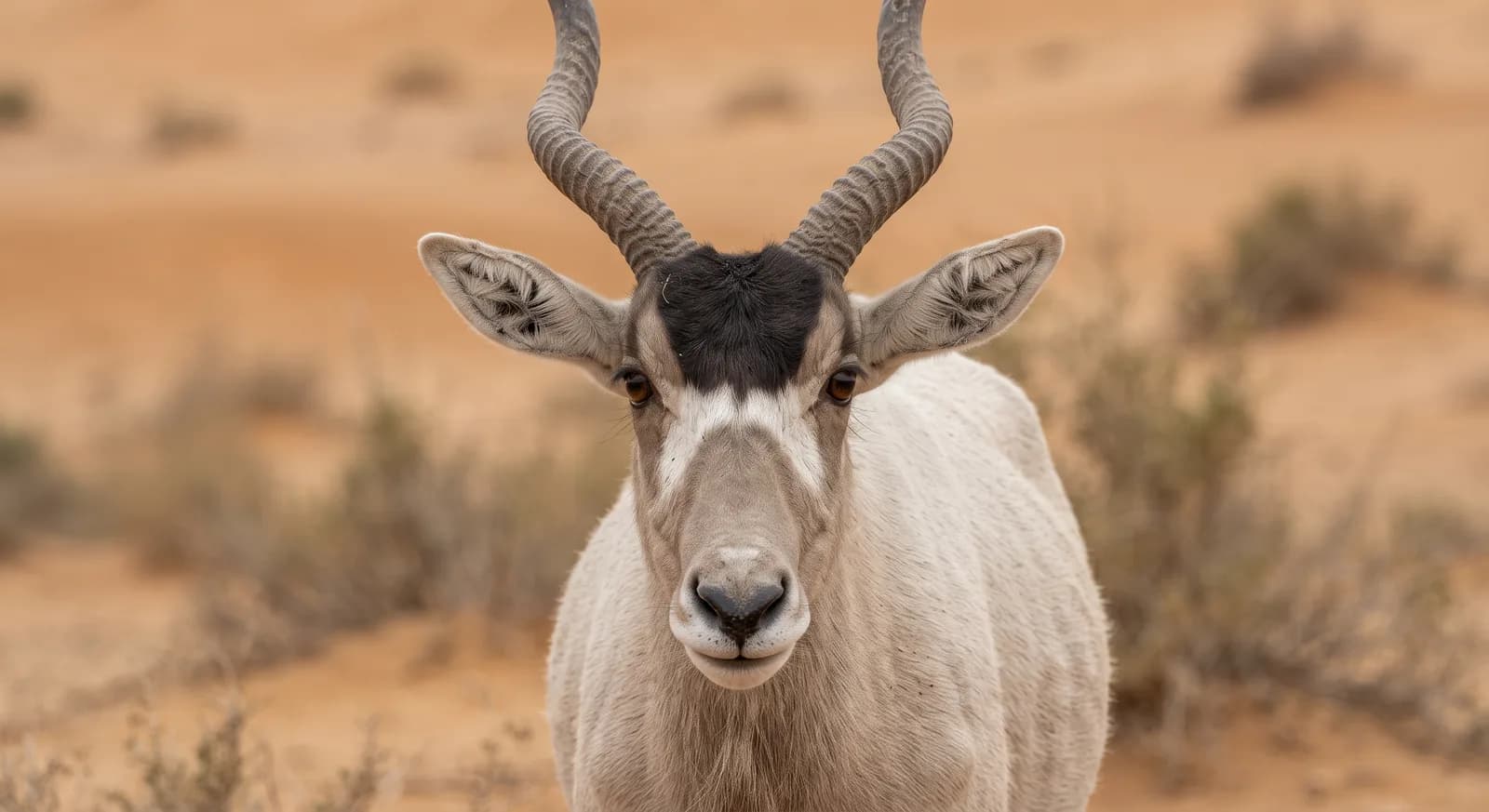
 Critically Endangered
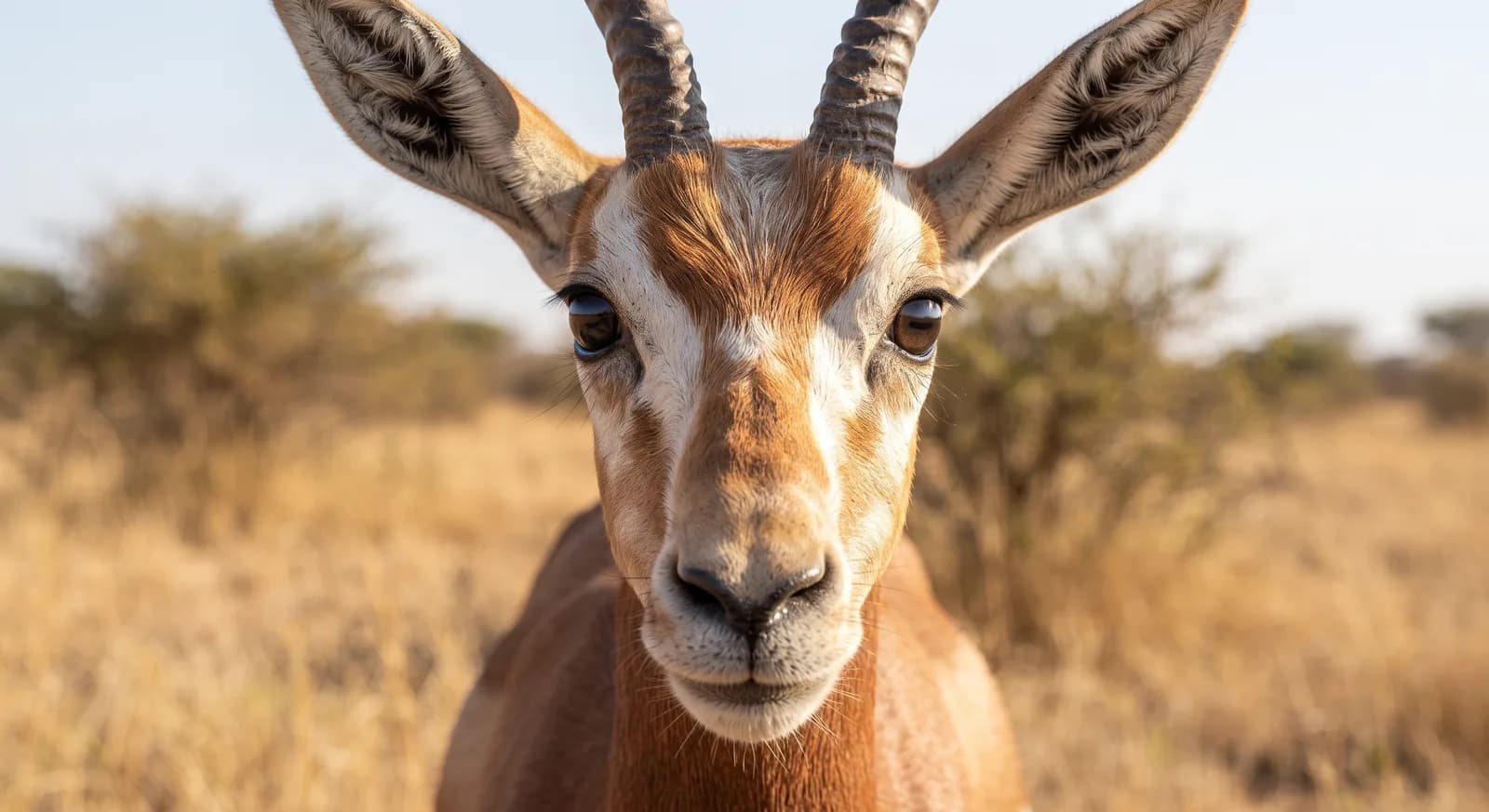
Addax
Addax nasomaculatus
Africa
Algeria is the largest country in Africa and close to four fifths of its territory is Sahara. In the north, the Tell and Kabylia keep cork and holm oak woods and cedar forests that descend to the Mediterranean, with the Barbary stag, the only deer native to the African continent, and with Algeria's last Barbary macaques. The interior plateaux are covered by esparto steppe and by chotts, salt lagoons where flamingos and waders spend the winter. Towards the south, the volcanic Hoggar massif and the sandstone plateaux of Tassili n'Ajjer form islands of altitude in the middle of the desert, with microclimates that allow thousand-year-old Saharan cypresses, dorcas gazelles, aoudad and a ghostly population of Saharan cheetah, detected only on camera traps, to survive.
National animal: The fennec fox, the national animal and the nickname of the country's national sports teams
The walls of Tassili n'Ajjer hold thousands of rock paintings with giraffes, elephants, hippopotamuses and herds of cattle: proof that the Sahara was a savannah with rivers and lakes between ten thousand and six thousand years ago. When the climate dried, that fauna disappeared or retreated south, but some Nile crocodiles were left isolated in pools on the Saharan plateaux and survived there well into the twentieth century.
The Saharan cheetah is one of the rarest cat subspecies in the world, with very few confirmed individuals in the Hoggar and the Tassili. The Barbary stag is slowly recovering in the forests of El Kala, on the Tunisian border.
Tassili and Hoggar in winter for Saharan wildlife and rock art. El Kala between October and March for wintering waterbirds. Djurdjura in spring for macaques and forest birds.
Where else might I want to travel?
Same region: North Africa
Same region: North Africa
Same region: North Africa
Same region: North Africa
327 species found
Based on what we already know about Algeria.