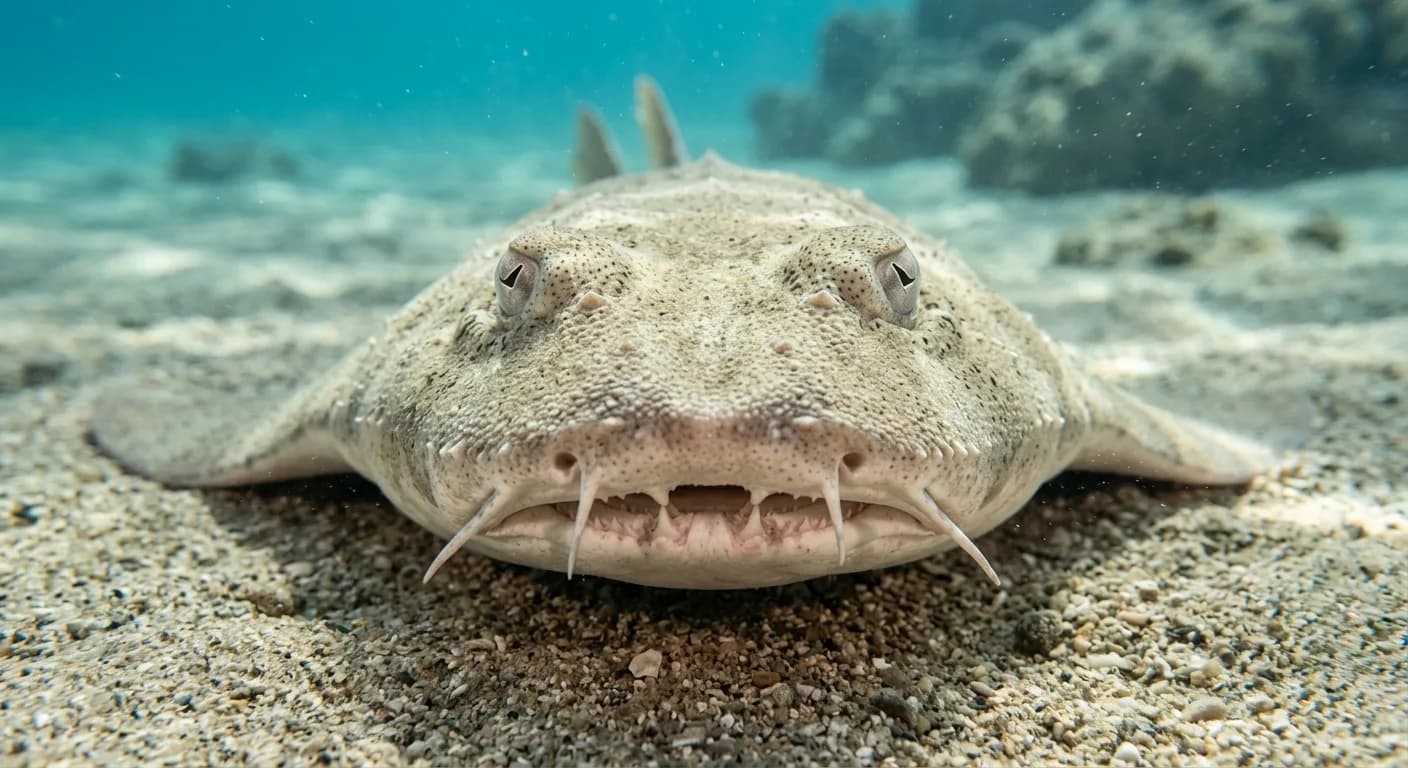
 Critically Endangered
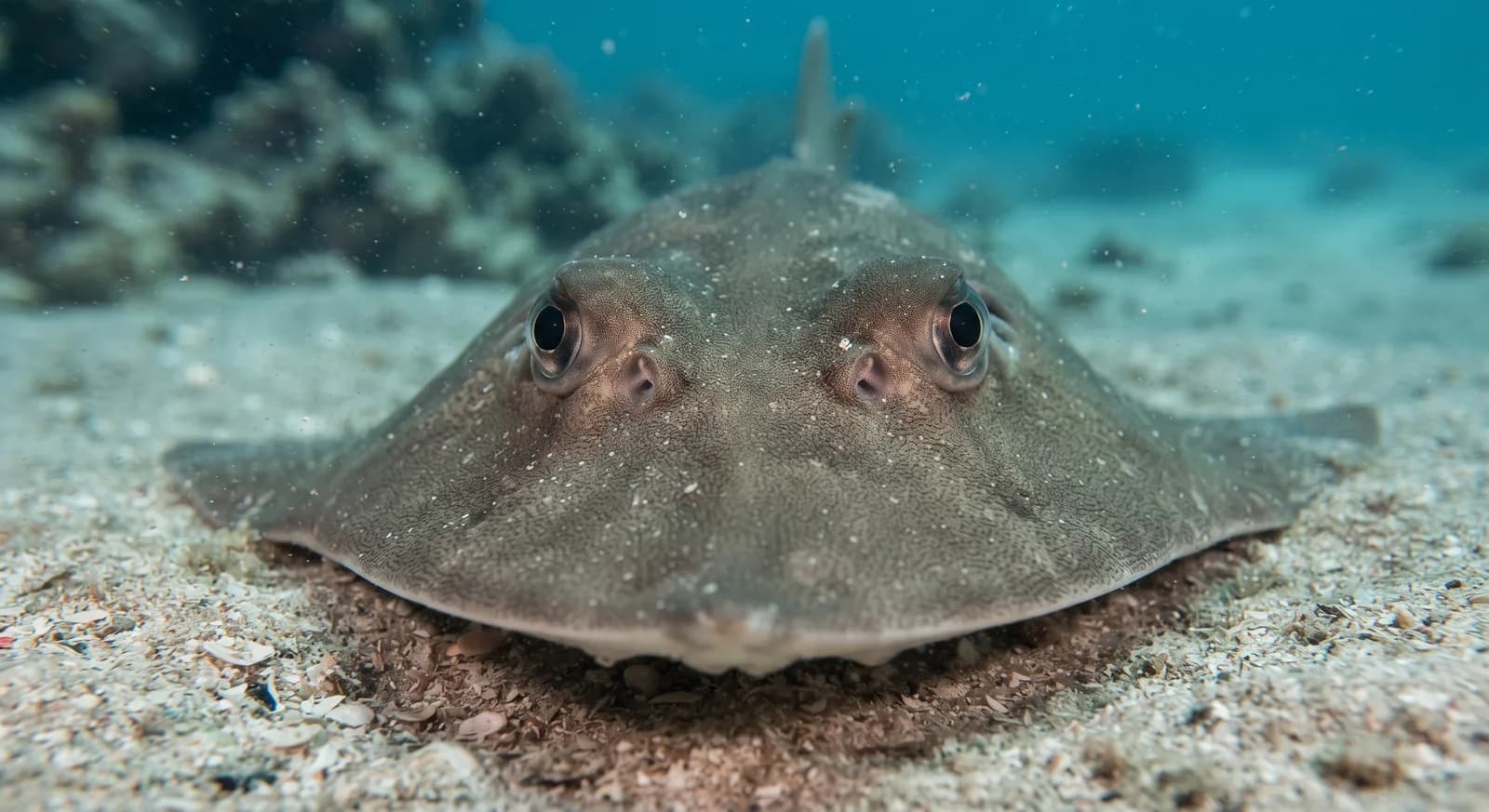
Angelshark
Squatina squatina
Europe
France brings together four biogeographical domains within its mainland territory — Atlantic, continental, alpine and Mediterranean — which no other European country matches. The Alps and the Pyrenees support high-mountain fauna with chamois, marmots, ibex and bearded vultures; the Massif Central and the Vosges keep forests and peat bogs with reintroduced Eurasian lynx; the Camargue, in the Rhône delta, is a mosaic of salt lagoons famous for its flamingo colony, its white horses and its semi-wild bulls. But the greatest French natural wealth lies outside Europe: the overseas territories, spread across three oceans, make France one of the most biodiverse countries on the planet. French Guiana contributes intact Amazon rainforest, New Caledonia a fauna isolated for 80 million years, and the southern territories massive colonies of penguins and albatrosses.
National animal: The Gallic rooster, a national symbol since antiquity
The kagu of New Caledonia is a grey bird the size of a hen, all but flightless, which barks at dawn like a dog to mark its territory: a duet audible more than a kilometre away. It has no close living relatives and is the sole survivor of an evolutionary branch of its own. Thanks to the control of feral dogs and rats, its population has been recovering from critical lows.
The natural return of the wolf from Italy in 1992 has created a persistent conflict with extensive livestock farming. The overseas territories hold most of the country's threatened species, under pressure from invasive species and mining.
The Camargue year-round, with flamingo numbers peaking between April and September. The Alps in summer for marmots and ibex at altitude. The Mercantour at dawn for wolves and mouflon.
Where else might I want to travel?
Same region: Western Europe
Same region: Western Europe
Same region: Western Europe
Same region: Western Europe
801 species found
Based on what we already know about France.