Skip to content
WAnimals
  • Map
  • Species
  • Parks
  • Diving
Log inCreate account
WAnimals

The guide for travellers and animal lovers: discover, plan and share your wild adventures around the world.

Discover wildlife

  • Species
  • Ecosystems
  • Glossary
  • Tags

Explore places

  • Map
  • Countries
  • Parks
  • Diving

Plan experiences

  • Guides

Learn

  • Blog

Resources

  • About us
  • How we build our profiles
  • Help centre
  • Contact
  • Install the app

Follow us

Account

  • Log in
  • Create account

© 2026 WAnimals. All rights reserved.

Terms of servicePrivacyCookiesLegal notice
MapSpeciesParksDiving
  1. Home
  2. Species
  3. Atlantic Ghost Crab

One of the 22 crabs on WAnimals
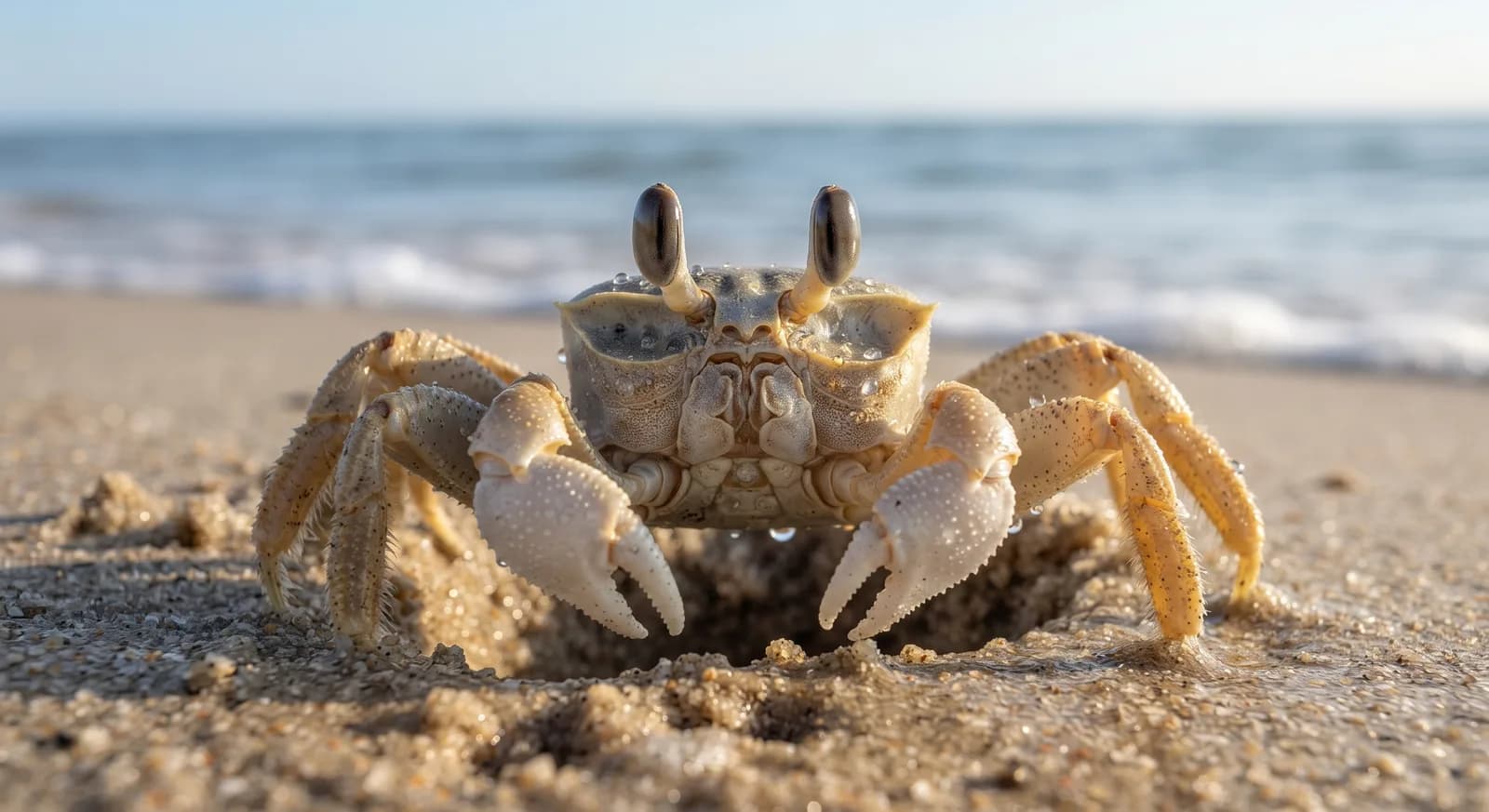
Atlantic Ghost Crab (Ocypode quadrata)

Malacostracans · Decapoda · Ocypodidae

Atlantic Ghost Crab

Ocypode quadrata

Not Evaluated

It has not yet been assessed against the IUCN criteria.

Spotted something wrong?

The Atlantic ghost crab is a decapod crustacean of the family Ocypodidae. The features of the genus include one claw larger than the other. The typical life expectancy of O. quadrata is about 3 years.

Size

4 cm – 6 cm

Life expectancy

3 years

Diet

Carnivore

Feeds mainly on other animals.
Activity

Nocturnal

Active mainly at night.

Social structure

Solitary

Lives and hunts alone, joining others only to breed.

Ocean
40countries29parks104dive sites1same family

AI-generated images: illustrations, not photographs.

Fun facts

  • Its eyes, on movable stalks, give it a 360-degree field of view without having to turn its head.
  • It produces sounds by rubbing a rough patch of its claw against its leg, a mechanism called stridulation, to communicate inside the burrow.
  • It is one of the most widely used indicators of human impact on beaches: the density of its burrows falls as soon as there is vehicle traffic or mechanical cleaning of the sand.
  • It runs at about 4 metres per second, which makes it one of the fastest crustaceans, and it changes direction without braking.
  • It is terrestrial but still needs the sea: it moistens its gills by wetting itself at the shoreline or by drawing water from damp ground with bristles on its legs, and the females go down to release their eggs into the water.
  • Its eyes sit on long stalks and give it 360-degree vision, with a horizontal band of high resolution adapted to a beach horizon.
  • It stridulates by rubbing a file on the inner side of its claw against its leg, producing an audible sound it uses to defend its burrow.
  • Its abundance is used as an indicator of beach health: it is very sensitive to vehicle traffic, trampling and light pollution, and its burrows are counted as a measure of tourist impact.
  • Light pollution disorients it, just as it does hatchling sea turtles.

Life cycle and biology

Skeleton type
Invertebrate - chitin exoskeleton (crustacean)
Habitat and environment
Dunes and dry sand of the upper beach of the western Atlantic

Sources consulted: Wikipedia (es): Ocypode quadrata

Where to find it

Loading map…

Where to see it

Parks and dive sites where this species has been documented — showing 20 of 133.

Related species

Other species in the catalogue with the most in common with Atlantic Ghost Crab — same habitat, park, country, tags or family.

Same taxonomic family
Shares a park
Shares a park
Shares a park
Shares a park
Shares a park

Keep exploring

Based on what we already know about atlantic ghost crab.

Share an experience, a fun fact or a tip for seeing the atlantic ghost crab.
See full glossary
This page in other languages: Español · Deutsch · Français · Português · Italiano

The pins mark the parks and dive sites where its presence is documented.

See its range on the interactive map→
EvergladesUnited States
Sian Ka'anMexico
Bacalar ChicoBelize
GuánicaPuerto Rico
JaraguaDominican Republic
Virgin Islands (St John)U.S. Virgin Islands
Tobago Main RidgeTrinidad and Tobago
Exuma Cays Land and Sea ParkBahamas
Fernando de NoronhaBrazil
TayronaColombia
Great Blue HoleBelize
Half Moon Caye WallBelize
Turneffe AtollBelize
Palancar ReefMexico
Isla Mujeres (whale shark)Mexico
Bloody Bay WallCayman Islands
USS Kittiwake wreckCayman Islands
Stingray CityCayman Islands
Tiger BeachBahamas
Jardines de la ReinaCuba
See all 29 parks
See all 104 dive sites
Not Evaluated

Mud Fiddler Crab

Uca pugnax

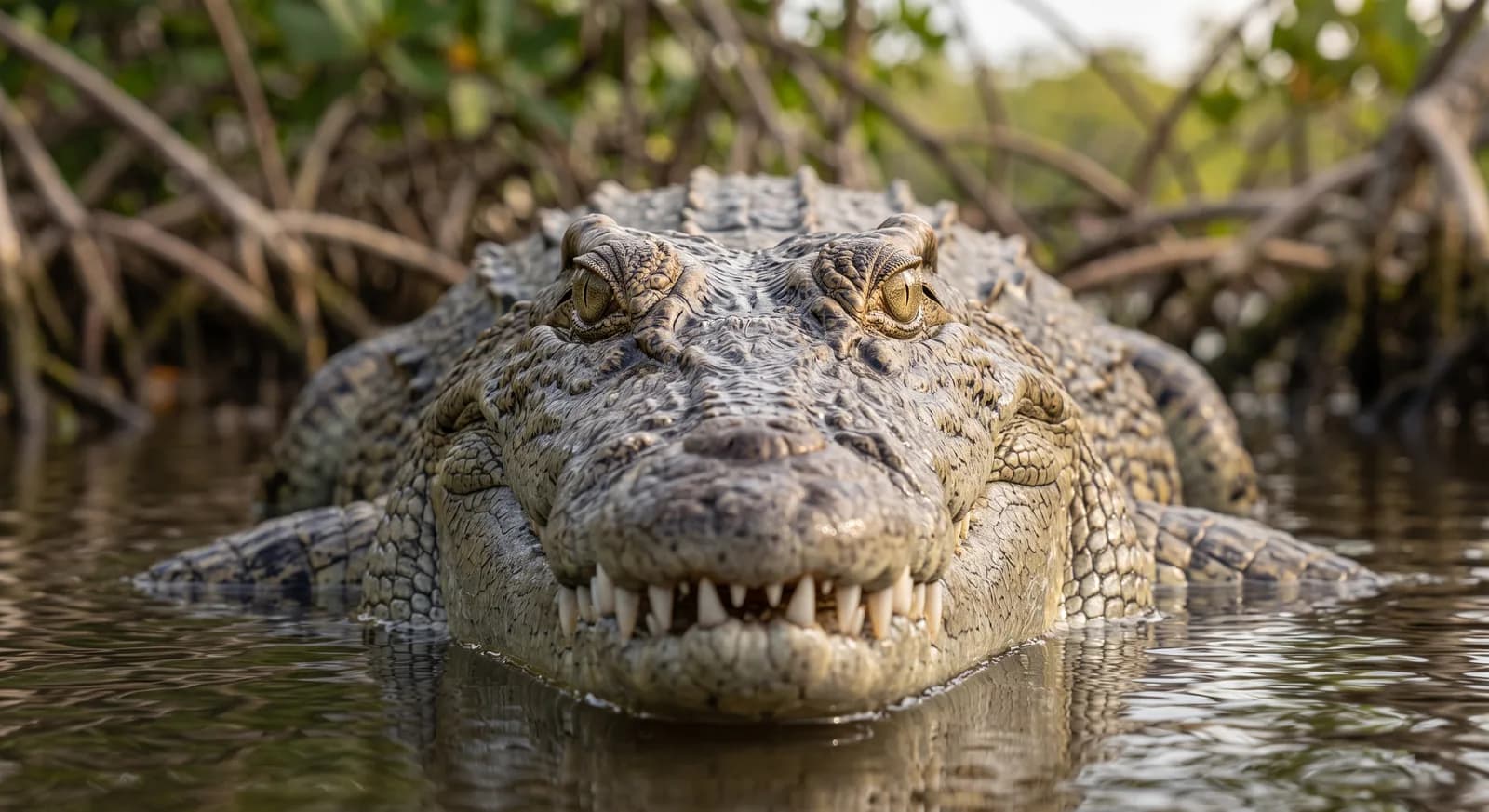
American CrocodileVulnerable

American Crocodile

Crocodylus acutus

Near Threatened

Southern Stingray

Hypanus americanus

Green MorayLeast Concern

Green Moray

Gymnothorax funebris

Red LionfishLeast Concern

Red Lionfish

Pterois volitans

Spot-fin PorcupinefishLeast Concern

Spot-fin Porcupinefish

Diodon hystrix

CountriesUnited States
ParksEvergladesUnited States
TagsCarnivore
Carnivore
Nocturnal
Solitary
Ocean
Crustacean

North America32

South America8

United States
Mexico
Belize
Brazil
Cayman Islands
Bahamas
Anguilla
Antigua and Barbuda
Aruba
Bahamas
Barbados
Belize
Bermuda
British Virgin Islands
Cayman Islands
Costa Rica
Cuba
Curaçao
Dominica
Dominican Republic
Grenada
Guadeloupe
Guatemala
Haiti
Honduras
Jamaica
Martinique
Mexico
Nicaragua
Panama
Puerto Rico
Saint Kitts and Nevis
Saint Lucia
Saint Vincent and the Grenadines
Trinidad and Tobago
Turks and Caicos Islands
U.S. Virgin Islands
United States
Argentina
Brazil
Colombia
French Guiana
Guyana
Suriname
Uruguay
Venezuela