Not Evaluated
Christmas Island Red Crab
Gecarcoidea natalis
1 country1 park2 dive sites
Species group · Malacostracans
WAnimals has 22 species of crab, spread across 15 families (Astacidae, Cambaridae, Coenobitidae, Gecarcinidae, Geryonidae, Grapsidae, Inachidae, Kiwaidae, Lithodidae, Ocypodidae, Paguridae, Portunidae, Raninidae, Varunidae, Xanthidae).
Each one has its own full profile. This group does not replace them: it brings them together.
3 species in this group are in a threatened category according to the IUCN.
Recorded in 171 countries. The ones with the most species in the group:
Every year 50 million crabs cross the island together to spawn in the sea.
From
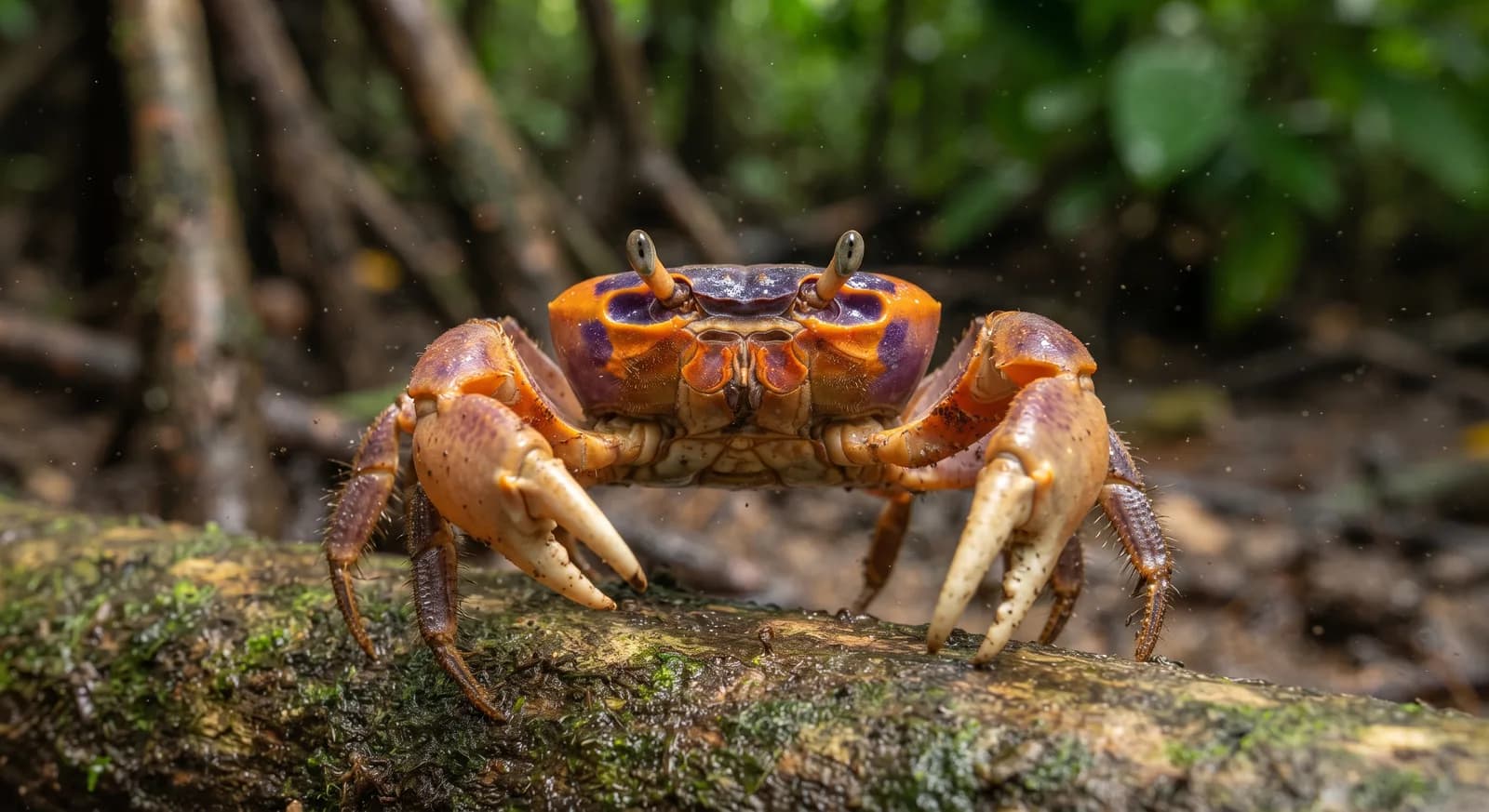
Its annual migration is one of the great natural spectacles on the planet: tens of millions of crabs leave their burrows at once as the wet season begins and march to the coast, closing roads and carpeting the ground.
From
They do not head for the nearest shore: most make for the island's north-west coast, and they do so in a straight line. The record for a single day is 1,460 metres.
From
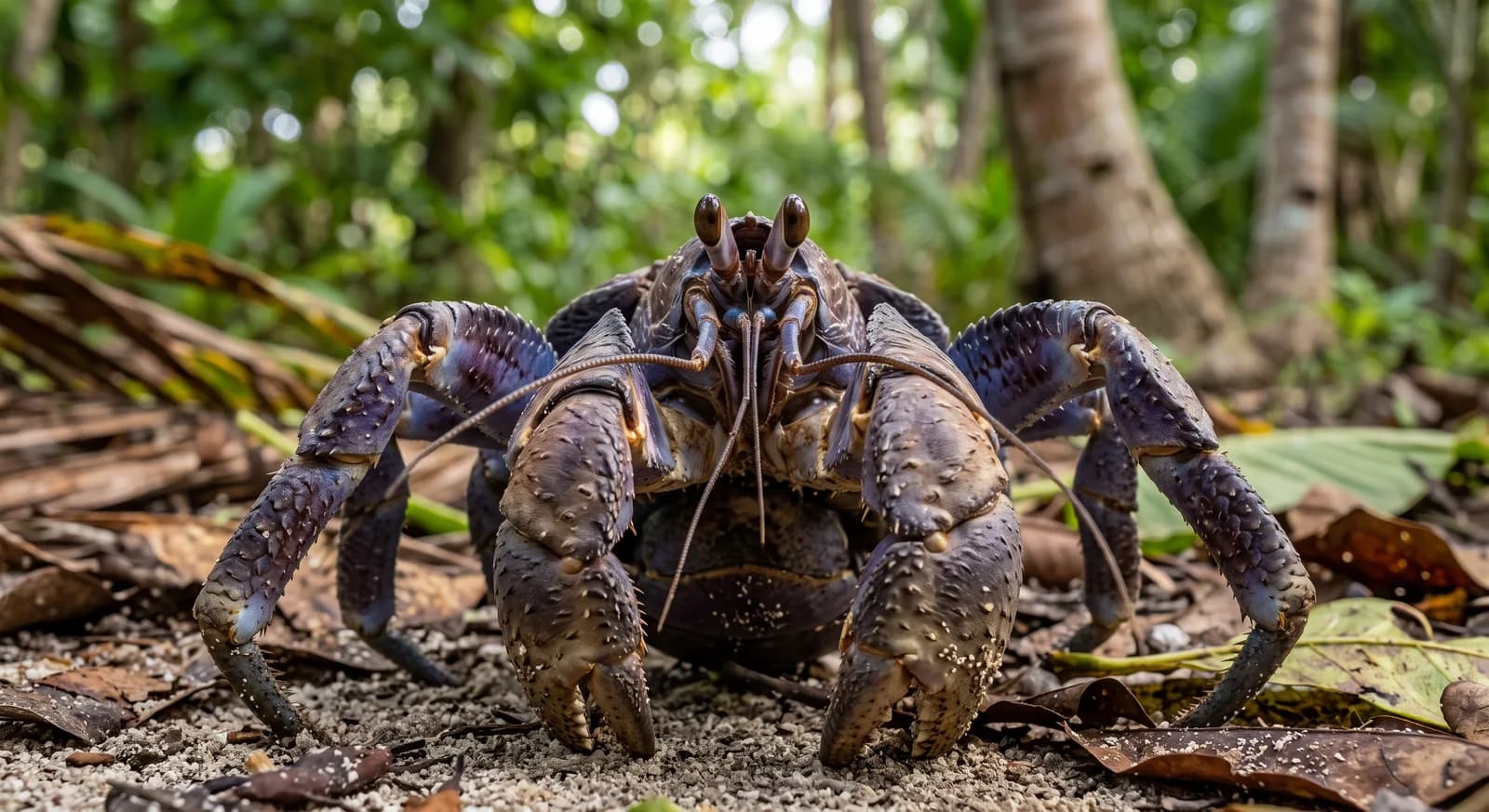
It is the largest land arthropod in the world, and will climb trees to cut coconuts loose with its powerful claws before dropping them to break on the ground.
From
Its claws exert one of the highest gripping forces measured in the animal kingdom, enough to crack open a coconut.
From
It is so adapted to life on land that it drowns if submerged: it breathes with branchiostegal lungs that it has to keep moist.
From
Its consumption of leaf litter and seedlings influences which trees manage to germinate, so that a crab shapes the composition of the forest.
·
Ranges calculated from the profiles that record the figure, not from all 22.
From Moon Crab
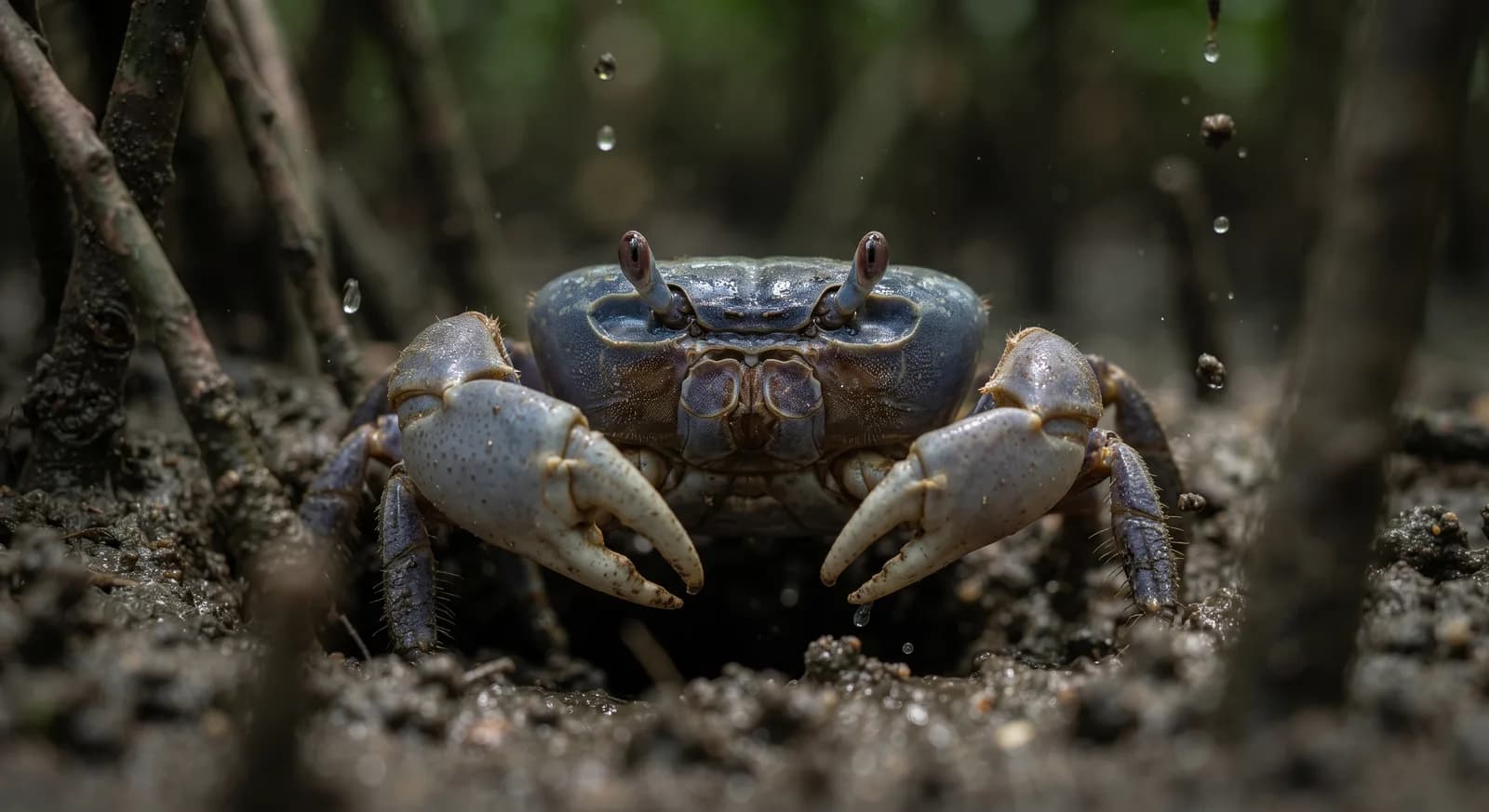
Its burrows aerate the soil and speed up nutrient recycling in the coastal forest.
From Moon Crab