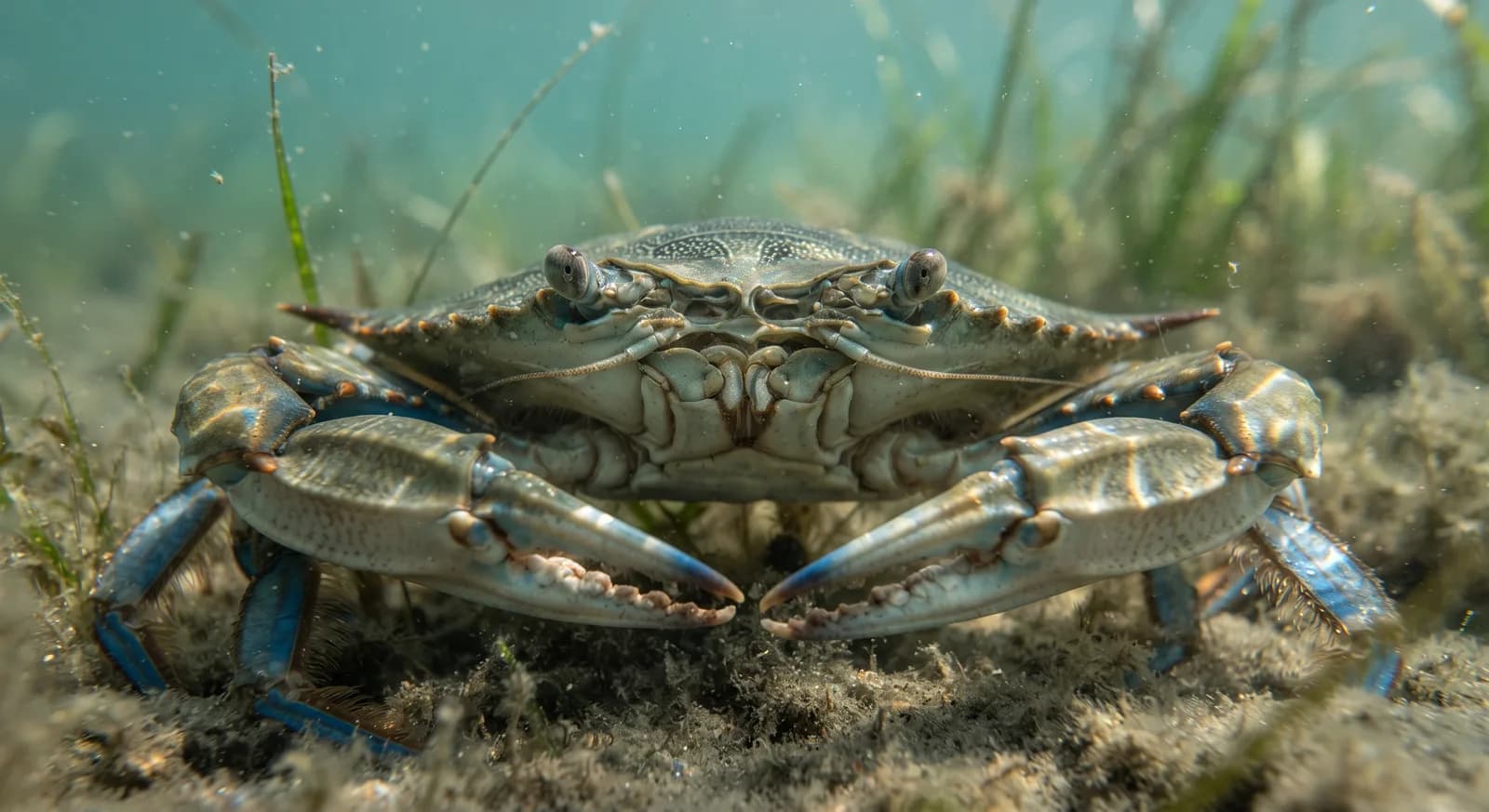
One of the 22 crabs on WAnimals
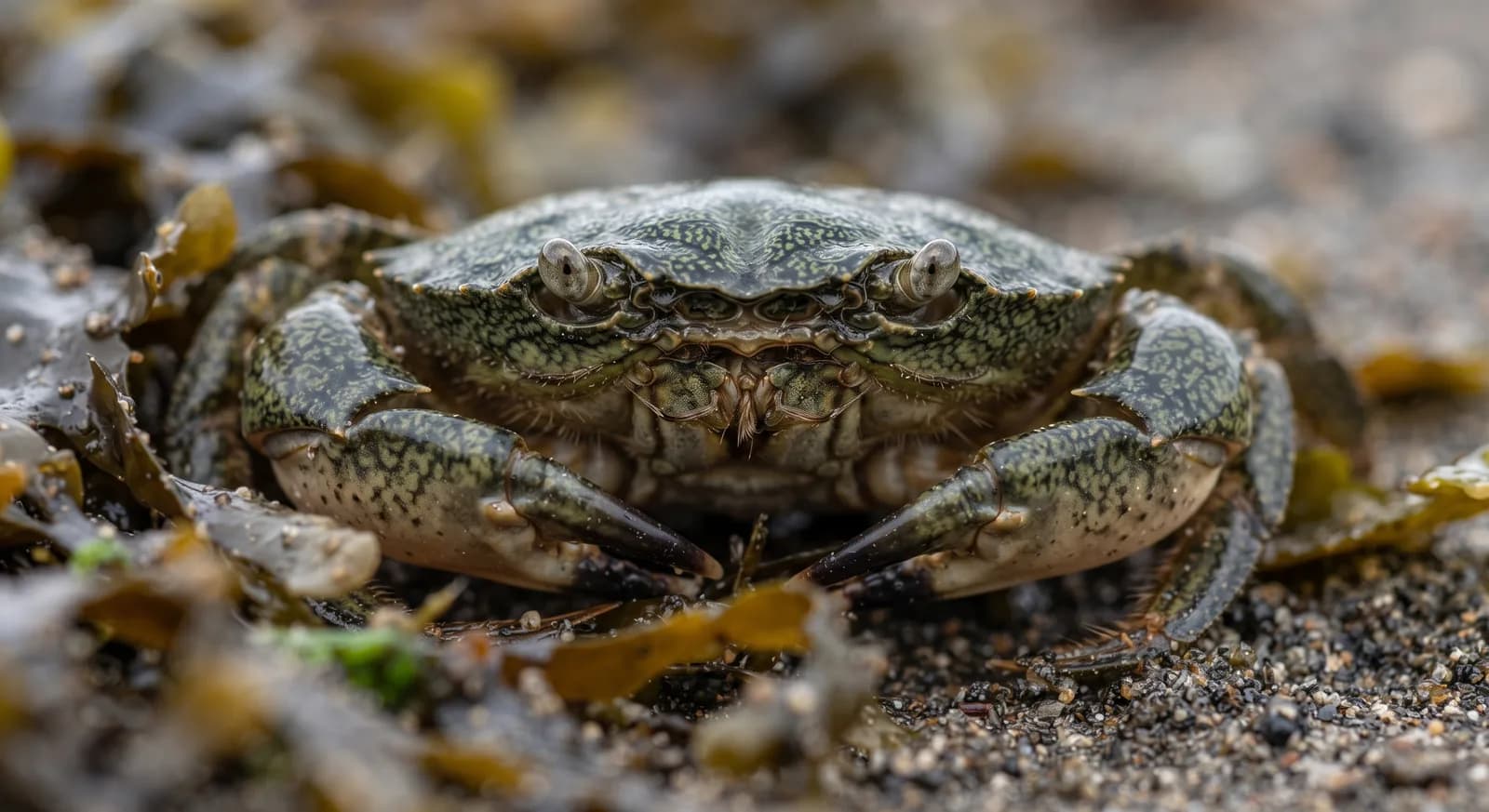
Malacostracans · Decapoda · Portunidae
Carcinus maenas
The species is abundant and widely distributed; it faces no significant short-term risk.
It is one of the 100 most damaging invasive species in the world according to the IUCN, tolerating an extraordinary range of salinity and temperature that has let it colonise coasts on every continent except Antarctica.
Size
4 cm – 9 cm
Life expectancy
5 years
Diet
Omnivore
Combines animal and plant food depending on availability.
Activity
Nocturnal
Active mainly at night.
Social structure
Solitary
Lives and hunts alone, joining others only to breed.
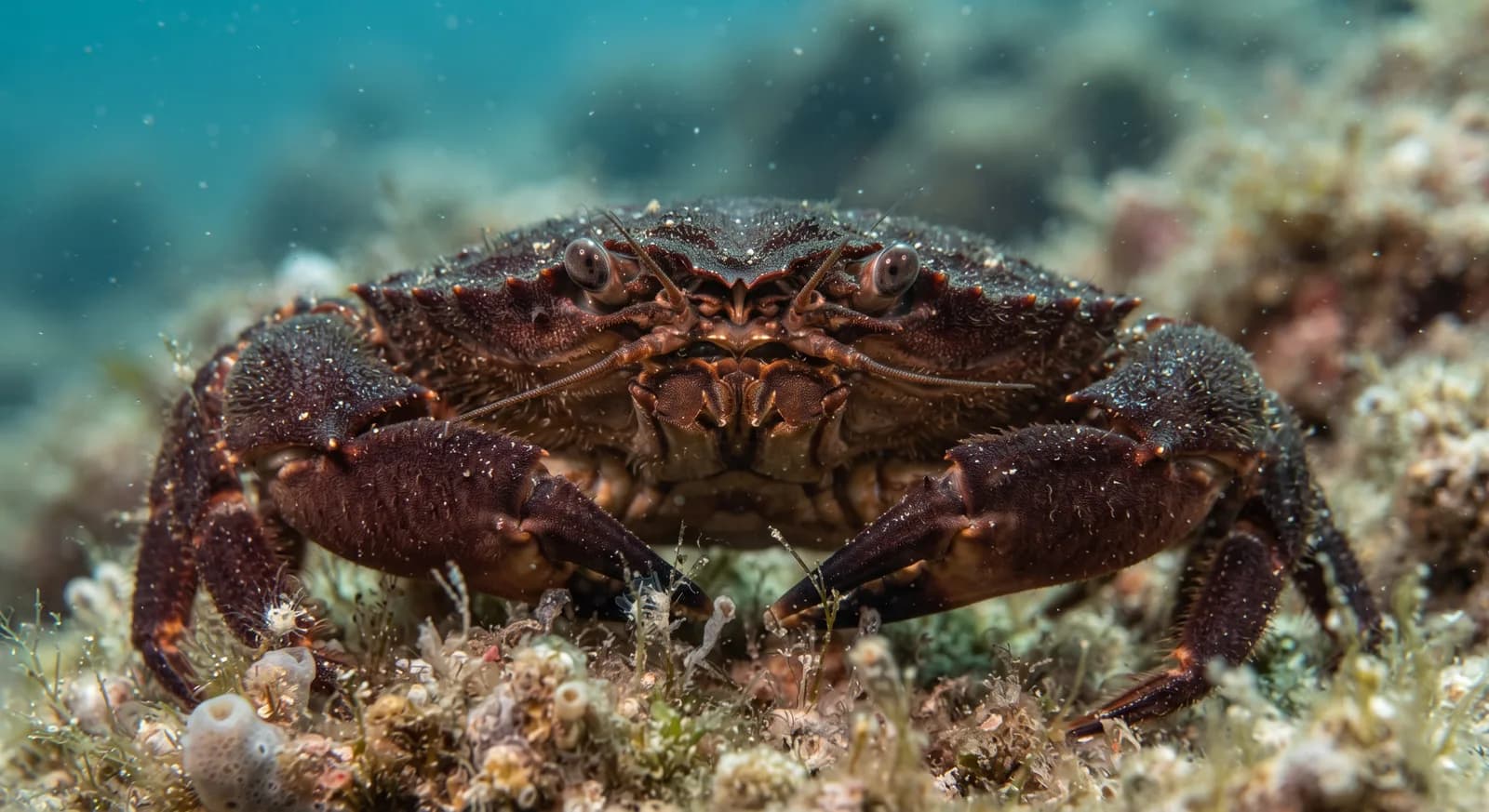
AI-generated images: illustrations, not photographs.
Sources consulted: Oxford Academic (Journal of Crustacean Biology, Maine study) · The Exotics Guide · Texas Invasive Species Institute · Vic High Marine · Animal Diversity Web · PMC (Southwestern Atlantic life-history study) · MDPI (life history population dynamics review)
Parks and dive sites where this species has been documented — showing 10 of 104.
Other species in the catalogue with the most in common with Green Crab — same habitat, park, country, tags or family.
Based on what we already know about green crab.
The pins mark the dive sites where its presence is documented.