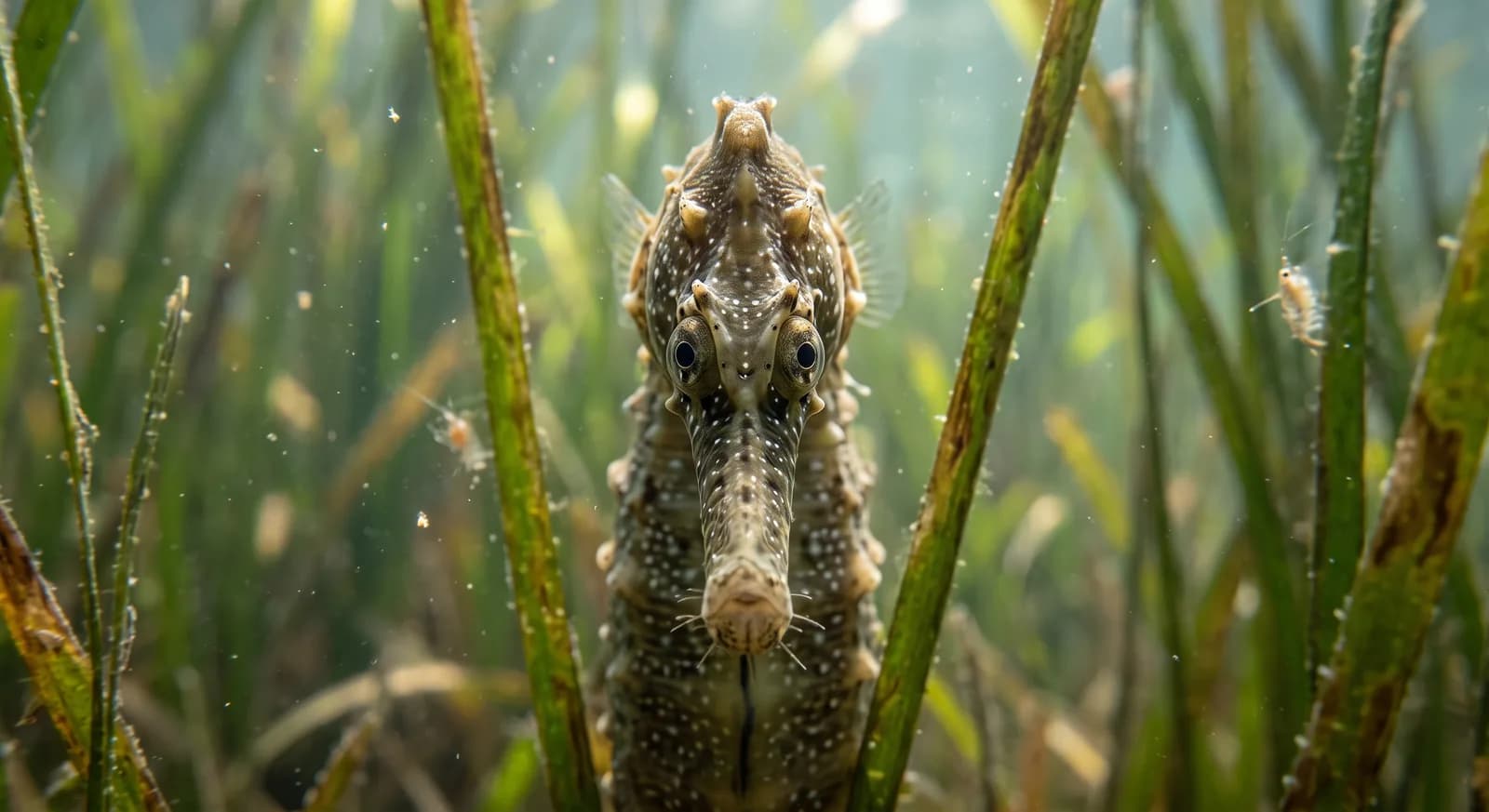
 Least Concern
Greater Pipefish
Syngnathus acus
A deep natural anchorage that was the base of the British Grand Fleet in both world wars. On 21 June 1919, Rear Admiral Ludwig von Reuter ordered the scuttling of the German High Seas Fleet interned there — 74 ships — wrongly convinced that the peace negotiations had broken down and that the British were about to seize the vessels. Some 50 ships went to the bottom within hours.
Depth
15–45 m
Recommended level
Advanced / technical
Average visibility
10 m
The remains of the German fleet are protected as scheduled monuments; HMS Royal Oak and HMS Vanguard are war graves and diving is prohibited without authorisation
The wrecks are covered by the UNESCO Convention on Underwater Cultural Heritage, having been submerged for more than 100 years
It is the greatest loss of tonnage recorded in a single day in history. Most of the fleet was later raised in one of the most ambitious salvage operations ever undertaken, begun by the engineer Ernest Cox, who had never raised a ship before and whose methods are still in use. Seven large ships remain on the seabed: the battleships König, Markgraf and Kronprinz Wilhelm and the light cruisers Brummer, Köln, Karlsruhe and Dresden. The thirteen German sailors killed that day are regarded as the last casualties of the First World War.
Sources consulted: Wikipedia (Scuttling of the German fleet at Scapa Flow); X-Ray Mag; NorthLink Ferries; scapaflowwrecks.com; EIVA/Sea War Museum; ww2wrecks.com
Which other dive sites are like this one?
Same country: United Kingdom
Same country: United Kingdom
Same country: United Kingdom
Based on what we already know about this dive site.
Share your experience diving or snorkelling at Scapa Flow.
Be the first to comment.
Water temperature
10 °C
Current
Moderate
Access
Boat
Best season
May-September
Recommended certification
Wreck Diver
Approx. price
90 USD / dive
Same country: United Kingdom
 United Kingdom