Skip to content
WAnimals
  • Map
  • Species
  • Parks
  • Diving
Log inCreate account
WAnimals

The guide for travellers and animal lovers: discover, plan and share your wild adventures around the world.

Discover wildlife

  • Species
  • Ecosystems
  • Glossary
  • Tags

Explore places

  • Map
  • Countries
  • Parks
  • Diving

Plan experiences

  • Guides

Learn

  • Blog

Resources

  • About us
  • How we build our profiles
  • Help centre
  • Contact
  • Install the app

Follow us

Account

  • Log in
  • Create account

© 2026 WAnimals. All rights reserved.

Terms of servicePrivacyCookiesLegal notice
MapSpeciesParksDiving
  1. Home
  2. Species
  3. Common Spider Crab
Common Spider Crab (Maja squinado)

Malacostracans · Decapoda · Majidae

Common Spider Crab

Maja squinado

Not Evaluated

It has not yet been assessed against the IUCN criteria.

Spotted something wrong?

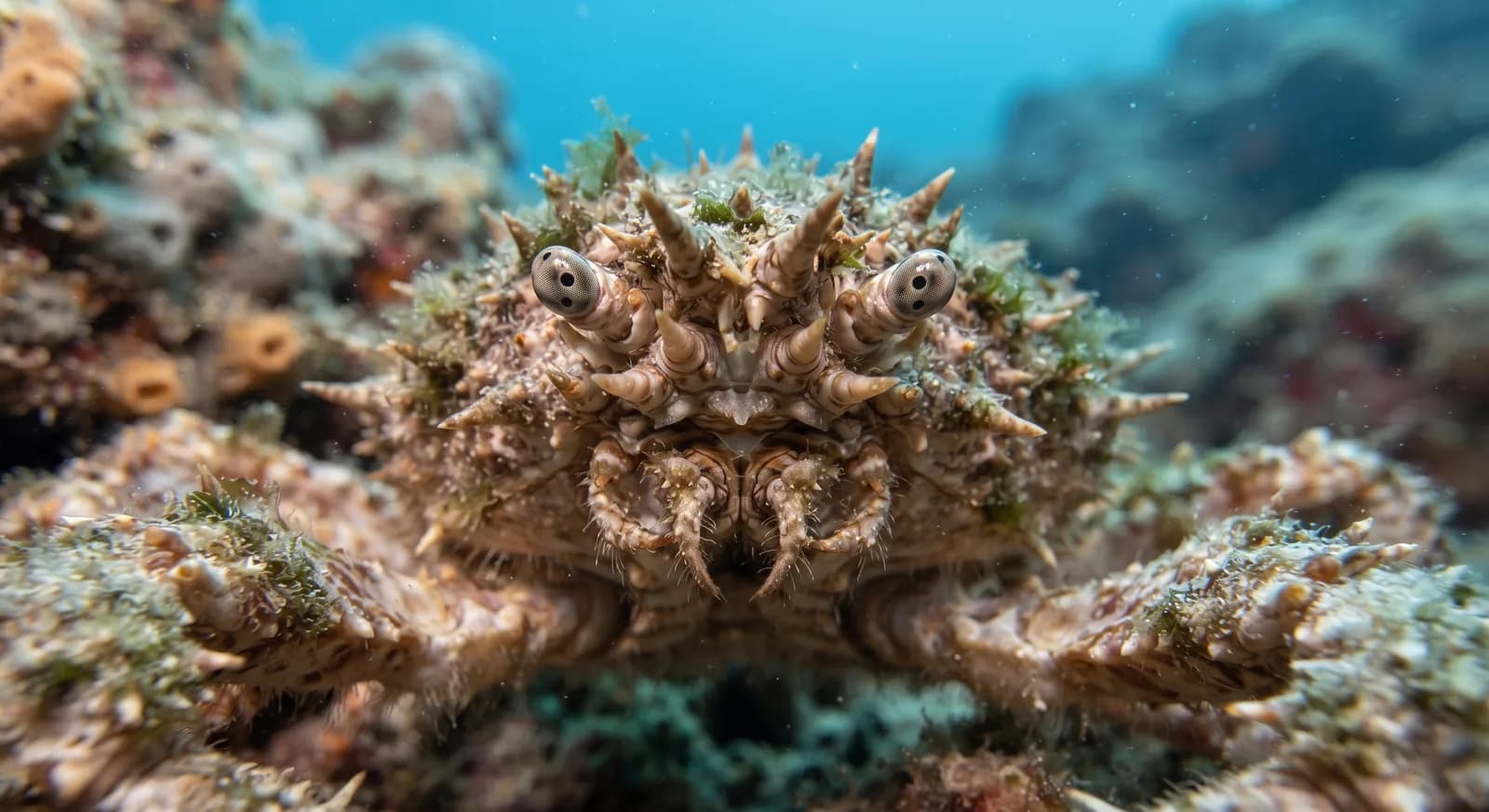
Maja squinado is a decapod crustacean of the infraorder Brachyura. It is a large migratory crustacean. Its carapace is covered in spines and protuberances and can measure up to 20 cm across.

Size

10 cm – 20 cm

Diet

Omnivore

Combines animal and plant food depending on availability.

Activity

Nocturnal

Active mainly at night.
Social structure

Colony

Lives in large concentrations, often for breeding reasons.

Ocean
29countries13parks75dive sites

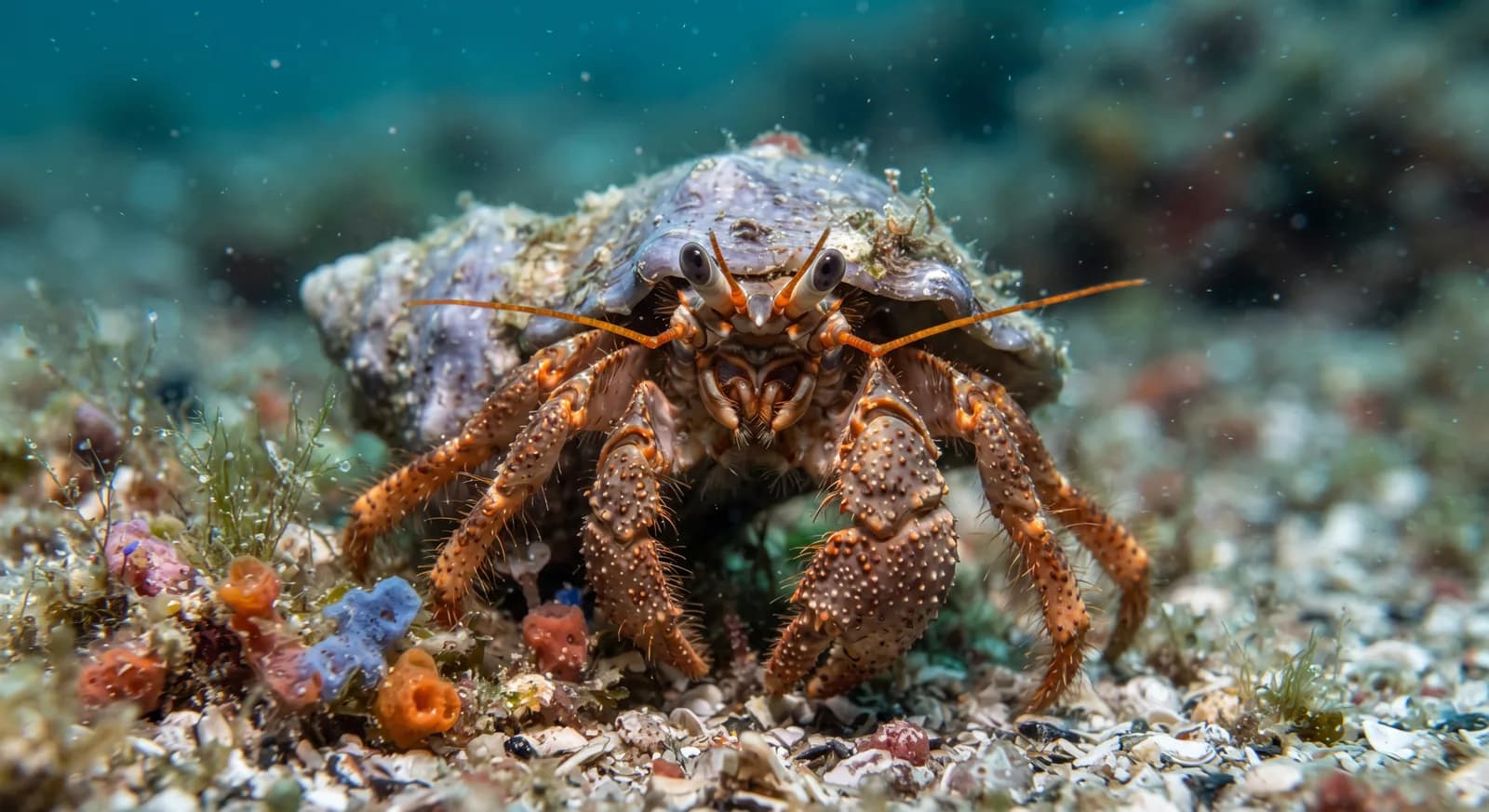
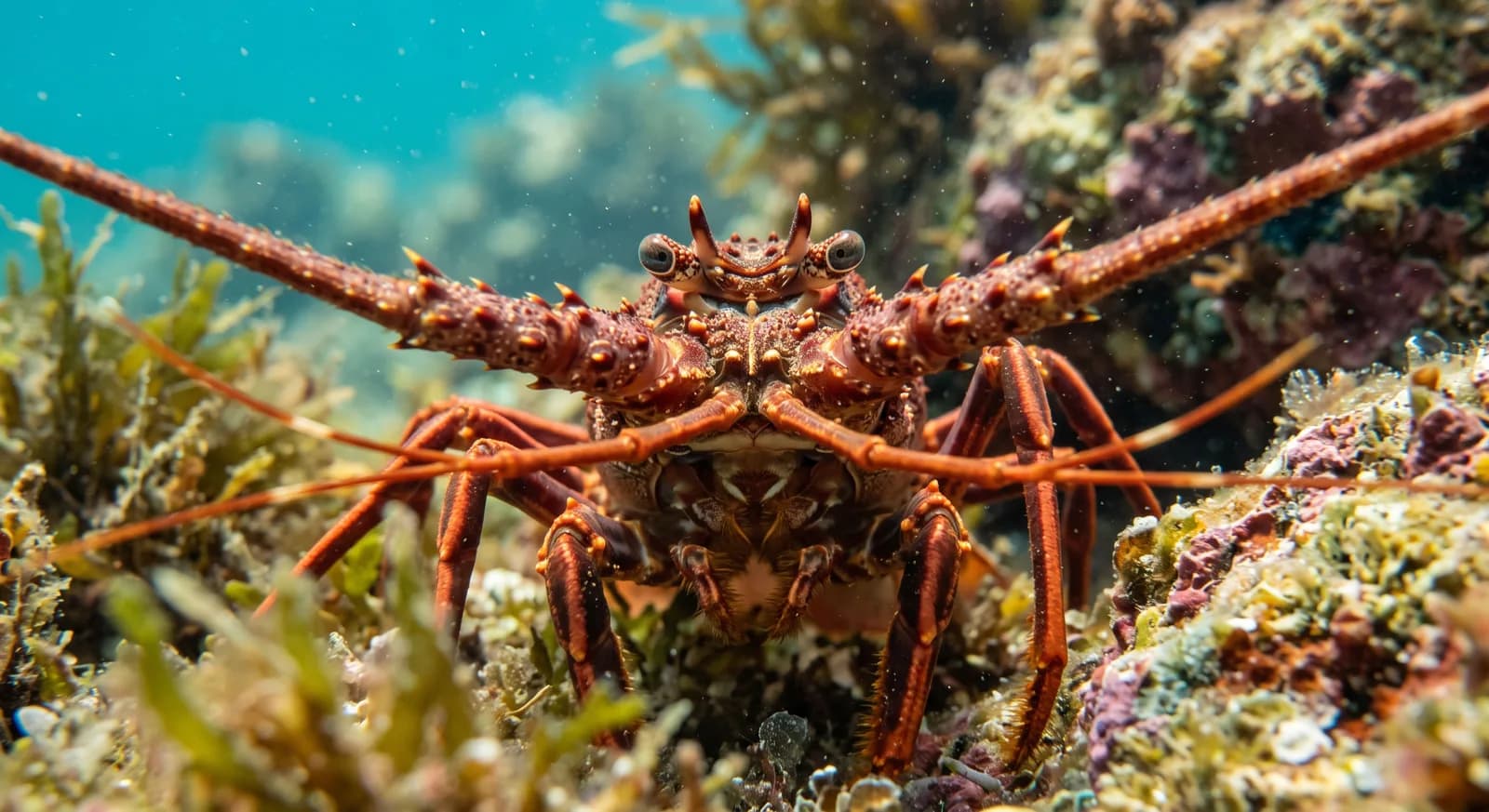
AI-generated images: illustrations, not photographs.

Fun facts

  • defensaIt decorates its own shell with scraps of seaweed and small fixed invertebrates, a living camouflage it renews from time to time.
  • It has a terminal moult: on reaching maturity it moults for the last time and never grows or changes its shell again for the rest of its life.
  • It makes seasonal migrations of tens of kilometres, and groups have been seen advancing in single file along the seabed.
  • It migrates en masse and in single file. In autumn the spider crabs gather and travel tens of kilometres across the seabed towards deeper water, in columns that have been filmed off Atlantic coasts.
  • And they pile up to moult: they form heaps of tens or hundreds of individuals, in which the soft, freshly moulted animals are protected at the centre by the hard-shelled ones.
  • It is a decorator crab: it covers its carapace with algae and sponges held on by hooked bristles, a camouflage it maintains throughout its juvenile life.
  • It stops growing on reaching maturity: its last moult is the final one, so an adult spider crab never moults again and its carapace becomes covered with epibionts over the years.
  • That makes it possible to estimate a specimen's age from the wear and encrustations on its carapace.
  • It is one of the most prized species in Galician shellfishing, and its fishery is regulated by minimum size and closed seasons.

Life cycle and biology

Skeleton type
Invertebrate - chitin exoskeleton (crustacean)
Habitat and environment
Sand, gravel and rock bottoms, from 5 to 120 m

Sources consulted: Wikipedia (es): Maja squinado

Where to find it

Best time: Autumn and winter, when it moves inshore

Loading map…

Where to see it

Parks and dive sites where this species has been documented — showing 20 of 88.

Related species

Other species in the catalogue with the most in common with Common Spider Crab — same habitat, park, country, tags or family.

Shares a park
Shares a park
Shares a park
Shares a park
Shares a park
Shares a park

Keep exploring

Based on what we already know about common spider crab.

Share an experience, a fun fact or a tip for seeing the common spider crab.
See full glossary
This page in other languages: Español · Deutsch · Français · Português · Italiano

The pins mark the parks and dive sites where its presence is documented.

See its range on the interactive map→
Pembrokeshire CoastUnited Kingdom
NorthumberlandUnited Kingdom
Cíes IslandsSpain
Ria FormosaPortugal
UrdaibaiSpain
ArrábidaPortugal
MadeiraPortugal
Sudoeste Alentejano e Costa VicentinaPortugal
BurrenIreland
Wild NephinIreland
Scapa FlowUnited Kingdom
Zenobia WreckCyprus
Medes IslandsSpain
Cap de CreusSpain
Zakynthos (loggerhead turtle)Greece
Kastellorizo (Blue Cave)Greece
Malta (Blue Hole Gozo / Um El Faroud)Malta
Tavolara (Sardinia)Italy
Plemmirio Marine Reserve (Sicily)Italy
Vis Island (wrecks)Croatia
See all 13 parks
See all 75 dive sites
Common Spiny LobsterVulnerable

Common Spiny Lobster

Palinurus elephas

Common Hermit CrabNot Evaluated

Common Hermit Crab

Pagurus bernhardus

Not Evaluated

Mediterranean Hermit Crab

Clibanarius erythropus

Speckled Sea LouseNot Evaluated

Speckled Sea Louse

Eurydice pulchra

Sand HopperNot Evaluated

Sand Hopper

Talitrus saltator

European Sand CumaceanNot Evaluated

European Sand Cumacean

Cumopsis goodsir

CountriesSpain
ParksPembrokeshire CoastUnited Kingdom
TagsOmnivore
Omnivore
Nocturnal
Colonial
Ocean
Crustacean

Europe18

Asia6

Africa5

Spain
Italy
United Kingdom
Greece
Croatia
Portugal
Albania
Bulgaria
Croatia
Cyprus
France
Gibraltar
Greece
Ireland
Italy
Malta
Monaco
Montenegro
Portugal
Romania
Slovenia
Spain
Ukraine
United Kingdom
Georgia
Israel
Lebanon
Palestine
Syria
Türkiye
Algeria
Egypt
Libya
Morocco
Tunisia