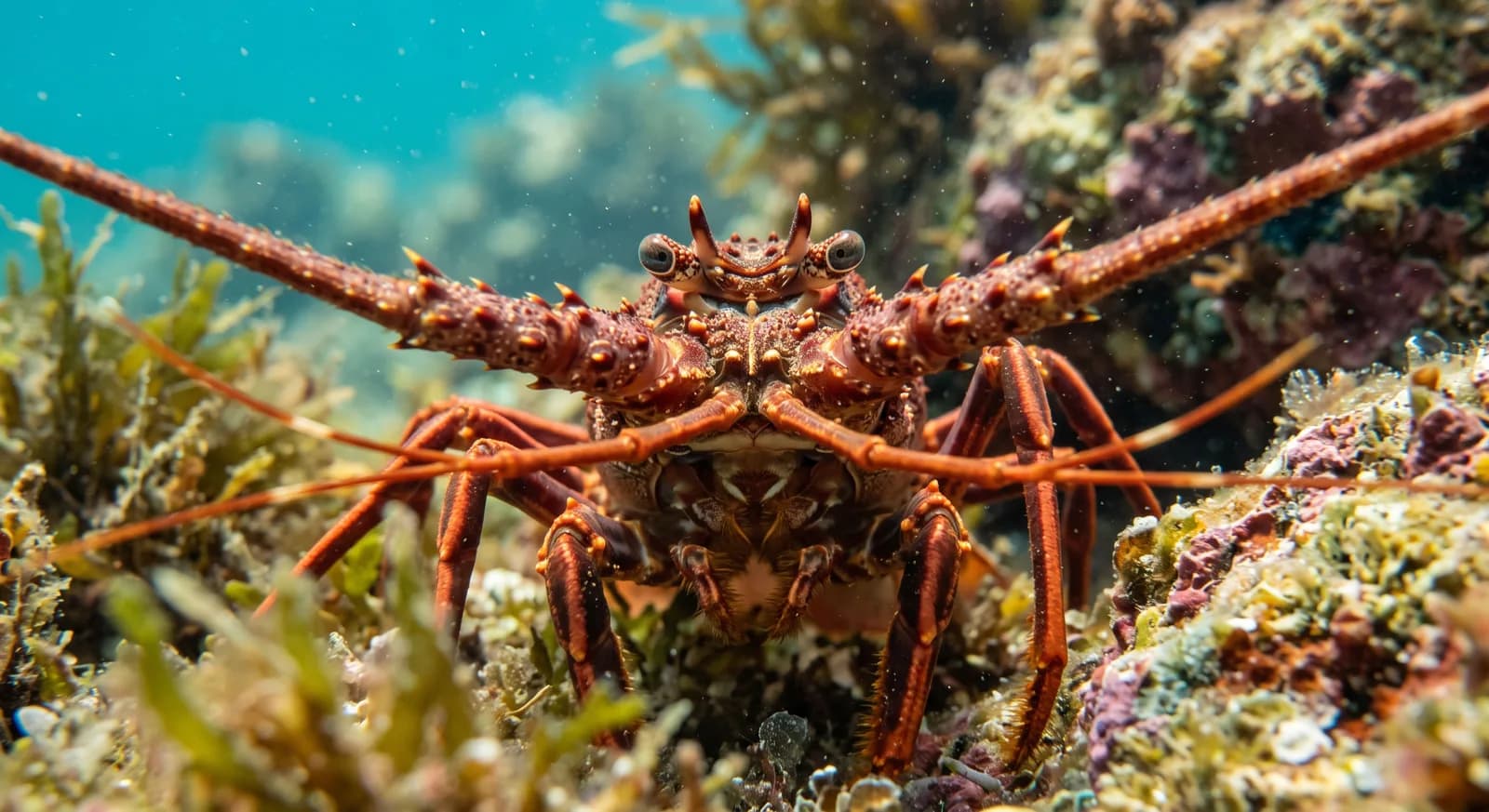
One of the 4 spiny lobsters on WAnimals
Malacostracans · Decapoda · Palinuridae
Palinurus elephas
At high risk of extinction in the wild over the medium term.
Unlike the European lobster it has no large front claws, but a pair of long spiny antennae it uses in defence.
Weight
up to 5 kg
Size
up to 50 cm
Life expectancy
17 years
Diet
Omnivore
Combines animal and plant food depending on availability.
Activity
Nocturnal
Active mainly at night.
Social structure
Solitary
Lives and hunts alone, joining others only to breed.
Sighting difficulty
Moderate
AI-generated images: illustrations, not photographs.
Sources consulted: FAO Species Catalogue (referencia general de langostas Palinuridae); SeaLifeBase; fuentes combinadas sobre biología de langostas espinosas del Mediterráneo y Atlántico este
Parks and dive sites where this species has been documented — showing 20 of 97.
Other species in the catalogue with the most in common with Common Spiny Lobster — same habitat, park, country, tags or family.
The common spiny lobster is classified as vulnerable. Organisations such as the IUCN, WWF and the Wildlife Conservation Society work specifically on its conservation and that of its habitat; looking into their programmes is a good starting point if you want to get involved.
It's documented in 16 protected areas — one reason why protecting these places matters for its conservation.
Based on what we already know about common spiny lobster.
Share an experience, a fun fact or a tip for seeing the common spiny lobster.
Be the first to comment.
The pins mark the parks and dive sites where its presence is documented.