Skip to content
WAnimals
  • Map
  • Species
  • Parks
  • Diving
Log inCreate account
WAnimals

The guide for travellers and animal lovers: discover, plan and share your wild adventures around the world.

Discover wildlife

  • Species
  • Ecosystems
  • Glossary
  • Tags

Explore places

  • Map
  • Countries
  • Parks
  • Diving

Plan experiences

  • Guides

Learn

  • Blog

Resources

  • Help centre
  • Contact
  • Install the app

Follow us

Account

  • Log in
  • Create account

© 2026 WAnimals. All rights reserved.

About usHow we build our profilesTerms of servicePrivacyLegal notice
MapSpeciesParksDiving
  1. Home
  2. Species
  3. European Sand Cumacean
European Sand Cumacean (Cumopsis goodsir)

Malacostracans · Cumacea · Bodotriidae

European Sand Cumacean

Cumopsis goodsir

Not Evaluated

It has not yet been assessed against the IUCN criteria.

Spotted something wrong?

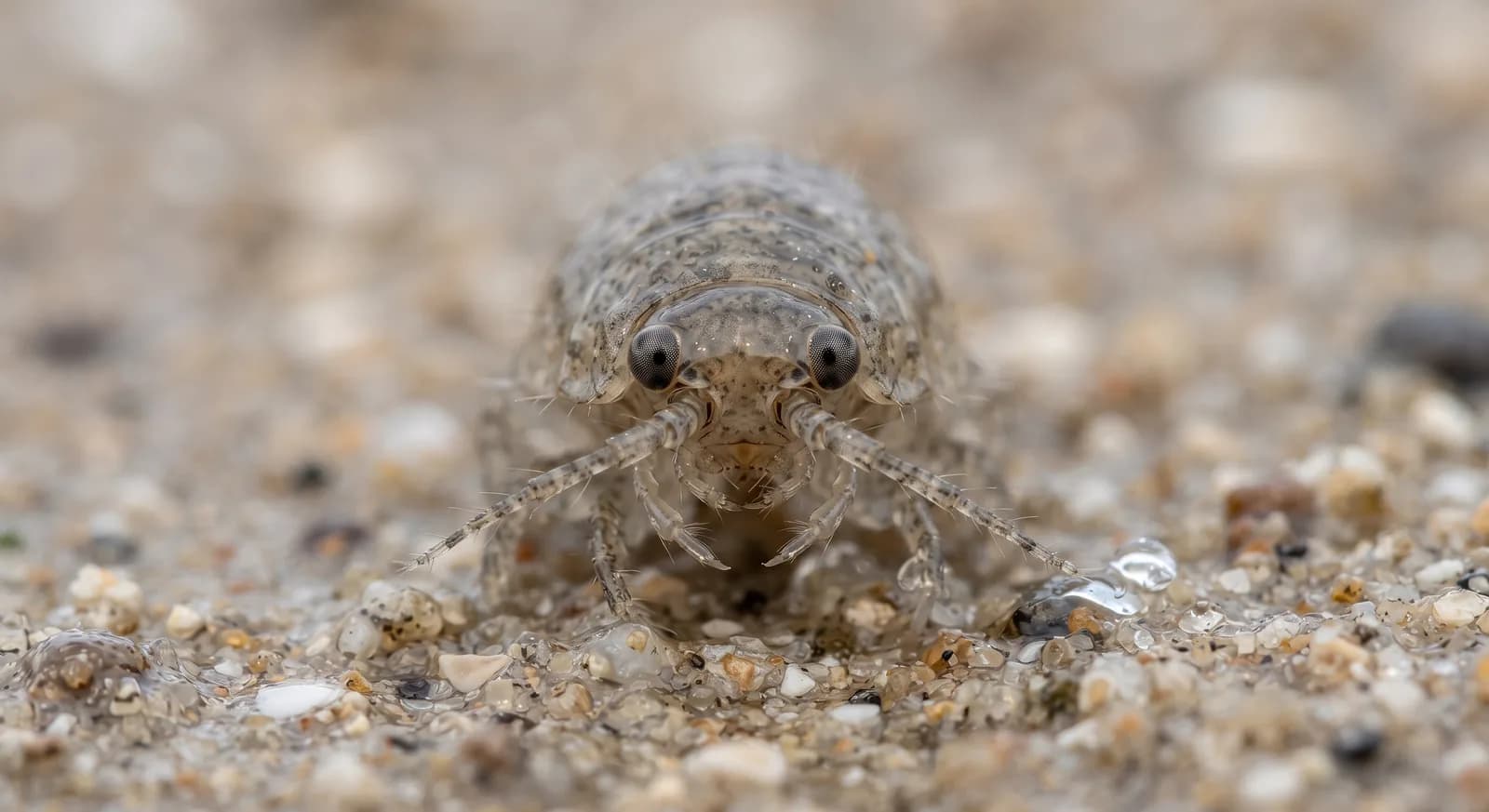
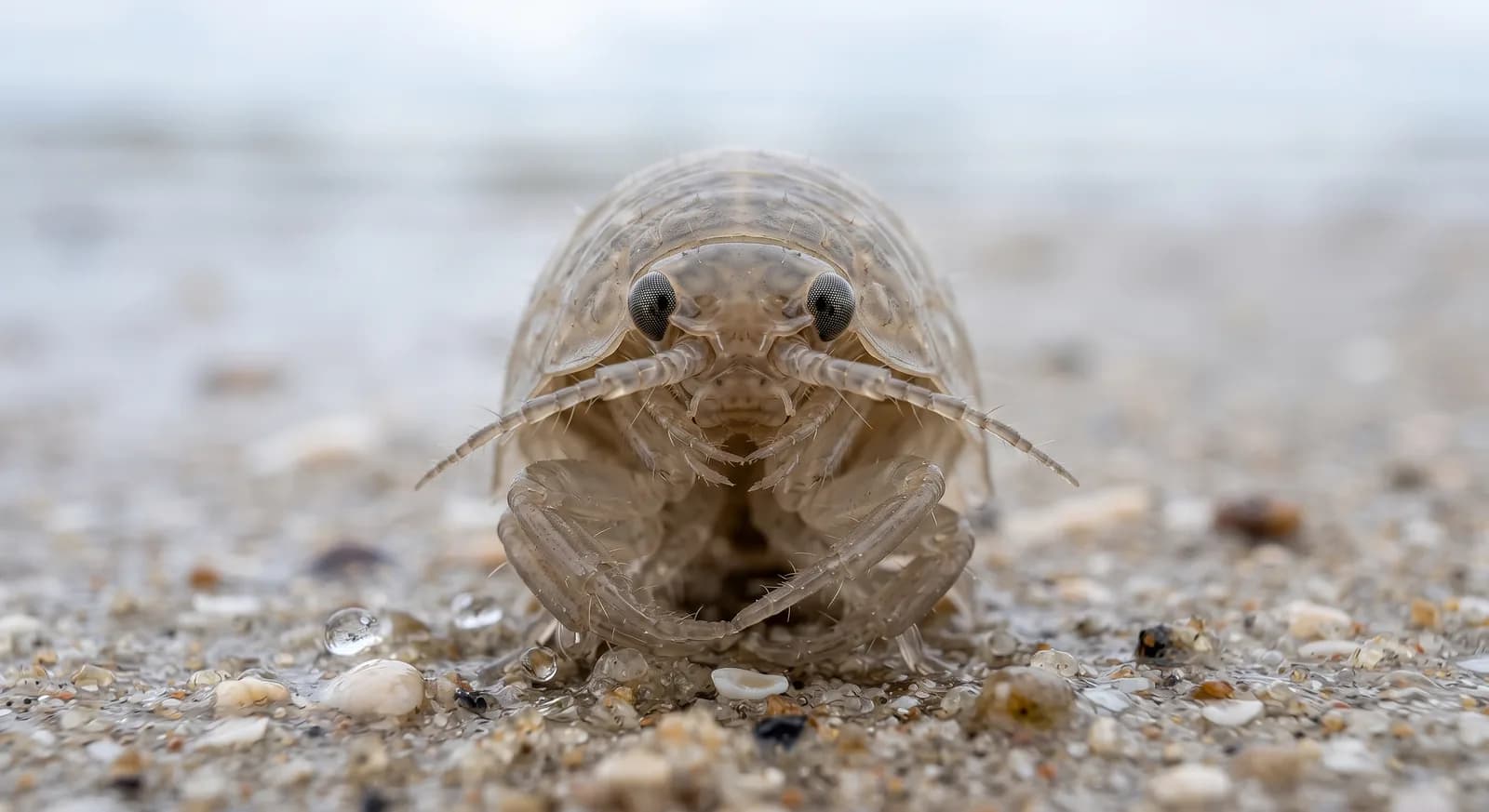
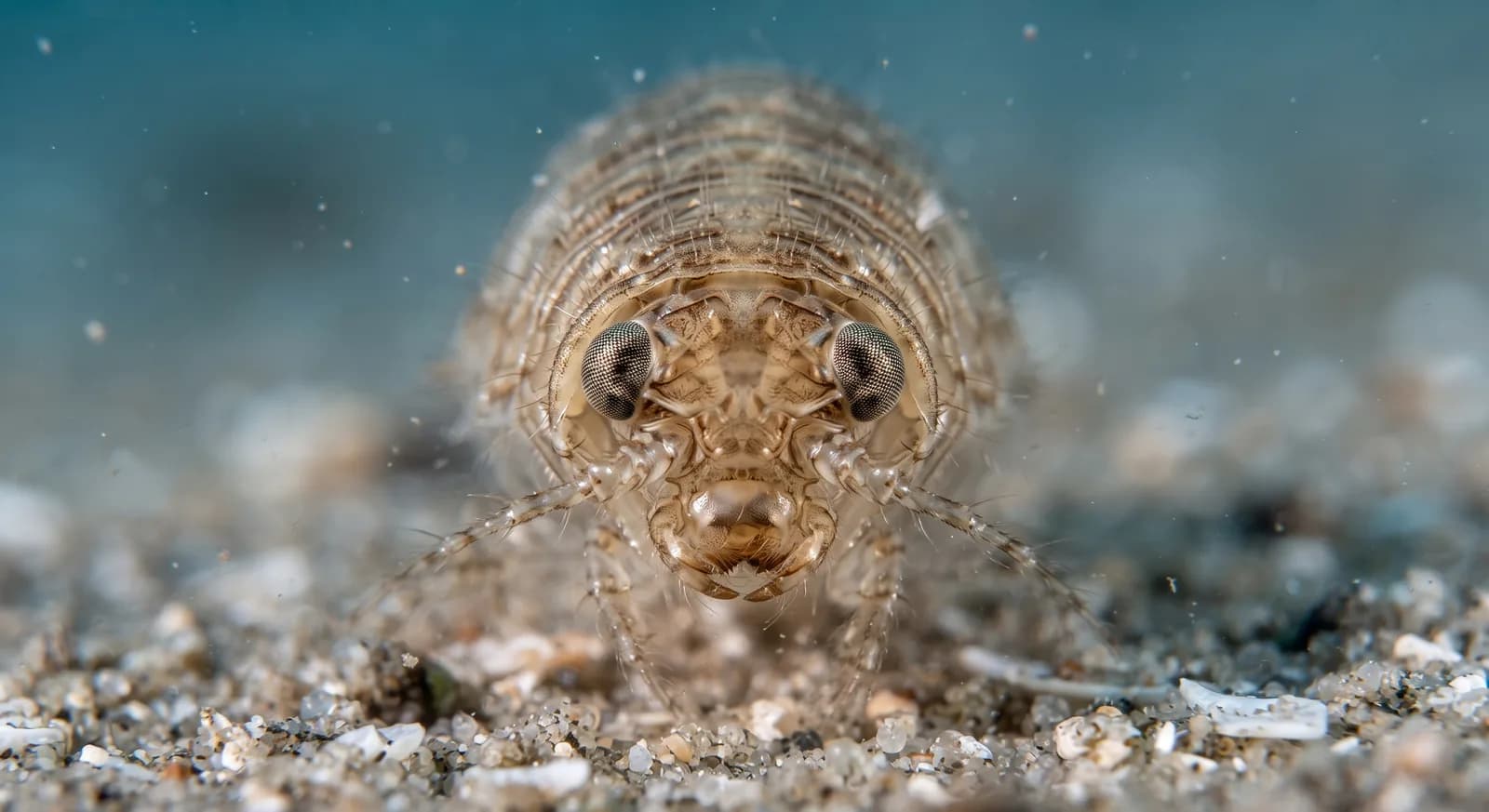
A minute cumacean, with a swollen carapace and a slender abdomen, which lives buried in the sand of beaches. At night the males emerge and swim in swarms over the bottom in search of females, while the females stay beneath the sand.

Size

up to 0.8 cm

Diet

Omnivore

Combines animal and plant food depending on availability.

Activity

Nocturnal

Active mainly at night.
Social structure

Colony

Lives in large concentrations, often for breeding reasons.

Sighting difficulty

Unknown

Ocean
13countries29parks33dive sites

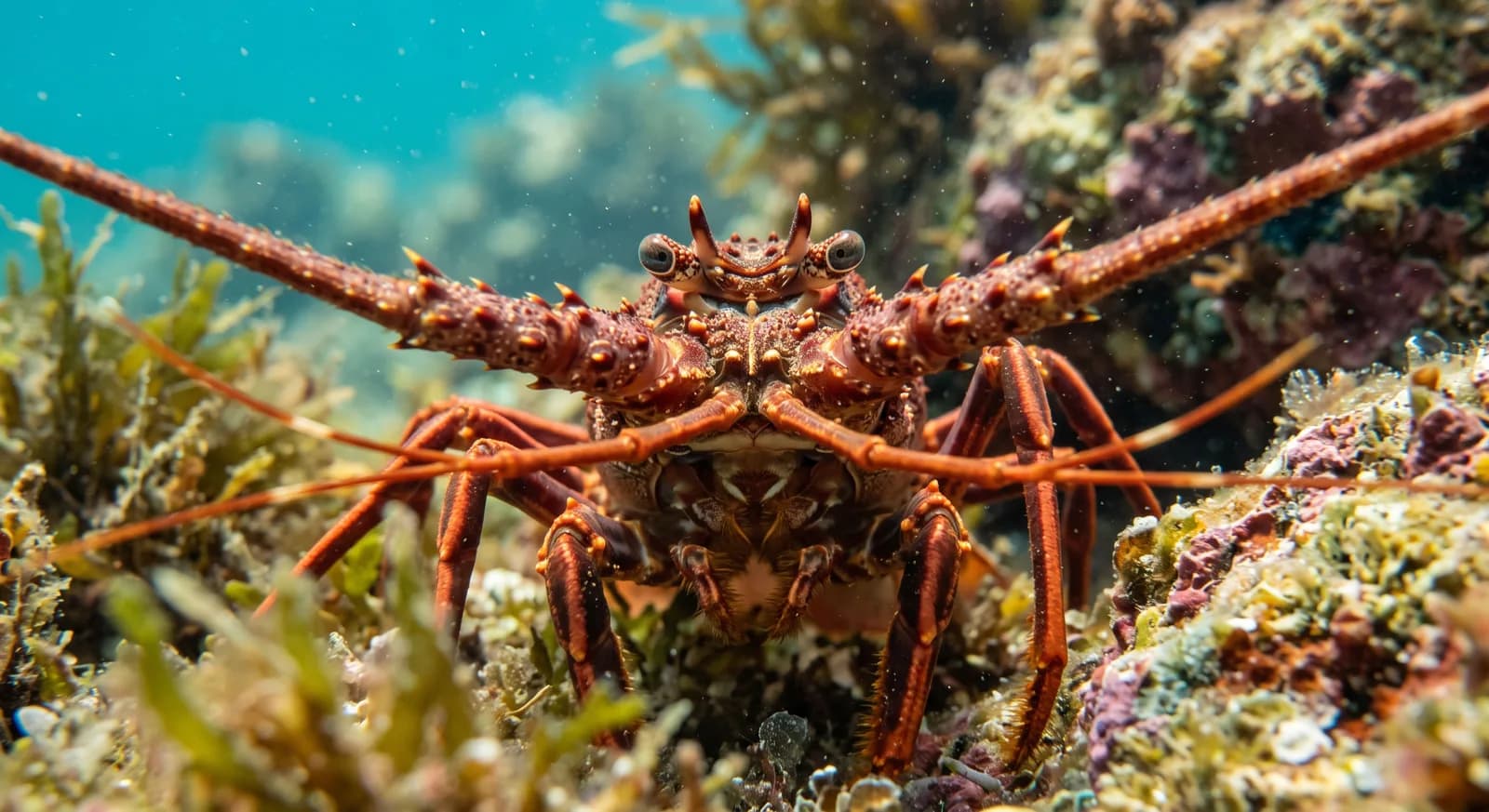
AI-generated images: illustrations, not photographs.

Fun facts

  • Its outline, with a swollen front end and a slender tail, has earned it the name of comma shrimp.
  • It is a staple in the diet of juvenile flatfish and of wading birds on sandy beaches.
  • Cumaceans have an unmistakable outline: a swollen carapace at the front and a long, narrow abdomen, which has earned them the name comma shrimps.
  • It buries itself in the sand by day and comes out to swim at night, a pattern that makes it regular prey for flatfish and waders.
  • It feeds by filtering the organic film and the diatoms clinging to the sand grains.

Life cycle and biology

Habitat and environment
Fine intertidal sand on beaches of the north-eastern Atlantic and the Mediterranean

Sources consulted: Bibliografía de Cumacea del Atlántico nororiental; MarLIN

Where to find it

Loading map…

The pins mark the parks and dive sites where its presence is documented.

Where to see it

Parks and dive sites where this species has been documented — showing 20 of 62.

Related species

Other species in the catalogue with the most in common with European Sand Cumacean — same habitat, park, country, tags or family.

Shares a park
Shares a park
Shares a park
Shares a park
Shares a park
Shares a park

Keep exploring

Based on what we already know about european sand cumacean.

Comments

Share an experience, a fun fact or a tip for seeing the european sand cumacean.

Be the first to comment.

See full glossary
This page in other languages: Español · Deutsch · Français · Português · Italiano
See its range on the interactive map→
CalanquesFrance
Wadden Sea National ParkDenmark
Wadden SeaGermany
Port-CrosFrance
Pembrokeshire CoastUnited Kingdom
NorthumberlandUnited Kingdom
Cabrera ArchipelagoSpain
Ebro DeltaSpain
Cíes IslandsSpain
Ria FormosaPortugal
Scapa FlowUnited Kingdom
Medes IslandsSpain
Cap de CreusSpain
Calanques of MarseilleFrance
Scandola Reserve (Corsica)France
Farne IslandsUnited Kingdom
Lofoten (orcas)Norway
SaltstraumenNorway
Columbretes IslandsSpain
Formentera (Es Freus)Spain
See all 29 parks
See all 33 dive sites
Common Spiny LobsterVulnerable

Common Spiny Lobster

Palinurus elephas

Common Hermit CrabNot Evaluated

Common Hermit Crab

Pagurus bernhardus

Common Spider CrabNot Evaluated

Common Spider Crab

Maja squinado

Not Evaluated

Mediterranean Hermit Crab

Clibanarius erythropus

Speckled Sea LouseNot Evaluated

Speckled Sea Louse

Eurydice pulchra

Sand HopperNot Evaluated

Sand Hopper

Talitrus saltator

CountriesSpain
ParksCalanquesFrance
TagsOmnivore
Omnivore
Nocturnal
Colonial
Ocean
Crustacean

Europe12

Africa1

Spain
United Kingdom
France
Portugal
Ireland
Denmark
Belgium
Denmark
France
Germany
Iceland
Ireland
Netherlands
Norway
Portugal
Spain
Sweden
United Kingdom
Morocco