Skip to content
WAnimals
  • Map
  • Species
  • Parks
  • Diving
Log inCreate account
WAnimals

The guide for travellers and animal lovers: discover, plan and share your wild adventures around the world.

Discover wildlife

  • Species
  • Ecosystems
  • Glossary
  • Tags

Explore places

  • Map
  • Countries
  • Parks
  • Diving

Plan experiences

  • Guides

Learn

  • Blog

Resources

  • Help centre
  • Contact
  • Install the app

Follow us

Account

  • Log in
  • Create account

© 2026 WAnimals. All rights reserved.

About usHow we build our profilesTerms of servicePrivacyLegal notice
MapSpeciesParksDiving
  1. Home
  2. Species
  3. Velvet Swimming Crab
Velvet Swimming Crab (Necora puber)

Malacostracans · Decapoda · Portunidae

Velvet Swimming Crab

Necora puber

Not Evaluated

It has not yet been assessed against the IUCN criteria.

Spotted something wrong?

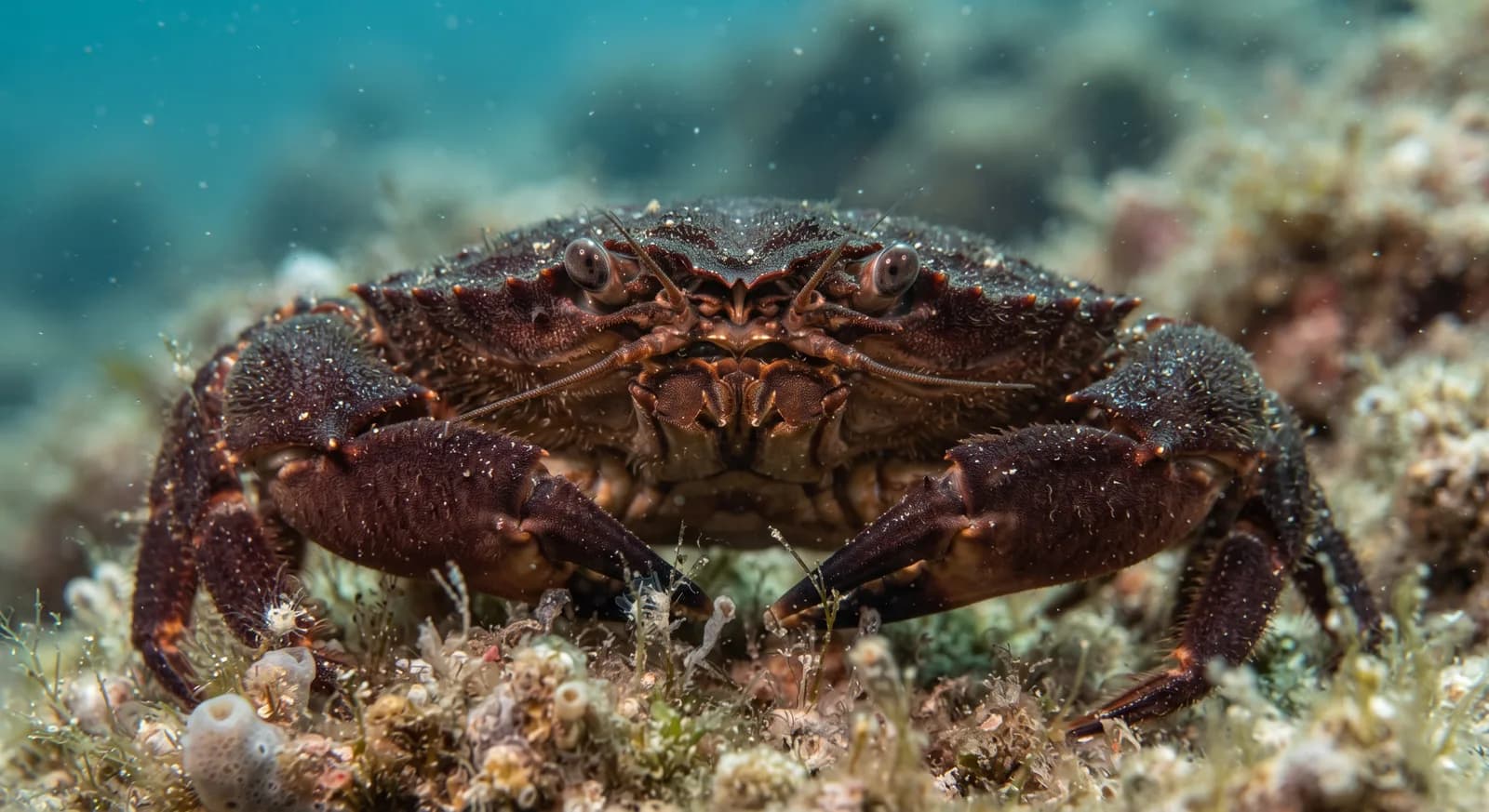
The velvet swimming crab is a decapod crustacean of the infraorder Brachyura. It belongs to the family Portunidae, which includes the so-called swimming crabs, and uses its last pair of legs to swim. It is a medium-sized crab much prized in cooking.

Size

up to 15 cm

Diet

Omnivore

Combines animal and plant food depending on availability.

Activity

Nocturnal

Active mainly at night.
Social structure

Solitary

Lives and hunts alone, joining others only to breed.

Sighting difficulty

Unknown

Ocean
19countries21parks62dive sites2same family

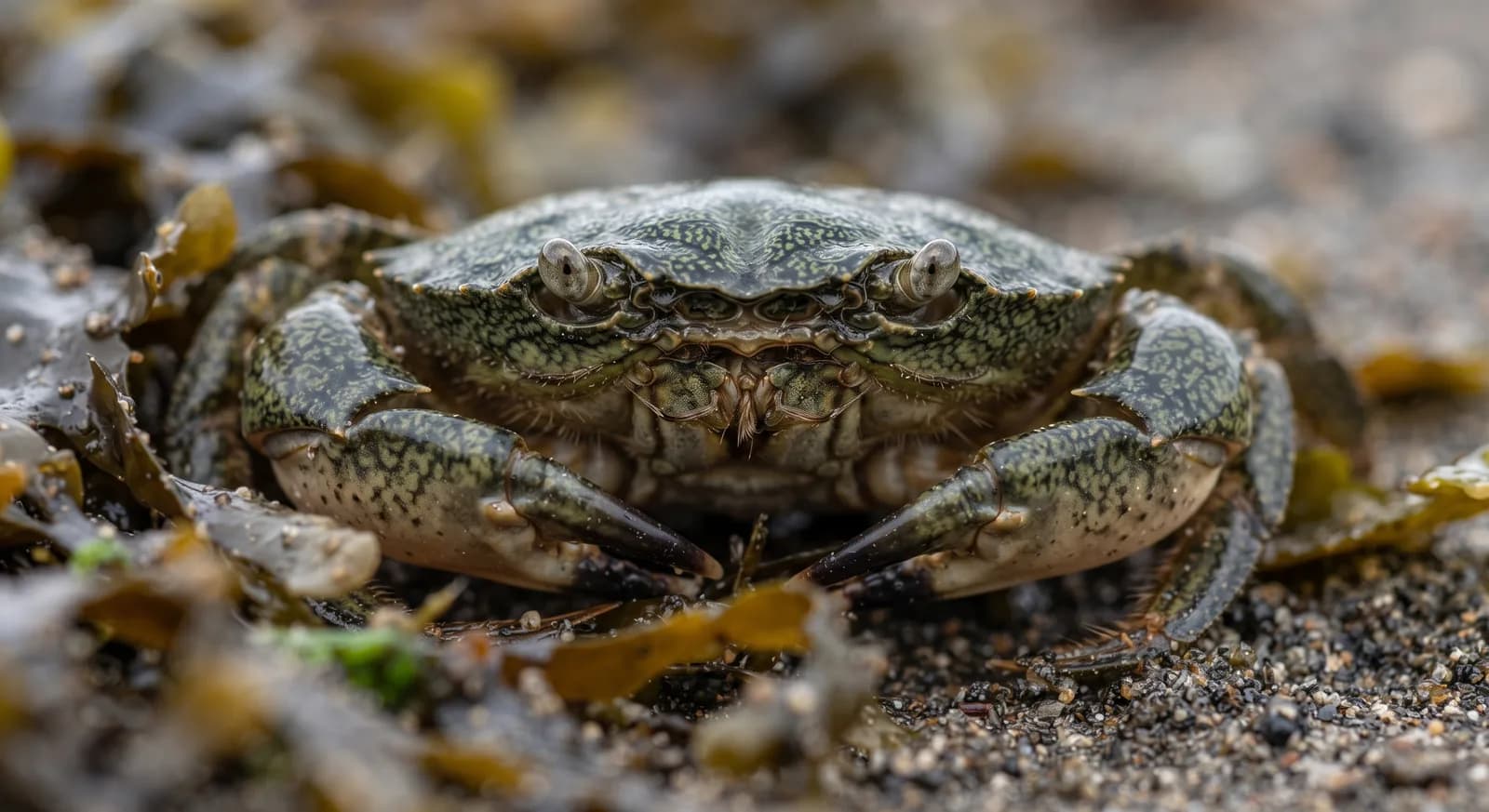
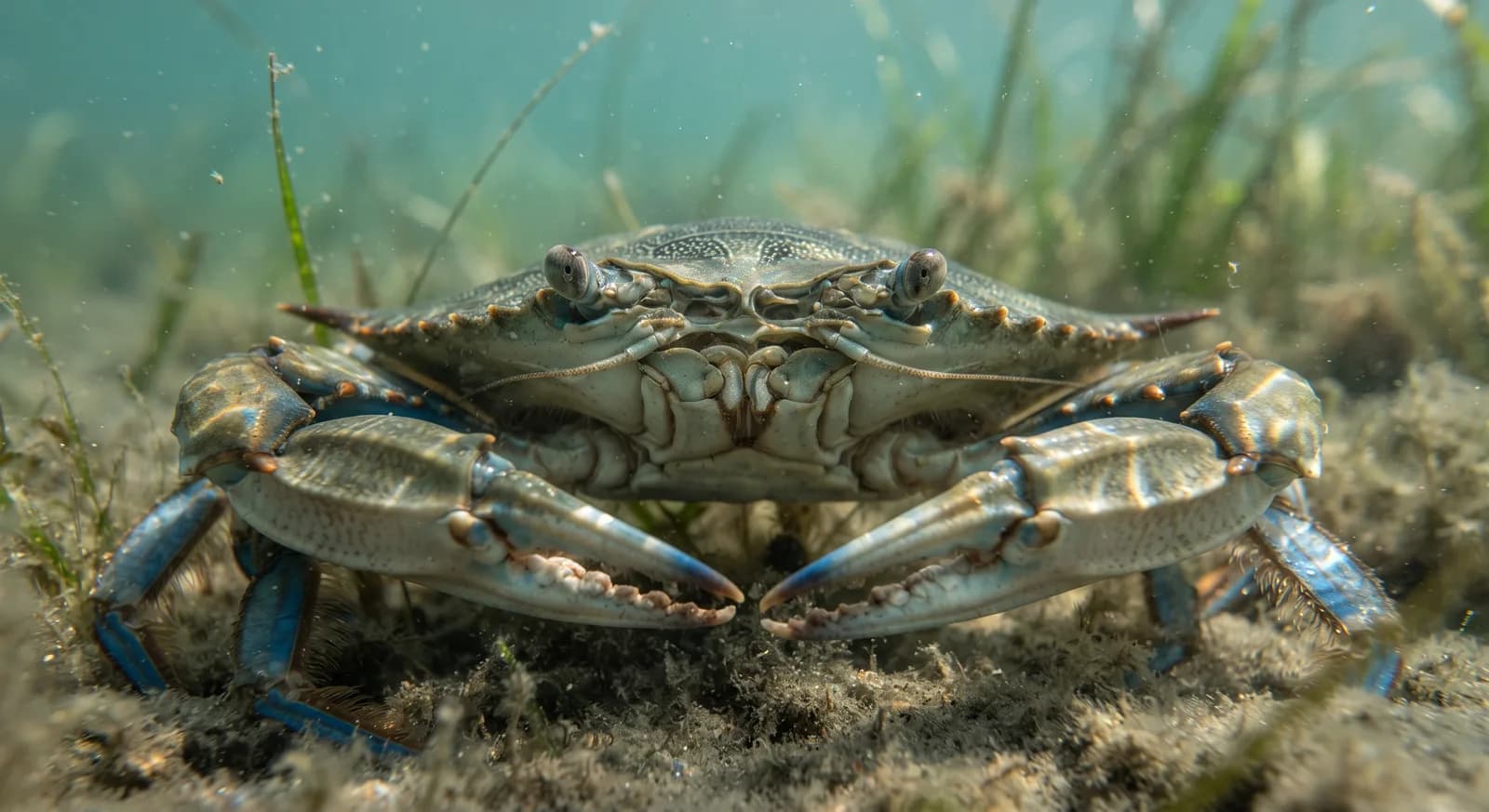
AI-generated images: illustrations, not photographs.

Fun facts

  • GeneralIt has red eyes and its last pair of legs flattened into paddles for swimming.
  • It is called the velvet crab for the fine down covering its carapace, but its other nickname, devil crab, comes from its bright red eyes and its temper: it rears up and defends itself with its claws rather than fleeing.
  • The last pair of legs is flattened into paddles, which lets it swim fast, unlike most bottom-dwelling crabs.
  • It is the largest swimming crab in British waters.
  • The Scottish fishery grew after the Spanish one declined in the 1980s.
  • Ocean acidification is a concern because of its effect on the species' exoskeleton.

Life cycle and biology

Skeleton type
Invertebrate - articulated calcareous exoskeleton (crustacean)
Habitat and environment
Weedy rocky bottoms of the shore and down to 70 m
Sexual maturity
Between one and one and a half years old, at 4 or 5 cm
Litter / clutch size
Between 5,000 and 278,000 eggs per female in Scottish populations

Sources consulted: https://es.wikipedia.org/wiki/Necora_puber

Where to find it

Loading map…

Where to see it

Parks and dive sites where this species has been documented — showing 20 of 83.

Related species

Other species in the catalogue with the most in common with Velvet Swimming Crab — same habitat, park, country, tags or family.

Same taxonomic family
Shares a park
Shares a park
Shares a park
Shares a park

Keep exploring

Based on what we already know about velvet swimming crab.

Comments

Share an experience, a fun fact or a tip for seeing the velvet swimming crab.

Be the first to comment.

See full glossary
This page in other languages: Español · Deutsch · Français · Português · Italiano

The pins mark the parks and dive sites where its presence is documented.

See its range on the interactive map→
Doñana National ParkSpain
Pembrokeshire CoastUnited Kingdom
NorthumberlandUnited Kingdom
Cíes IslandsSpain
Ria FormosaPortugal
KosterhavetSweden
Fragas do EumeSpain
UrdaibaiSpain
ArrábidaPortugal
Sudoeste Alentejano e Costa VicentinaPortugal
Scapa FlowUnited Kingdom
Medes IslandsSpain
Cap de CreusSpain
El Hierro / La RestingaSpain
Museo Atlántico (Lanzarote)Spain
Zakynthos (loggerhead turtle)Greece
Kastellorizo (Blue Cave)Greece
Tavolara (Sardinia)Italy
Plemmirio Marine Reserve (Sicily)Italy
Calanques of MarseilleFrance
See all 21 parks
See all 62 dive sites
Blue CrabNot Evaluated

Blue Crab

Callinectes sapidus

Green CrabLeast Concern

Green Crab

Carcinus maenas

Not Evaluated

Edible Crab

Cancer pagurus

Common LobsterLeast Concern

Common Lobster

Homarus gammarus

Common Spiny LobsterVulnerable

Common Spiny Lobster

Palinurus elephas

Common Hermit CrabNot Evaluated

Common Hermit Crab

Pagurus bernhardus

CountriesSpain
ParksDoñana National ParkSpain
TagsOmnivore
Omnivore
Nocturnal
Solitary
Ocean
Crustacean

Europe14

Africa4

Asia1

Spain
Italy
United Kingdom
Greece
Portugal
France
Belgium
Denmark
France
Germany
Greece
Iceland
Ireland
Italy
Netherlands
Norway
Portugal
Spain
Sweden
United Kingdom
Algeria
Mauritania
Morocco
Tunisia
Türkiye