Skip to content
WAnimals
  • Map
  • Species
  • Parks
  • Diving
Log inCreate account
WAnimals

The guide for travellers and animal lovers: discover, plan and share your wild adventures around the world.

Discover wildlife

  • Species
  • Ecosystems
  • Glossary
  • Tags

Explore places

  • Map
  • Countries
  • Parks
  • Diving

Plan experiences

  • Guides

Learn

  • Blog

Resources

  • Help centre
  • Contact
  • Install the app

Follow us

Account

  • Log in
  • Create account

© 2026 WAnimals. All rights reserved.

About usHow we build our profilesTerms of servicePrivacyLegal notice
MapSpeciesParksDiving
  1. Home
  2. Species
  3. Red Lionfish
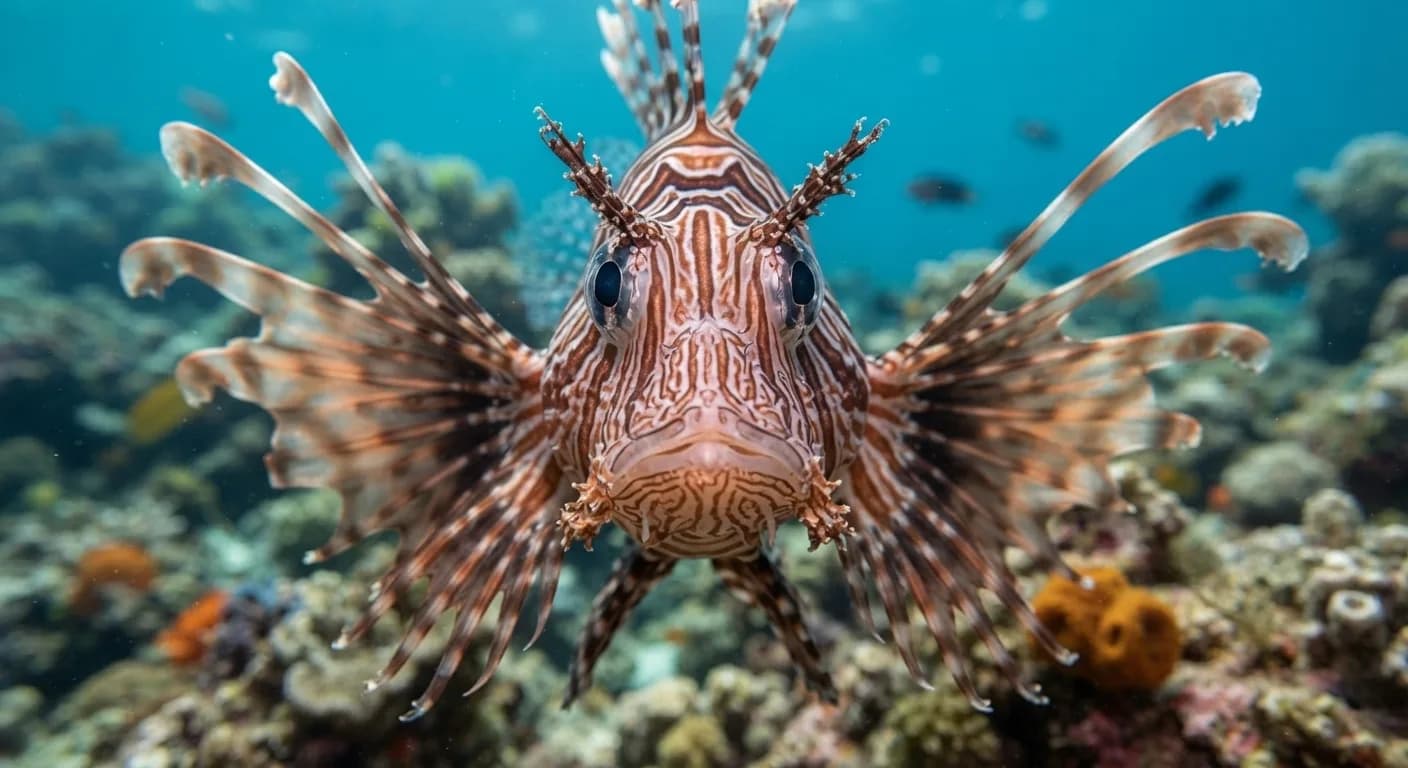
Red Lionfish (Pterois volitans)

Bony fish · Scorpaeniformes · Scorpaenidae

Red Lionfish

Pterois volitans

Least Concern

The species is abundant and widely distributed; it faces no significant short-term risk.

Spotted something wrong?

Its extraordinary reproductive capacity — up to 2 million eggs per female a year — has been central to its explosive spread as an invasive species in the western Atlantic and the Caribbean.

Weight

up to 1.4 kg

Size

up to 47 cm

Life expectancy

10 years
Diet

Carnivore

Feeds mainly on other animals.

Activity

Nocturnal

Active mainly at night.

Social structure

Solitary

Lives and hunts alone, joining others only to breed.

Sighting difficulty

Easy

Ocean
92countries59parks336dive sites1same family

AI-generated images: illustrations, not photographs.

Fun facts

  • It can swallow prey up to half its own body length.
  • Its venomous dorsal spines are an effective defence against predators.
  • It lives on coral reefs, in lagoons and on rocky outcrops in the Indo-Pacific.
  • ecologíaIt is an invasive species in the Caribbean and western Atlantic, where it has no natural predators and its venomous spines are a threat to local reefs.
  • It is the first fish species to have established itself as an invader in the western Atlantic. The first specimen was caught at Dania Beach, Florida, in 1985, and there were no further sightings until 1992.
  • Genetic studies indicate that the entire Atlantic population descends from a handful of individuals, a bottleneck consistent with aquarium releases.
  • The story of Hurricane Andrew in 1992, said to have freed six specimens from an aquarium, does not explain the origin: a fish had already been caught seven years earlier.
  • In less than three decades it occupied some 7.3 million square kilometres of the western Atlantic and the Caribbean.
  • Its success comes down to a combination that is hard to counter: prey that do not recognise it as a predator, almost no natural controls, continuous reproduction and a long larval phase that disperses the young fish on the currents.
  • Its dorsal, pelvic and anal spines are venomous and cause intense pain, though they are rarely fatal.

Life cycle and biology

Skeleton type
Vertebrate - bony skeleton (fish)
Habitat and environment
Coral reefs, lagoons and rocky outcrops of the Indo-Pacific; an established invasive species in the Caribbean and western Atlantic
Birth weight
An egg inside a floating gelatinous mass
Sexual maturity
Under 1 year (by size: female ~18 cm, male ~10 cm)
Gestation / incubation
~25 days of the gelatinous egg mass drifting before hatching
Litter / clutch size
12,000 to 15,000 eggs per mass, with two masses released per spawning every 4 days in warm water

Sources consulted: USM Aquila Thesis (life history study); Dimensions.com; Planet Zoo 2 Zoopedia; FishBase; Animalia.bio; FWC; The Animal Facts; PMC (Barbados invasion study)

Where to find it

Loading map…

Where to see it

Parks and dive sites where this species has been documented — showing 20 of 395.

Related species

Other species in the catalogue with the most in common with Red Lionfish — same habitat, park, country, tags or family.

Shares a park
Shares a park
Shares a park
Shares a park
Shares a park
Shares a park

Keep exploring

Based on what we already know about red lionfish.

Comments

Share an experience, a fun fact or a tip for seeing the red lionfish.

Be the first to comment.

See full glossary
This page in other languages: Español · Deutsch · Français · Português · Italiano

The pins mark the parks and dive sites where its presence is documented.

See its range on the interactive map→
KomodoIndonesia
EvergladesUnited States
Sian Ka'anMexico
Bacalar ChicoBelize
GuanicaPuerto Rico
JaraguaDominican Republic
Virgin Islands (St John)U.S. Virgin Islands
Tobago Main RidgeTrinidad and Tobago
Exuma Cays Land and Sea ParkBahamas
TayronaColombia
Blue Hole DahabEgypt
Ras Mohammed National ParkEgypt
Thistlegorm wreckEgypt
Elphinstone ReefEgypt
Brothers Islands (El Akhawein)Egypt
Sha'ab Rumi (Cousteau)Sudan
Eilat Coral ReserveIsrael
Aqaba Marine ParkJordan
Musandam PeninsulaOman
Daymaniyat IslandsOman
See all 59 parks
See all 336 dive sites
Saltwater CrocodileLeast Concern

Saltwater Crocodile

Crocodylus porosus

Least Concern

Yellow-bellied Sea Snake

Hydrophis platurus

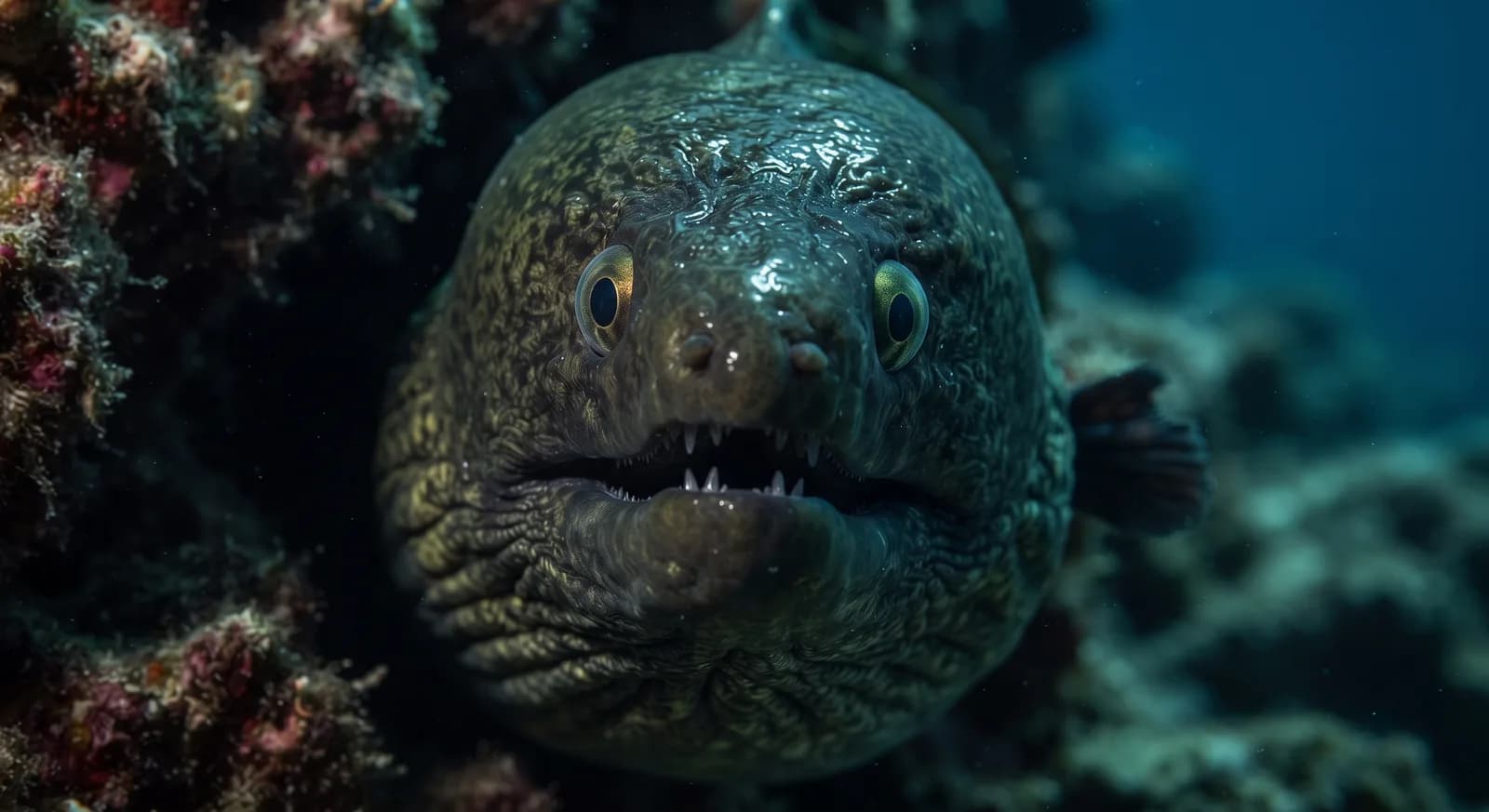
Green MorayLeast Concern

Green Moray

Gymnothorax funebris

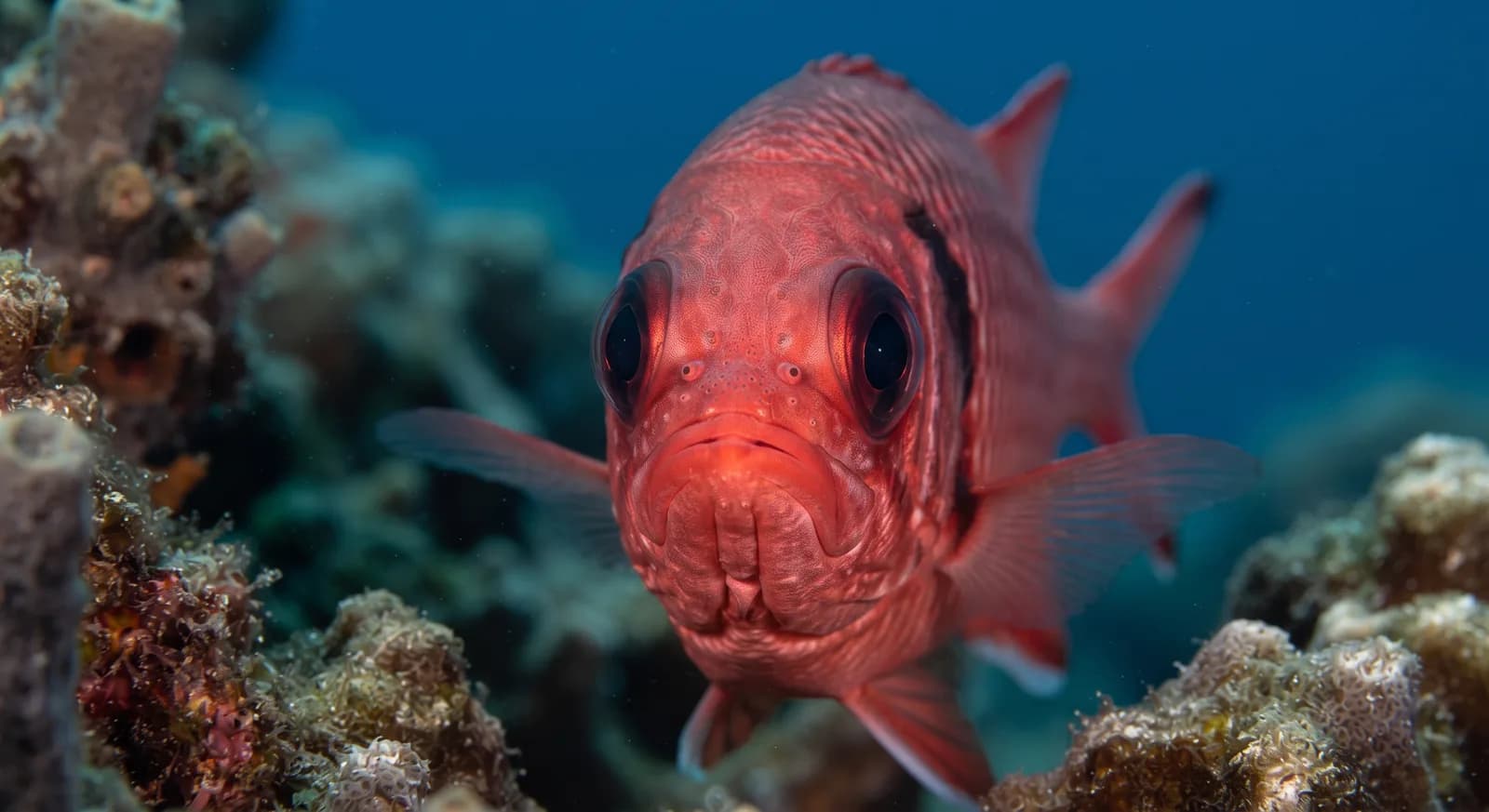
Blackbar SoldierfishLeast Concern

Blackbar Soldierfish

Myripristis jacobus

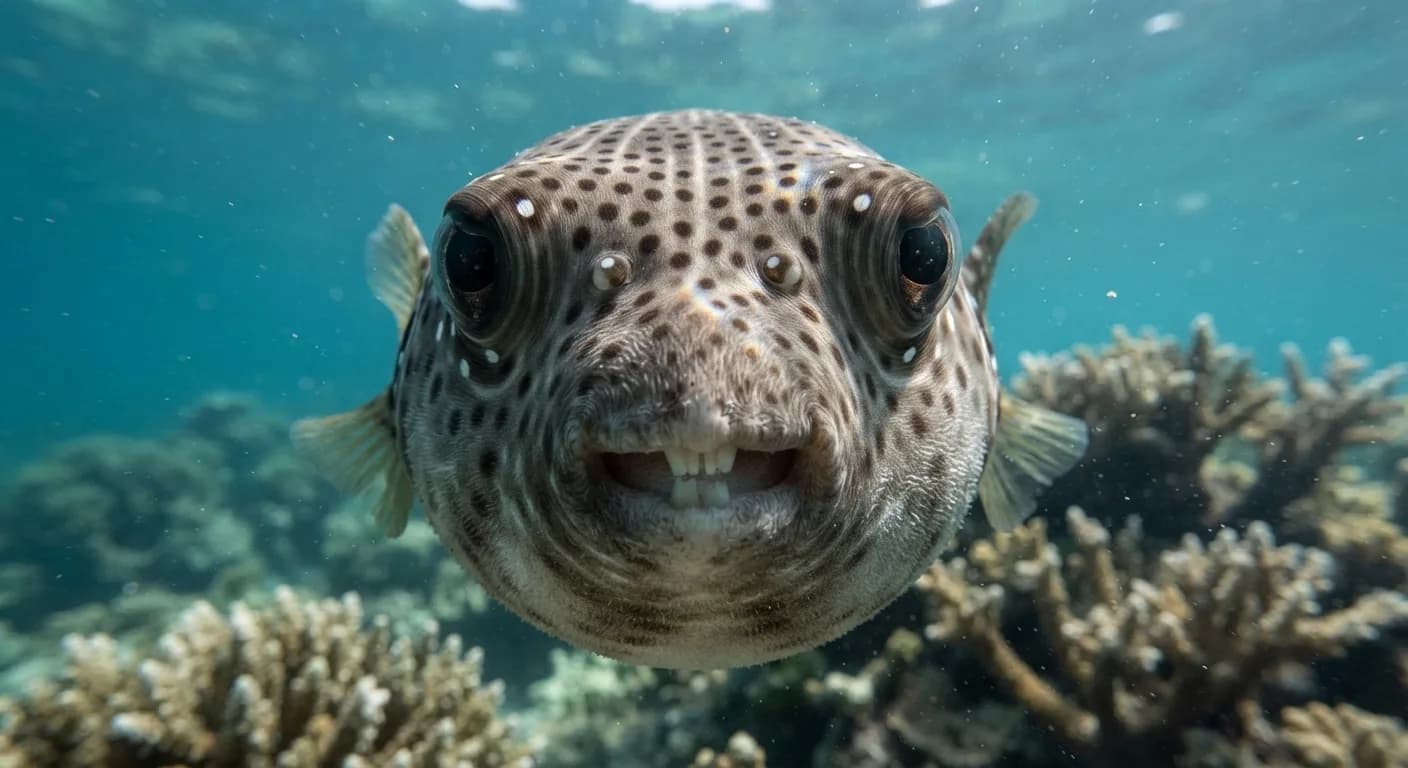
White-spotted PufferLeast Concern

White-spotted Puffer

Arothron hispidus

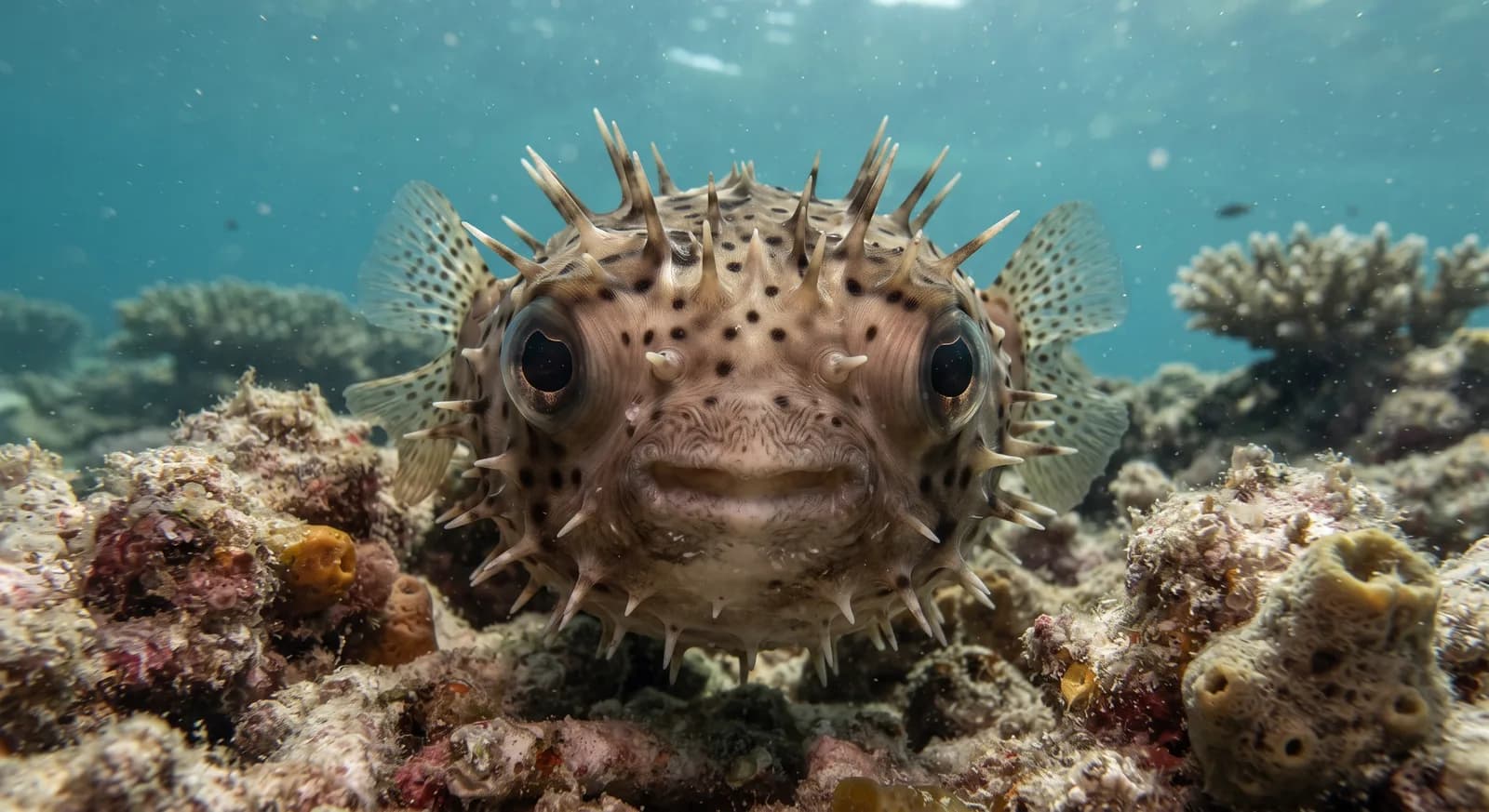
Spot-fin PorcupinefishLeast Concern

Spot-fin Porcupinefish

Diodon hystrix

CountriesIndonesia
ParksKomodoIndonesia
TagsCarnivore
Carnivore
Nocturnal
Solitary
Fish
Ocean

North America32

Asia24

Oceania20

Africa14

South America2

Indonesia
Egypt
Philippines
Australia
United States
Thailand
Anguilla
Antigua and Barbuda
Aruba
Bahamas
Barbados
Belize
Bermuda
British Virgin Islands
Cayman Islands
Costa Rica
Cuba
Curaçao
Dominica
Dominican Republic
Grenada
Guadeloupe
Guatemala
Haiti
Honduras
Jamaica
Martinique
Mexico
Nicaragua
Panama
Puerto Rico
Saint Kitts and Nevis
Saint Lucia
Saint Vincent and Grenadines
Trinidad and Tobago
Turks and Caicos Islands
U.S. Virgin Islands
United States
Bangladesh
Brunei
Cambodia
China
India
Indonesia
Israel
Japan
Jordan
Malaysia
Maldives
Myanmar
Oman
Pakistan
Philippines
Saudi Arabia
Singapore
Sri Lanka
Taiwan
Thailand
Timor-Leste
United Arab Emirates
Vietnam
Yemen
American Samoa
Australia
Cook Islands
Fiji
French Polynesia
Guam
Kiribati
Marshall Islands
Micronesia
Nauru
New Caledonia
Niue
Northern Mariana Islands
Palau
Papua New Guinea
Samoa
Solomon Islands
Tonga
Tuvalu
Vanuatu
Comoros
Djibouti
Egypt
Eritrea
Kenya
Mauritius
Mayotte
Mozambique
Réunion
Seychelles
Somalia
South Africa
Sudan
Tanzania
Colombia
Venezuela