Skip to content
WAnimals
  • Map
  • Species
  • Parks
  • Diving
Log inCreate account
WAnimals

The guide for travellers and animal lovers: discover, plan and share your wild adventures around the world.

Discover wildlife

  • Species
  • Ecosystems
  • Glossary
  • Tags

Explore places

  • Map
  • Countries
  • Parks
  • Diving

Plan experiences

  • Guides

Learn

  • Blog

Resources

  • About us
  • How we build our profiles
  • Help centre
  • Contact
  • Install the app

Follow us

Account

  • Log in
  • Create account

© 2026 WAnimals. All rights reserved.

Terms of servicePrivacyCookiesLegal notice
MapSpeciesParksDiving
  1. Home
  2. Species
  3. Siberian Crane

One of the 11 cranes on WAnimals
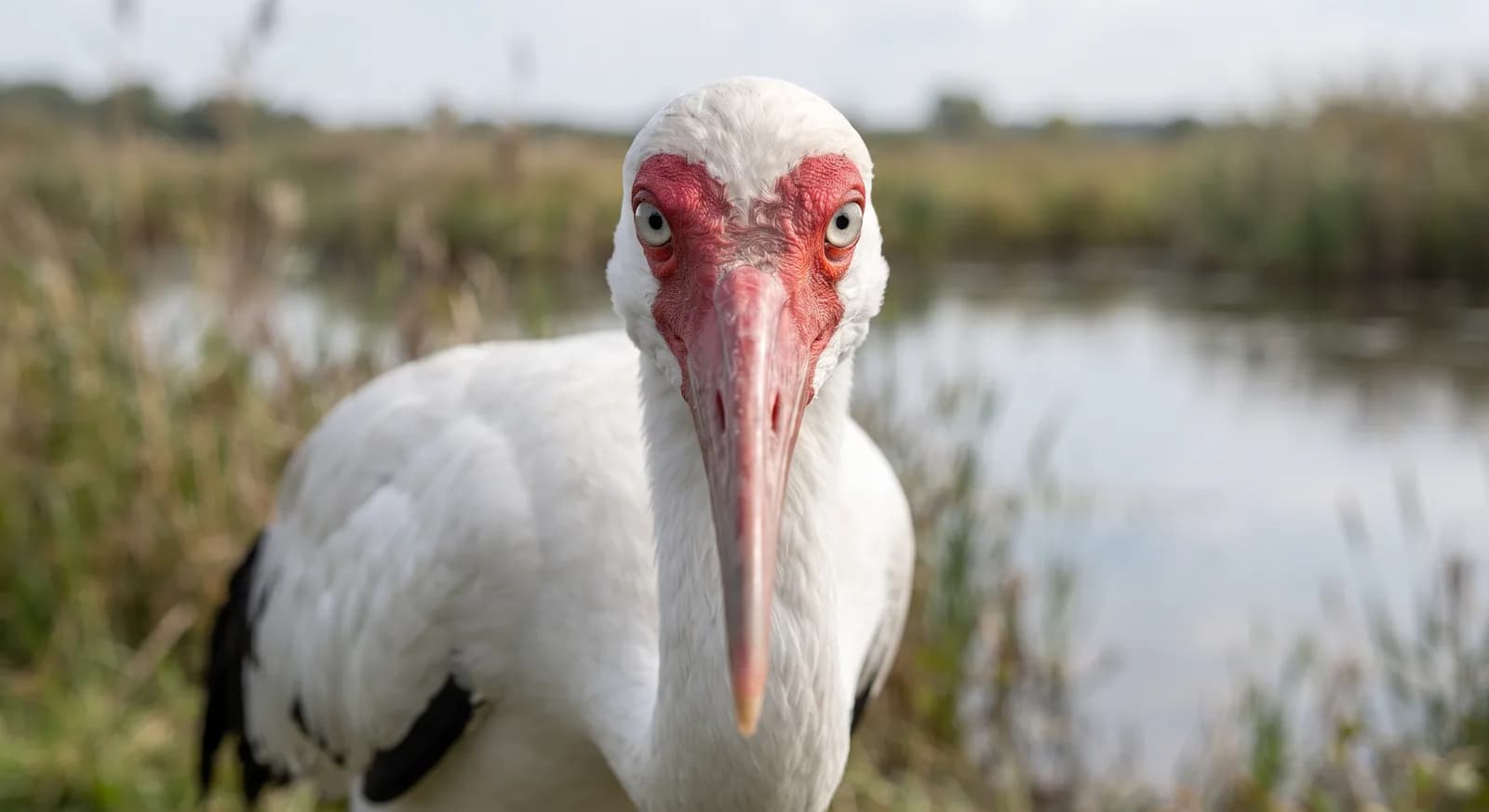
Siberian Crane (Leucogeranus leucogeranus)

Birds · Gruiformes · Gruidae

Siberian Crane

Leucogeranus leucogeranus

Critically Endangered

At extremely high risk of imminent extinction in the wild.

Spotted something wrong?

The Siberian crane is a species of gruiform bird of the family Gruidae. It breeds in Arctic Russia, in Yakutia and in western Siberia. It is a long-distance migrant. The eastern population winters on the Yangtze River and at Lake Poyang in China, the central population winters in Keoladeo National Park, India, and the western population at Fereidoonkenar and Isfahan in Iran. It breeds and winters in wetlands, where it feeds on the shoots, roots and tubers of aquatic plants. No subspecies are recognised.

Weight

4.9 kg – 8.6 kg

Size

1.4 m – 1.5 m

Life expectancy

60 years
Diet

Omnivore

Combines animal and plant food depending on availability.

Activity

Diurnal

Active mainly during the day.

Social structure

In pairs

Usually lives in pairs, sometimes for life.

Estimated population

Some 3,500-4,000 individuals, almost all of the eastern population

TundraFreshwaterPolar
8countries7parks10same family

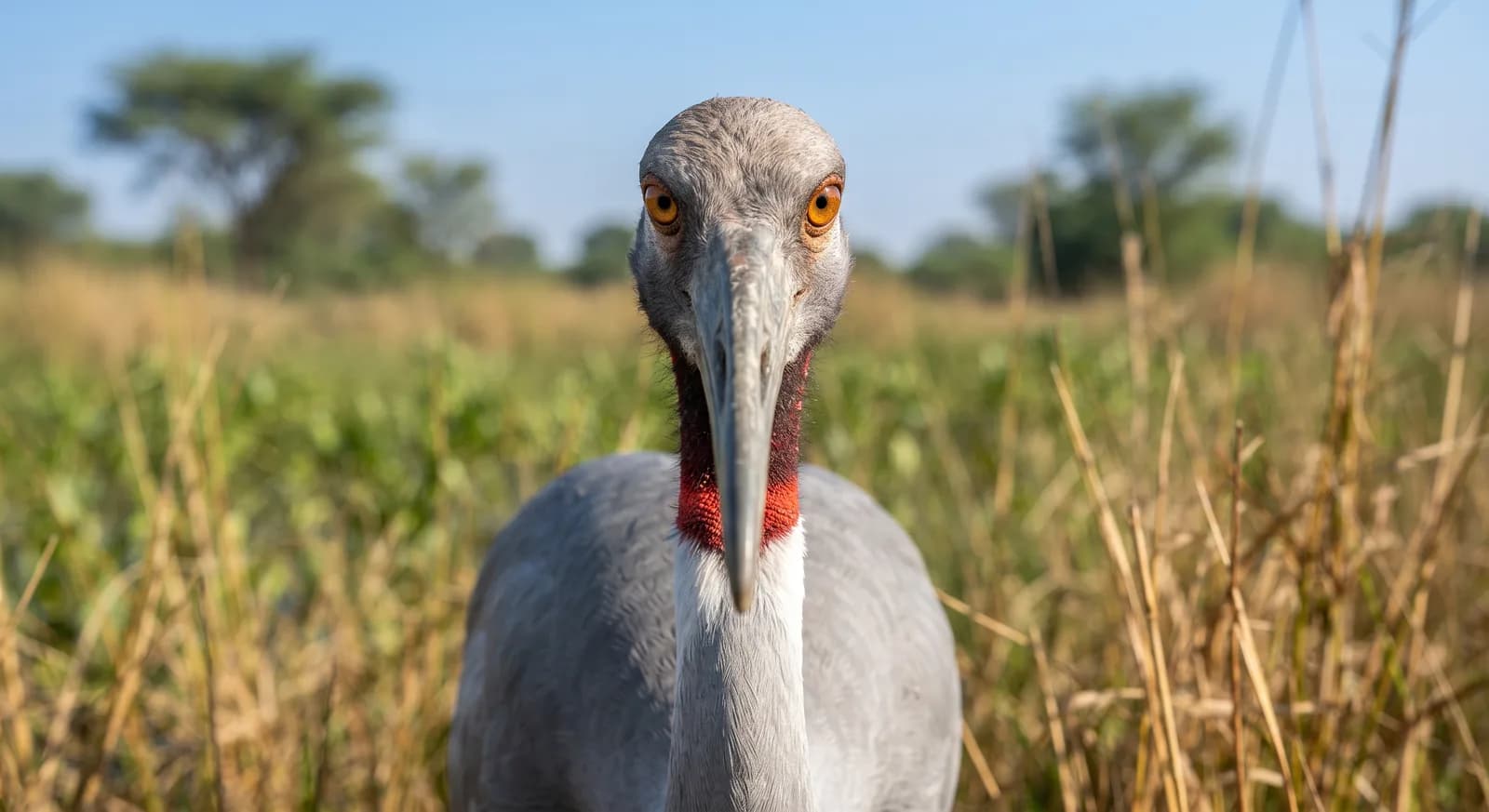
AI-generated images: illustrations, not photographs.

Fun facts

  • Almost the entire species winters in a single wetland: Lake Poyang, in China, which holds more than 95% of the world population. A single change to that lake could finish off the Siberian crane.
  • The western population, which crossed Asia as far as India, is extinct: the last known bird on that route was seen in Iran in 2009.

Life cycle and biology

Skeleton type
Vertebrate - internal bony skeleton (bird)
Habitat and environment
Arctic tundra and peat bogs of Siberia for breeding; the wetlands of Lake Poyang, in China, for wintering
Sexual maturity
6 years
Gestation / incubation
29 days of incubation
Litter / clutch size
2 eggs

Sources consulted: Wikipedia (es): Leucogeranus leucogeranus

Where to find it

Loading map…

The pins mark the parks where its presence is documented.

Where to see it

Parks and dive sites where this species has been documented.

Related species

Other species in the catalogue with the most in common with Siberian Crane — same habitat, park, country, tags or family.

Same taxonomic family

How to help

The siberian crane is classified as critically endangered. Organisations such as the IUCN, WWF and the Wildlife Conservation Society work specifically on its conservation and that of its habitat; looking into their programmes is a good starting point if you want to get involved.

It's documented in 7 protected areas — one reason why protecting these places matters for its conservation.

Keep exploring

Based on what we already know about siberian crane.

Share an experience, a fun fact or a tip for seeing the siberian crane.
See full glossary
This page in other languages: Español · Deutsch · Français · Português · Italiano
See its range on the interactive map→
Keoladeo (Bharatpur)India
Zhalong Nature ReserveChina
Putorana PlateauRussia
KavirIran
Yellow Sea Migratory Bird SanctuariesChina
Landscapes of DauriaMongolia
Yugyd VaRussia
Sarus CraneVulnerable

Sarus Crane

Antigone antigone

Sandhill CraneLeast Concern

Sandhill Crane

Antigone canadensis

Red-crowned CraneVulnerable

Red-crowned Crane

Grus japonensis

Demoiselle CraneLeast Concern

Demoiselle Crane

Grus virgo

Black-necked CraneNear Threatened

Black-necked Crane

Grus nigricollis

Common CraneLeast Concern

Common Crane

Grus grus

CountriesChina
ParksKeoladeo (Bharatpur)India
TagsOmnivore
Omnivore
Diurnal
In pairs
Critically Endangered
Bird
Tundra
Freshwater
Polar
China
Russia
India
Iran
Mongolia
Afghanistan
Kazakhstan
Pakistan