Skip to content
WAnimals
  • Map
  • Species
  • Parks
  • Diving
Log inCreate account
WAnimals

The guide for travellers and animal lovers: discover, plan and share your wild adventures around the world.

Discover wildlife

  • Species
  • Ecosystems
  • Glossary
  • Tags

Explore places

  • Map
  • Countries
  • Parks
  • Diving

Plan experiences

  • Guides

Learn

  • Blog

Resources

  • About us
  • How we build our profiles
  • Help centre
  • Contact
  • Install the app

Follow us

Account

  • Log in
  • Create account

© 2026 WAnimals. All rights reserved.

Terms of servicePrivacyCookiesLegal notice
MapSpeciesParksDiving
  1. Home
  2. Species
  3. Sandhill Crane

One of the 11 cranes on WAnimals
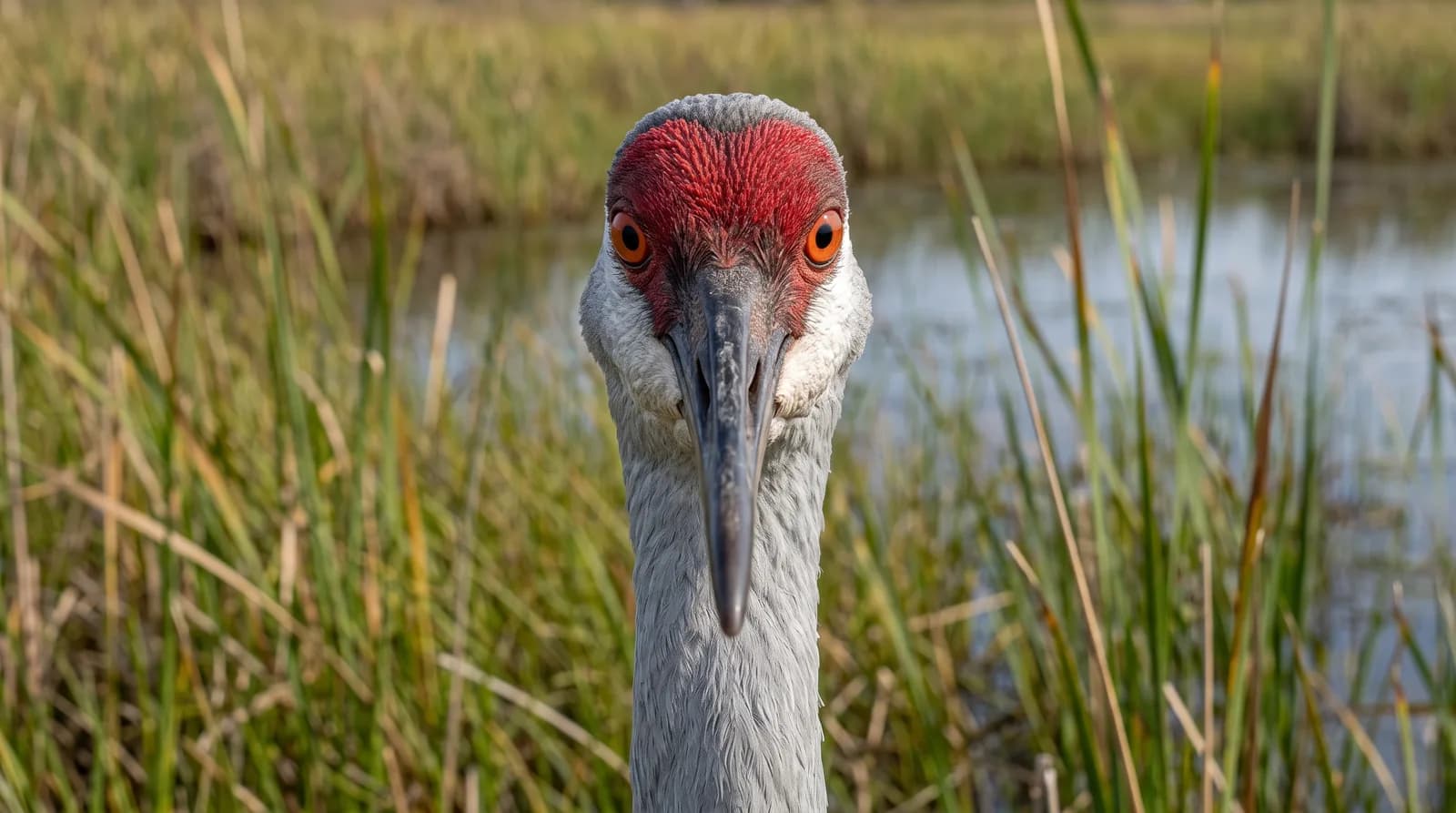
Sandhill Crane (Antigone canadensis)

Birds · Gruiformes · Gruidae

Sandhill Crane

Antigone canadensis

Least Concern

The species is abundant and widely distributed; it faces no significant short-term risk.

Spotted something wrong?

The sandhill crane is the most abundant crane in the world and is responsible for one of the great gatherings of birds on the planet: every spring more than half a million of them stop on the Platte River in Nebraska during their migration north. It is omnivorous and uses maize stubble to build up reserves. Its populations are expanding, though some island and non-migratory subspecies, such as those of Mississippi and Cuba, remain in a critical state.

Weight

3 kg – 6.5 kg

Size

1 m – 1.2 m

Life expectancy

25 years
Diet

Omnivore

Combines animal and plant food depending on availability.

Activity

Diurnal

Active mainly during the day.

TundraFreshwaterGrassland
5countries25parks10same family2natural phenomena1featured routes

AI-generated images: illustrations, not photographs.

Fun facts

  • The oldest crane fossil attributed to this species is some ten million years old, which would make it one of the oldest known living bird species.
  • Every March more than half a million of them gather along an eighty-kilometre stretch of the Platte River in Nebraska: it is the largest concentration of cranes in the world and one of the great natural spectacles of North America.

Life cycle and biology

Skeleton type
Vertebrate - internal bony skeleton (bird)
Habitat and environment
Tundra, peat bogs, wet meadows and farmland of North America and north-eastern Siberia
Sexual maturity
4 years
Gestation / incubation
30 days of incubation
Litter / clutch size
2 eggs

Sources consulted: IUCN Red List · Animal Diversity Web · Wikipedia (es)

Where to find it

Loading map…

The pins mark the parks where its presence is documented.

Where to see it

Parks and dive sites where this species has been documented — showing 10 of 25.

Related species

Other species in the catalogue with the most in common with Sandhill Crane — same habitat, park, country, tags or family.

Same taxonomic family
Shares a park
Shares a park

Keep exploring

Based on what we already know about sandhill crane.

Share an experience, a fun fact or a tip for seeing the sandhill crane.
See full glossary
This page in other languages: Español · Deutsch · Français · Português · Italiano
See its range on the interactive map→
EvergladesUnited States
DenaliUnited States
Big BendUnited States
Wood BuffaloCanada
VoyageursUnited States
Isle RoyaleUnited States
IvvavikCanada
Riding MountainCanada
BadlandsUnited States
Theodore RooseveltUnited States
See all 25 parks
Endangered

Whooping Crane

Grus americana

Siberian CraneCritically Endangered

Siberian Crane

Leucogeranus leucogeranus

Demoiselle CraneLeast Concern

Demoiselle Crane

Grus virgo

Common CraneLeast Concern

Common Crane

Grus grus

Canada GooseLeast Concern

Canada Goose

Branta canadensis

Least Concern

Wood Duck

Aix sponsa

CountriesUnited States
ParksEvergladesUnited States
TagsOmnivore
Omnivore
Diurnal
Bird
Tundra
Freshwater
Grassland
United States
Canada
Russia
Cuba
Mexico