 Least Concern
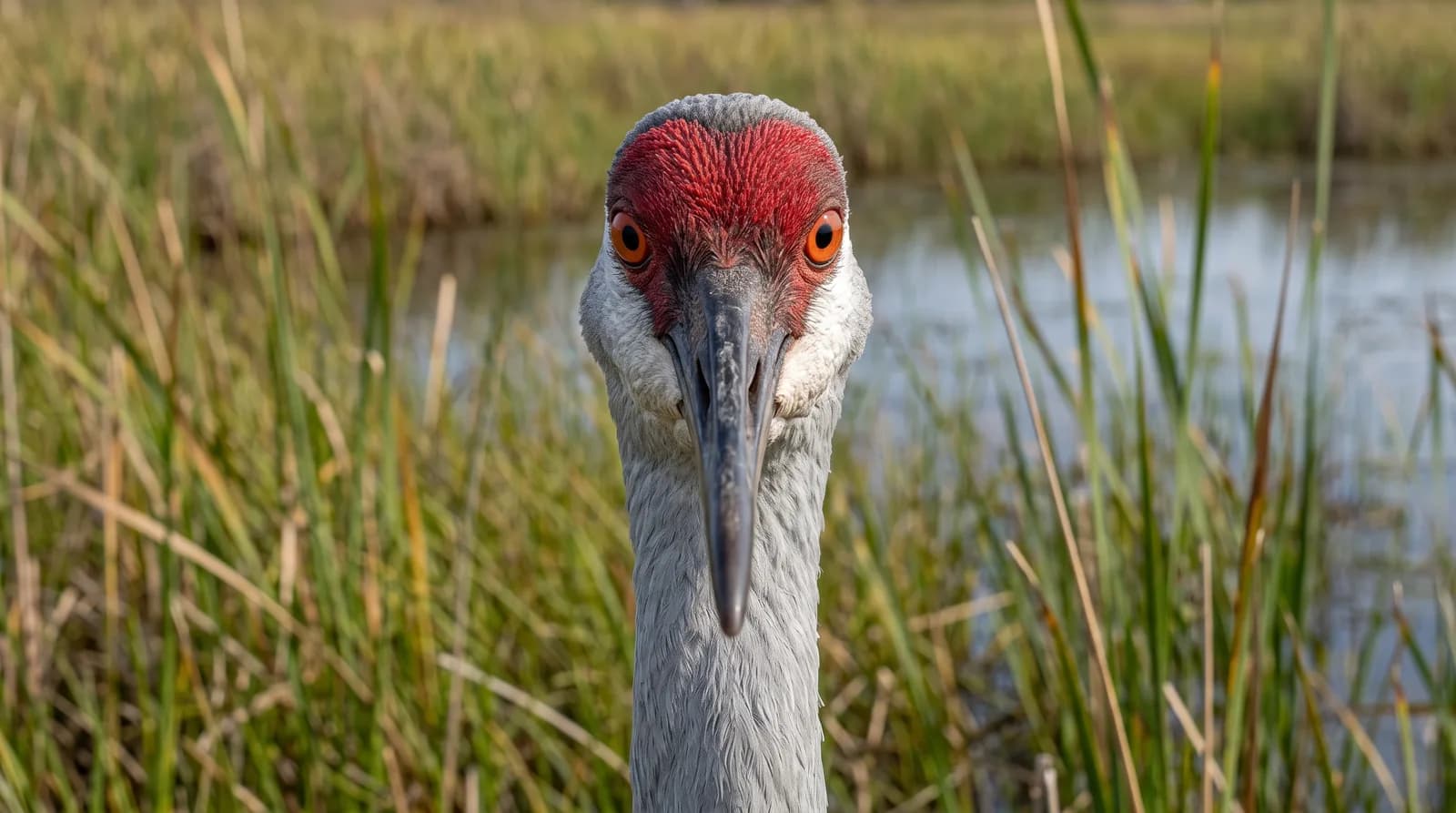
Sandhill Crane
Antigone canadensis
One of the 11 cranes on WAnimals
Birds · Gruiformes · Gruidae
Grus americana
At very high risk of extinction in the wild in the near future.
The whooping crane is the tallest bird in North America and one of the emblematic species of world conservation. In 1941 fifteen individuals remained in total. Its recovery, through strict protection of the only wild population and captive breeding programmes, has taken it above eight hundred. It still depends on a single migratory route of more than four thousand kilometres between Canada and Texas.
Weight
5 kg – 8.5 kg
Size
1.3 m – 1.5 m
Life expectancy
30 years
Diet
Omnivore
Combines animal and plant food depending on availability.
Activity
Diurnal
Active mainly during the day.
Social structure
In pairs
Usually lives in pairs, sometimes for life.
Sighting difficulty
Hard
Estimated population
Around 800 individuals, some 550 of them wild
Sources consulted: https://www.iucnredlist.org/ | https://animaldiversity.org/ | https://es.wikipedia.org/
The pins mark the parks where its presence is documented.
Parks and dive sites where this species has been documented.
Other species in the catalogue with the most in common with Whooping Crane — same habitat, park, country, tags or family.
The whooping crane is classified as endangered. Organisations such as the IUCN, WWF and the Wildlife Conservation Society work specifically on its conservation and that of its habitat; looking into their programmes is a good starting point if you want to get involved.
It's documented in 6 protected areas — one reason why protecting these places matters for its conservation.
Based on what we already know about whooping crane.
Share an experience, a fun fact or a tip for seeing the whooping crane.
Be the first to comment.