One of the 5 woodpeckers on WAnimals
Birds · Piciformes · Picidae
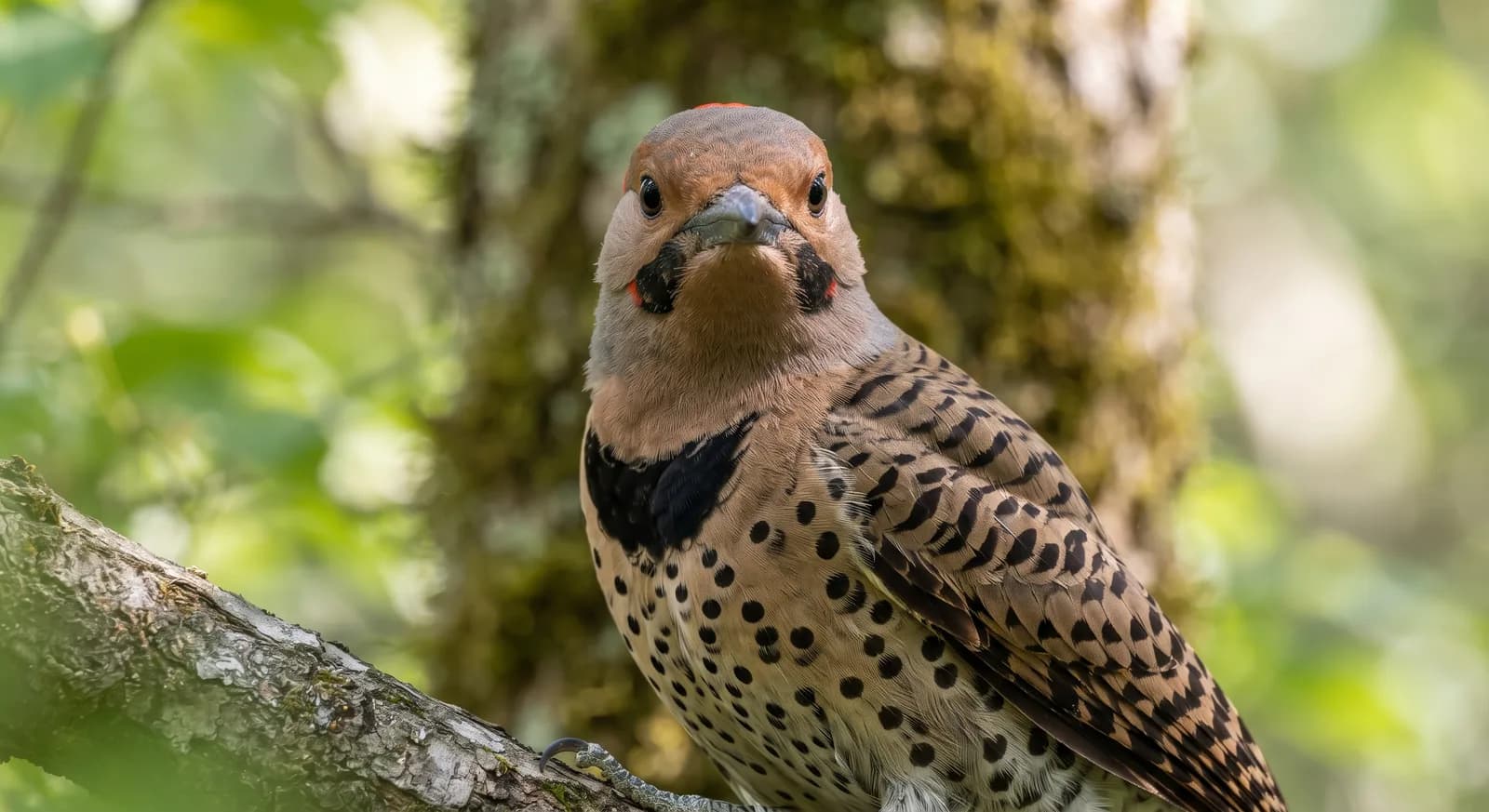
Colaptes auratus
The species is abundant and widely distributed; it faces no significant short-term risk.
A polytypic North American woodpecker of medium size, with a very visible black crescent on the breast. There are five distinct morphological groups, the best known being the yellow-shafted and the red-shafted, which are told apart by the colour of the shafts of the flight feathers.
Weight
120 g on average
Size
28 cm – 31 cm
Life expectancy
12 years
Diet
Insectivore
Feeds mainly on insects and other invertebrates.
Activity
Diurnal
Active mainly during the day.
Social structure
In pairs
Usually lives in pairs, sometimes for life.
Sighting difficulty
Easy
Estimated population
Some 12 million individuals worldwide, 11 million of them in the United States and Canada according to the 2006-2015 BBS survey. Partners in Flight lists it among the common birds in steep decline, with a fall of close to 50 % in forty years
AI-generated images: illustrations, not photographs.
Sources consulted: IUCN Red List; Manthey et al. 2021 (genoma de referencia a escala cromosómica, G3/NCBI); Bernis et al., Ardeola (nombres castellanos SEO); Freeman et al. 2025, Frontiers in Parasitology; Linnaeus 1758
Best time: All year round over much of its range; the northern populations migrate
Parks and dive sites where this species has been documented — showing 10 of 105.
Other species in the catalogue with the most in common with Northern Flicker — same habitat, park, country, tags or family.
Based on what we already know about northern flicker.
Share an experience, a fun fact or a tip for seeing the northern flicker.
Be the first to comment.
The pins mark the parks where its presence is documented.