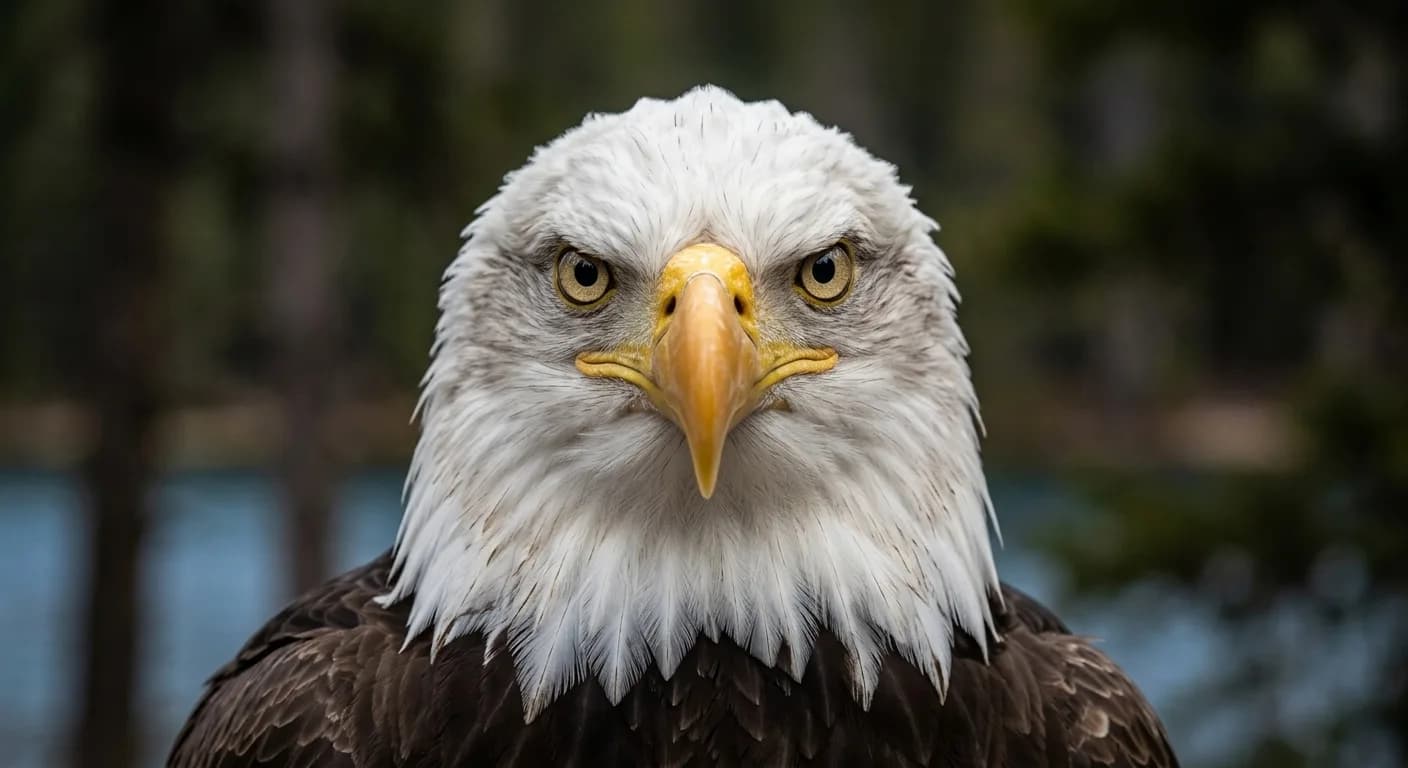
- Skeleton type
- Vertebrate - internal bony skeleton (bird)
- Habitat and environment
- Coasts, rivers and large lakes of North America, close to mature forest
- Birth weight
- Born blind and helpless
- Size at birth
- Born blind and helpless
- Sexual maturity
- 4-5 years (when the full adult plumage comes in)
- Gestation / incubation
- 34-36 days
- Litter / clutch size
- 1 to 3 eggs per clutch (most commonly 2)
- Life expectancy in captivity
- Documented record of up to 48 years
Sources consulted: A-Z Animals; Alaska Department of Fish and Game; National Eagle Center; Baldeagleinfo.com; AnAge (genomics.senescence.info); Les Oiseaux; U.S. Fish and Wildlife Service, informe de 2021: la población se ha más que cuadruplicado desde 2009, cuando se estimaban 72.434 ejemplares || U.S. Fish and Wildlife Service, Bald Eagle Population Update 2021 (con datos de eBird / Cornell Lab of Ornithology)