- Skeleton type
- Vertebrate - internal bony skeleton (bird)
- Habitat and environment
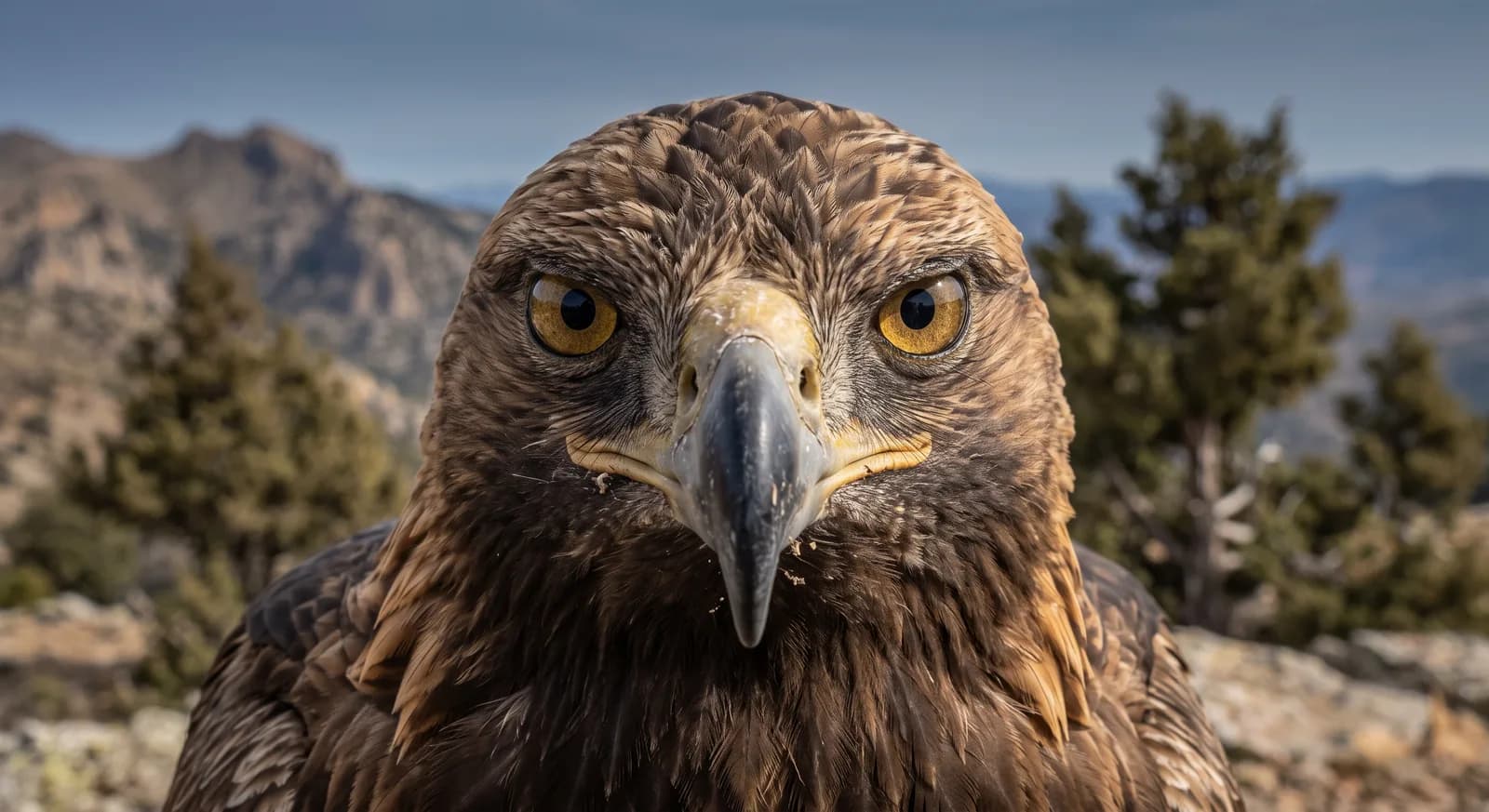
- Mountainous country, tundra, scrubland and open grassland across the Northern Hemisphere
- Birth weight
- Born blind and helpless, ~110 g at birth
- Size at birth
- ~110 g at birth
- Sexual maturity
- 4-5 years
- Gestation / incubation
- 40-45 days
- Litter / clutch size
- 1 to 4 eggs per clutch (most commonly 2)
- Life expectancy in captivity
- Documented record of up to 46-48 years
Sources consulted: A-Z Animals · SeaWorld/United Parks · PBS Nature · AnAge (genomics.senescence.info) · Animal Diversity Web · US FWS · BioKIDS · SEO/BirdLife: los censos nacionales han pasado de 1.192-1.265 parejas en el primer estudio nacional a 1.459-1.503 en 2004, y las cuatro comunidades con más parejas presentan tendencia ascendente. A escala mundial las tendencias no están bien cuantificadas · SEO/BirdLife, III Atlas de las aves en época de reproducción en España, ficha del águila real (Bautista et al. 2022) · BirdLife International · SEO/BirdLife, III Atlas de las aves en época de reproducción en España, ficha del águila real