Skip to content
WAnimals
  • Map
  • Species
  • Parks
  • Diving
Log inCreate account
WAnimals

The guide for travellers and animal lovers: discover, plan and share your wild adventures around the world.

Discover wildlife

  • Species
  • Ecosystems
  • Glossary
  • Tags

Explore places

  • Map
  • Countries
  • Parks
  • Diving

Plan experiences

  • Guides

Learn

  • Blog

Resources

  • Help centre
  • Contact
  • Install the app

Follow us

Account

  • Log in
  • Create account

© 2026 WAnimals. All rights reserved.

About usHow we build our profilesTerms of servicePrivacyLegal notice
MapSpeciesParksDiving
  1. Home
  2. Humpback Whale

Humpback Whale (Megaptera novaeangliae)

Mammals · Artiodactyla · Balaenopteridae

Humpback Whale

Megaptera novaeangliae

Least Concern

The species is abundant and widely distributed; it faces no significant short-term risk.

Spotted something wrong?

It is famous for its complex "songs", structured sequences of sound that can last from 4 to 33 minutes and that males repeat for hours on end.

Weight

25 t – 40 t

Size

11 m – 17 m

Life expectancy

45 years

Diet

Omnivore

Combines animal and plant food depending on availability.

Activity

Irregular activity

Active at irregular times, by day or night depending on circumstances.

Social structure

Solitary

Lives and hunts alone, joining others only to breed.

Sighting difficulty

Easy

Ocean
134countries45parks104dive sites5same family9natural phenomena9featured routes

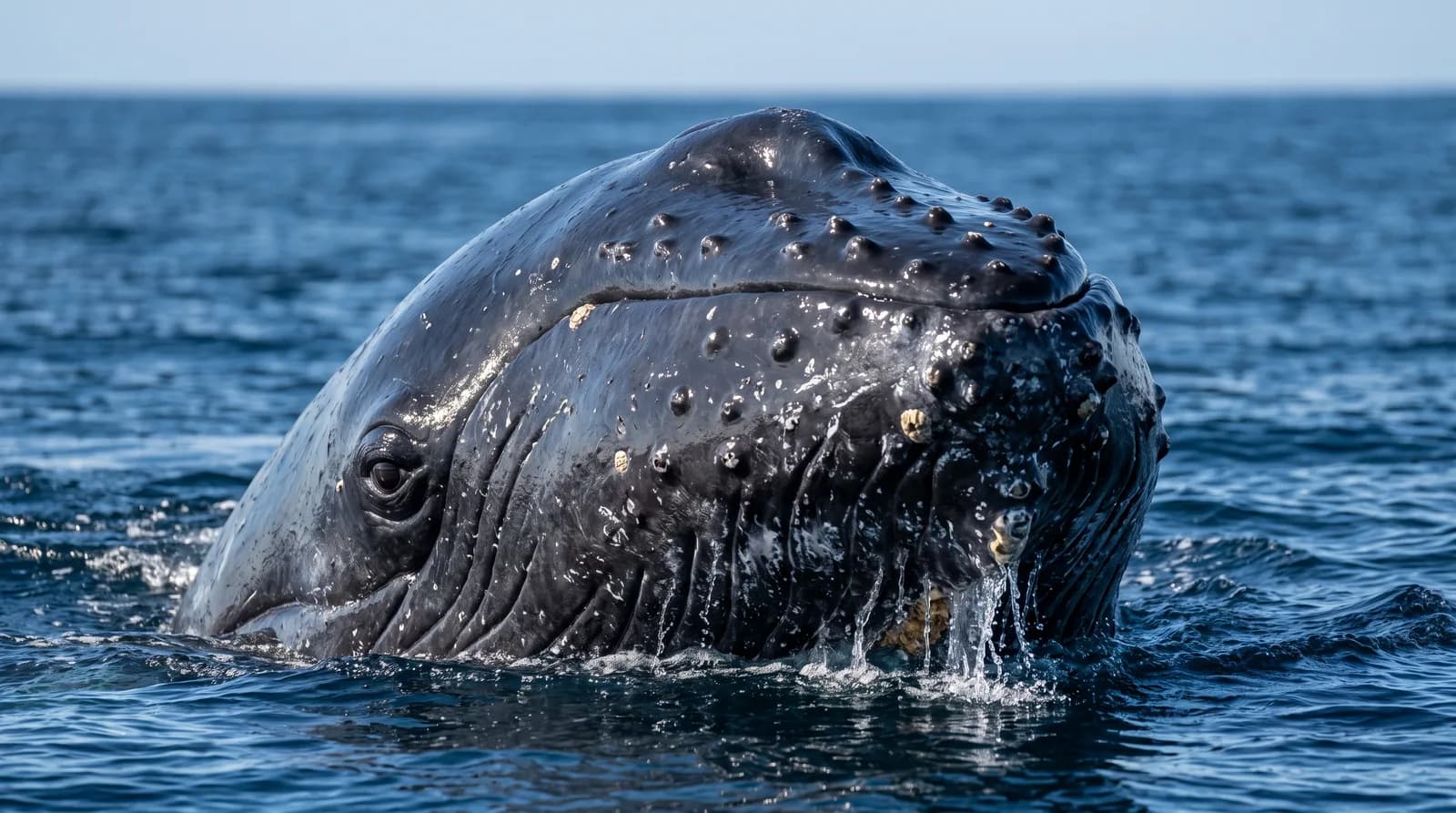
AI-generated images: illustrations, not photographs.

Fun facts

  • It is famous for its complex "songs", which can last from 4 to 33 minutes.
  • It makes one of the longest migrations of any mammal, between polar and tropical waters.
  • It hunts using lunge-feeding techniques and bubble nets.
  • comunicaciónMales sing structured songs lasting more than 20 minutes that are repeated and that evolve collectively across an entire regional population, year after year.

Life cycle and biology

Skeleton type
Vertebrate - internal bony skeleton (mammal)
Habitat and environment
Every ocean in the world; migrates between high-latitude feeding grounds and tropical breeding grounds
Birth weight
~1 tonne and 3-4.5 m long at birth
Size at birth
~1 tonne and 3-4.5 m at birth
Sexual maturity
4-10 years
Gestation / incubation
11-12 months (~11.5 months)
Litter / clutch size
1 young per birth, with intervals of 1-3 years

Sources consulted: Wikipedia (Humpback whale); PMC (chromosome-level reference genome study); Alaska Department of Fish and Game; CRRU Cetacean Fact Files; NOAA Fisheries; Mingan Island Cetacean Study; Hawaii Marine Animal Response

Where to find it

Loading map…

Where to see it

Parks and dive sites where this species has been documented — showing 20 of 149.

Related species

Other species in the catalogue with the most in common with Humpback Whale — same habitat, park, country, tags or family.

Same taxonomic family
Shares a park
Shares a park

Keep exploring

Based on what we already know about humpback whale.

Comments

Share an experience, a fun fact or a tip for seeing the humpback whale.

Be the first to comment.

Species
One of the 7 whales on WAnimals
See full glossary
This page in other languages: Español · Deutsch · Français · Português · Italiano

The pins mark the parks and dive sites where its presence is documented.

See its range on the interactive map→
AcadiaUnited States
Glacier BayUnited States
Hawaii VolcanoesUnited States
Channel IslandsUnited States
Gros MorneCanada
FundyCanada
Pacific RimCanada
Gwaii HaanasCanada
El VizcainoMexico
Revillagigedo ArchipelagoMexico
Grand Turk WallTurks and Caicos Islands
Ilha GrandeBrazil
Arraial do CaboBrazil
Fernando de NoronhaBrazil
Ballestas IslandsPeru
Robinson Crusoe Island (Juan Fernández)Chile
Channel Islands National ParkUnited States
La Jolla CoveUnited States
Revillagigedo Islands (Socorro)Mexico
Cabo Pulmo National ParkMexico
See all 45 parks
See all 104 dive sites
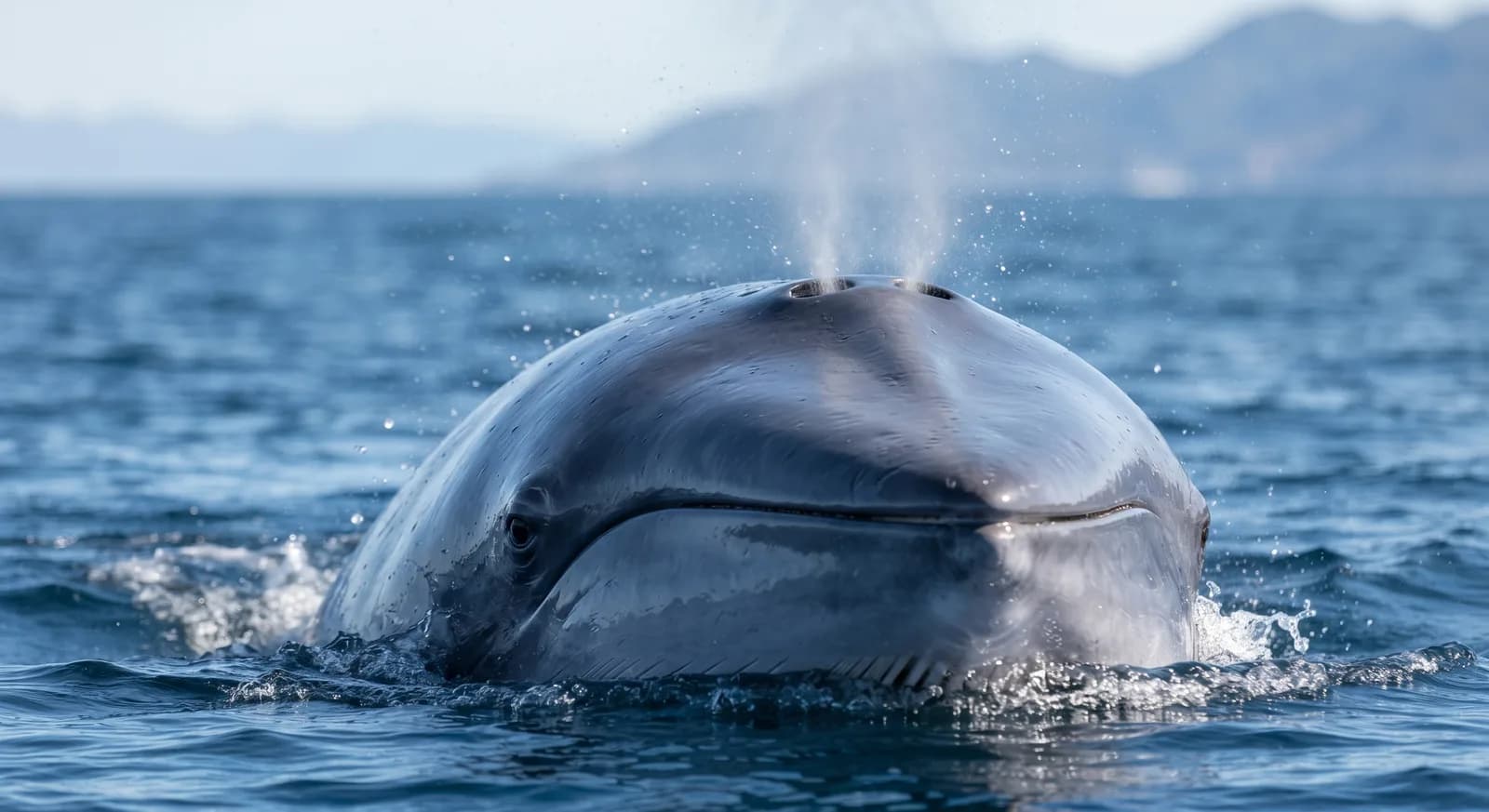
Bryde's WhaleLeast Concern

Bryde's Whale

Balaenoptera edeni

Minke WhaleLeast Concern

Minke Whale

Balaenoptera acutorostrata

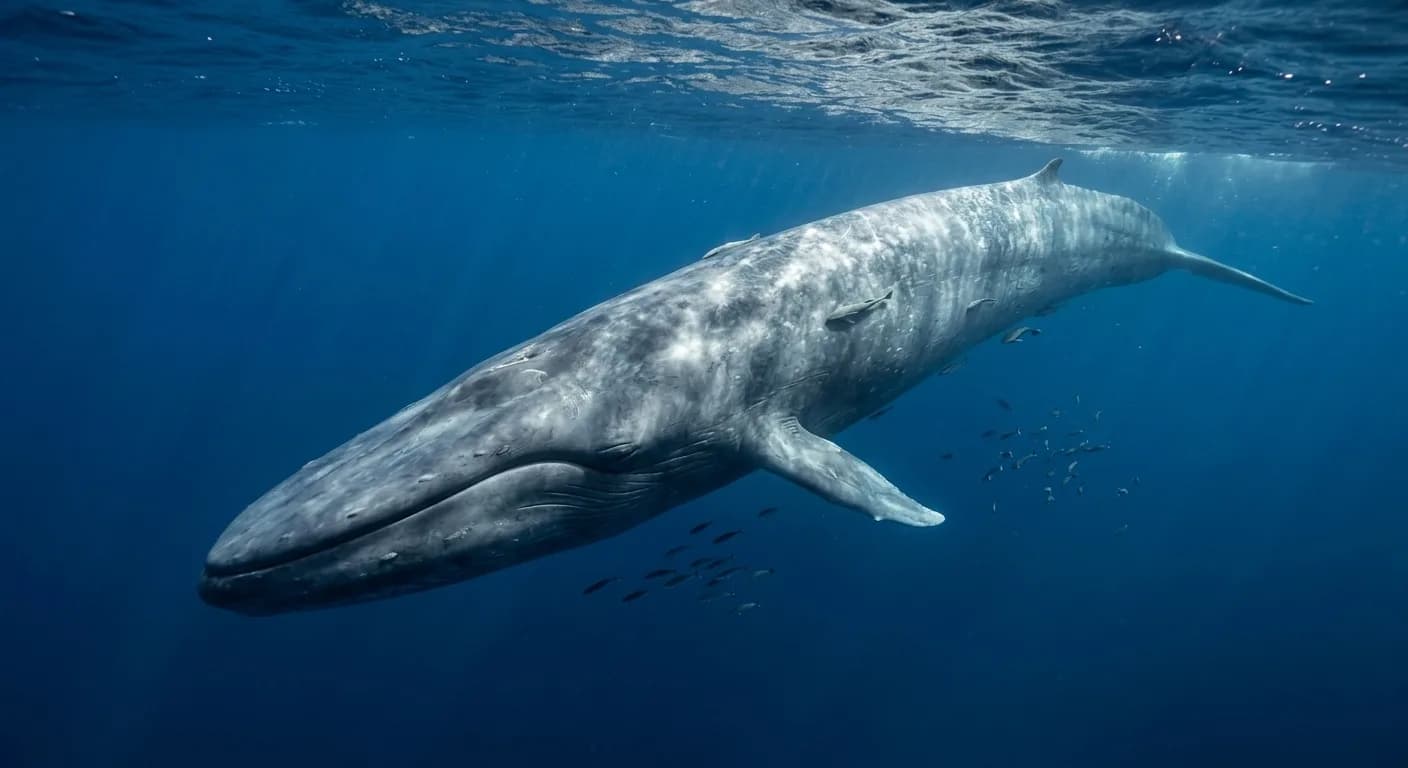
Blue WhaleEndangered

Blue Whale

Balaenoptera musculus

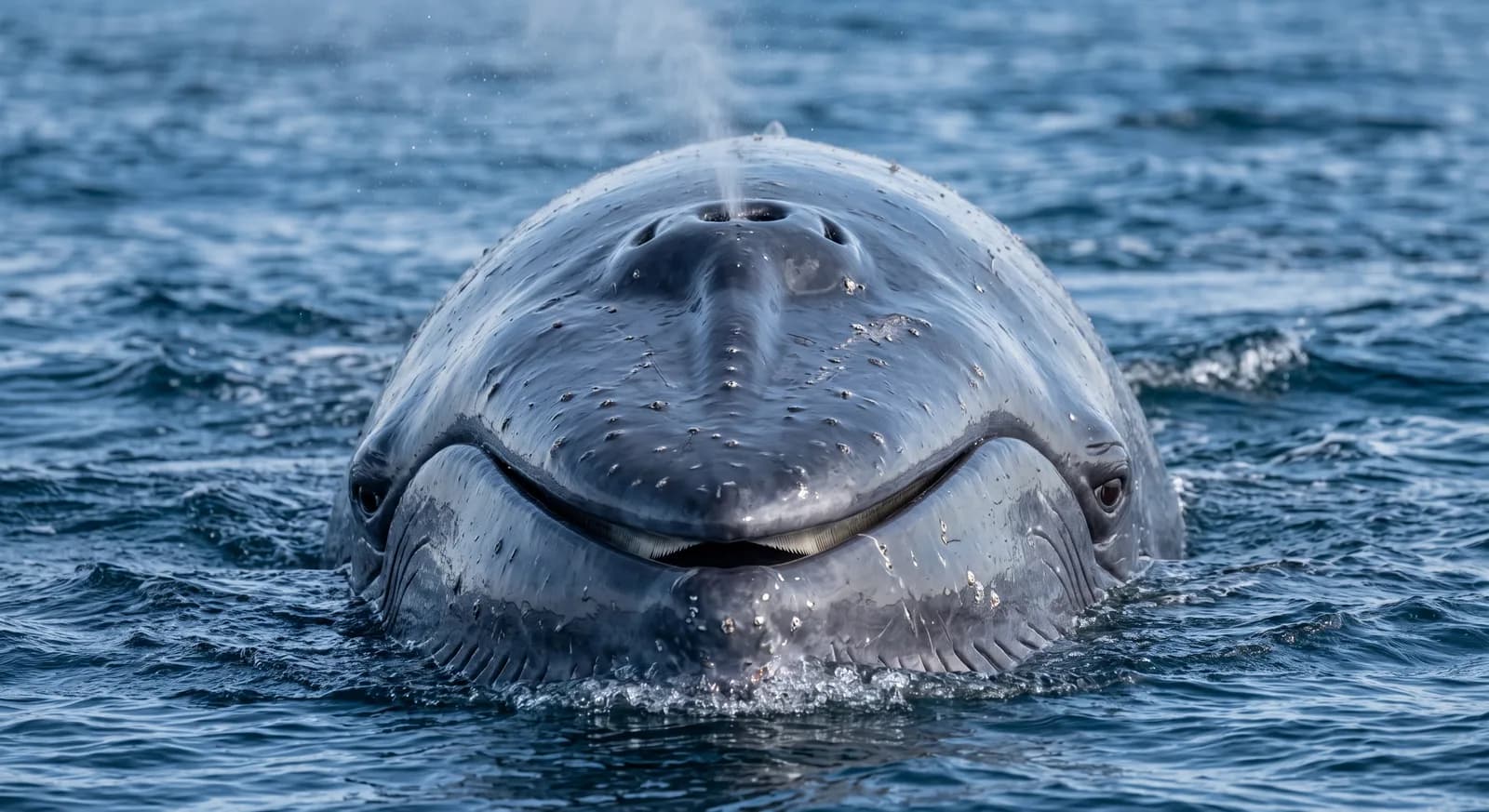
Sei WhaleEndangered

Sei Whale

Balaenoptera borealis

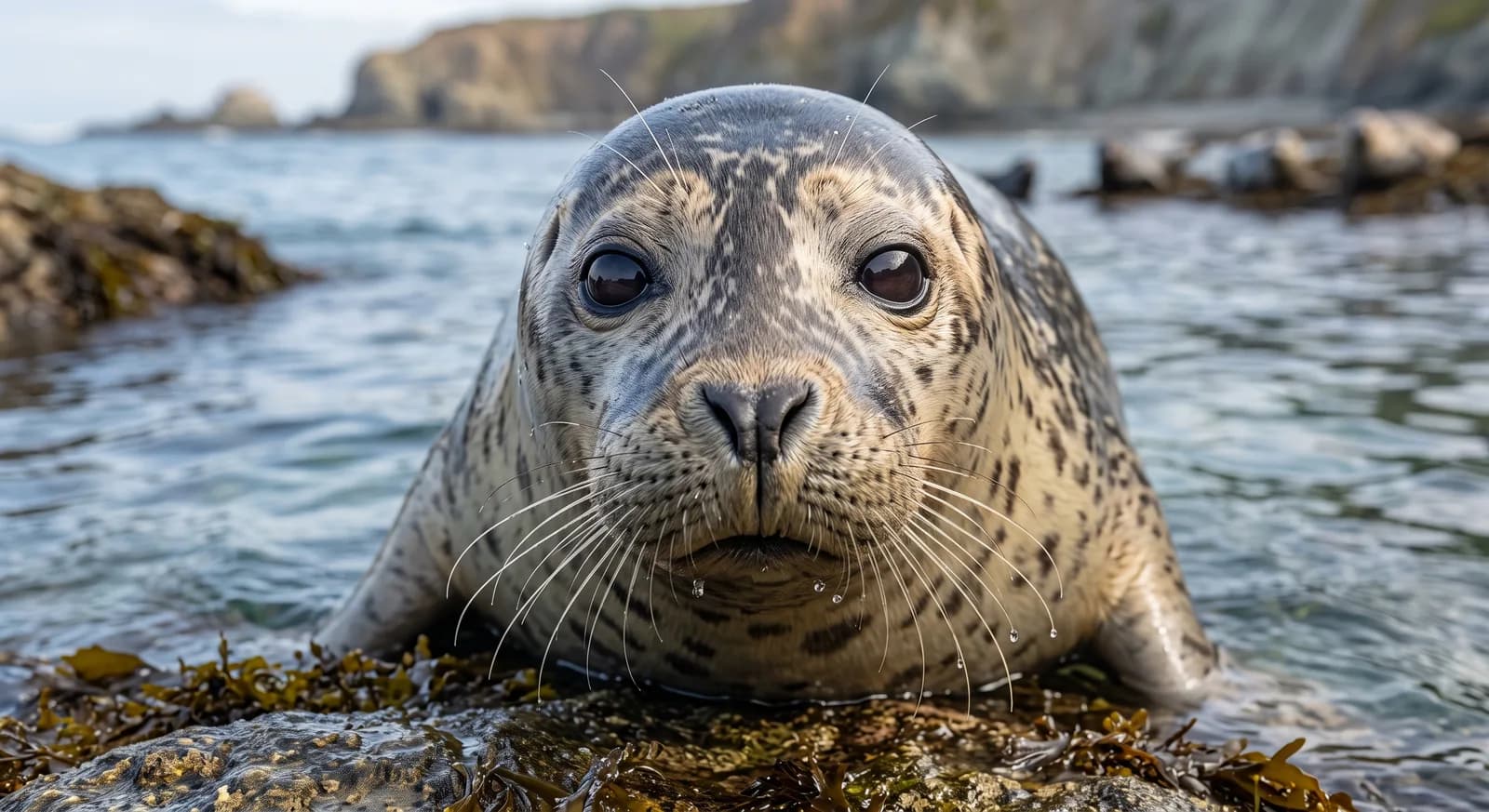
Harbor SealLeast Concern

Harbor Seal

Phoca vitulina

Least Concern

Bowhead Whale

Balaena mysticetus

CountriesAustralia
ParksAcadiaUnited States
TagsOmnivore
Omnivore
Variable activity
Solitary
Ocean
Mammal

North America35

Africa27

Asia24

Oceania20

Europe15

South America10

Antarctica3

Australia
United States
Canada
Japan
Mexico
Mozambique
Anguilla
Antigua and Barbuda
Aruba
Bahamas
Barbados
Belize
Bermuda
British Virgin Islands
Canada
Cayman Islands
Costa Rica
Cuba
Curaçao
Dominica
Dominican Republic
El Salvador
Greenland
Grenada
Guadeloupe
Guatemala
Haiti
Honduras
Jamaica
Martinique
Mexico
Nicaragua
Panama
Puerto Rico
Saint Kitts and Nevis
Saint Lucia
Saint Vincent and Grenadines
Trinidad and Tobago
Turks and Caicos Islands
U.S. Virgin Islands
United States
Angola
Cabo Verde
Cameroon
Comoros
Djibouti
Egypt
Equatorial Guinea
Eritrea
Gabon
Gambia
Guinea-Bissau
Kenya
Madagascar
Mauritania
Mauritius
Mayotte
Morocco
Mozambique
Republic of the Congo
Réunion
São Tomé and Príncipe
Senegal
Seychelles
Somalia
South Africa
Sudan
Tanzania
Bangladesh
Brunei
Cambodia
China
India
Indonesia
Israel
Japan
Jordan
Malaysia
Maldives
Myanmar
Oman
Pakistan
Philippines
Saudi Arabia
Singapore
Sri Lanka
Taiwan
Thailand
Timor-Leste
United Arab Emirates
Vietnam
Yemen
American Samoa
Australia
Cook Islands
Fiji
French Polynesia
Guam
Kiribati
Marshall Islands
Micronesia
Nauru
New Caledonia
Niue
Northern Mariana Islands
Palau
Papua New Guinea
Samoa
Solomon Islands
Tonga
Tuvalu
Vanuatu
Belgium
Denmark
Estonia
France
Iceland
Ireland
Latvia
Lithuania
Netherlands
Norway
Poland
Portugal
Spain
Sweden
United Kingdom
Argentina
Brazil
Chile
Colombia
Ecuador
Falkland Islands
French Guiana
Guyana
Suriname
Venezuela
Antarctica
French Southern Territories
South Georgia and South Sandwich Islands