Gastropods · Neogastropoda · Olividae
Lettered Olive
Oliva sayana
It has not yet been assessed against the IUCN criteria. See full glossary
The olive snail is a marine gastropod belonging to the family Olividae, commonly known as the olives. It was initially described as belonging to the genus Oliva. This gastropod species is a carnivore and scavenger. It lives in intertidal zones and in lagoons with a strong marine influence. This species has been found in some shell offerings in Mexico, among them at the Temple of Teotihuacán.
Size
4 cm – 7 cm
Diet
Carnivore
Feeds mainly on other animals.
Activity
Nocturnal
Active mainly at night.
Social structure
Solitary
Lives and hunts alone, joining others only to breed.
Sighting difficulty
Unknown
Fun facts
- The patent-leather gloss of its shell comes from the mantle, which covers it entirely while the animal moves beneath the sand and keeps it from being worn away.
- The furrows it leaves as it travels just below the surface give away its presence on Florida's beaches.
- Its shell is glossy and smooth like a polished olive, and that finish comes from the mantle wrapping it completely while the animal is active, just as in cowries.
- It hunts while buried: it moves beneath the surface of the sand leaving a visible furrow, and catches bivalves and small crustaceans, which it wraps in its foot and drags downwards to consume.
- It eats beneath the sand, not at the surface, which protects it from its own predators while it feeds.
- It is nocturnal, and on Florida beaches it is found by following the furrows it leaves in the sand at dawn.
- Its shell has long been prized by collectors and was used as an ornament by the indigenous peoples of the Gulf coast.
Life cycle & biology
- Skeleton type
- Invertebrate - external calcareous shell (mollusc)
- Habitat & environment
- Beaches and shallow sandy bottoms of the western Atlantic
Sources consulted: https://es.wikipedia.org/wiki/Americoliva_sayana
Related species
Other species in the catalogue with the most in common with Lettered Olive — same habitat, park, country, tags or family.
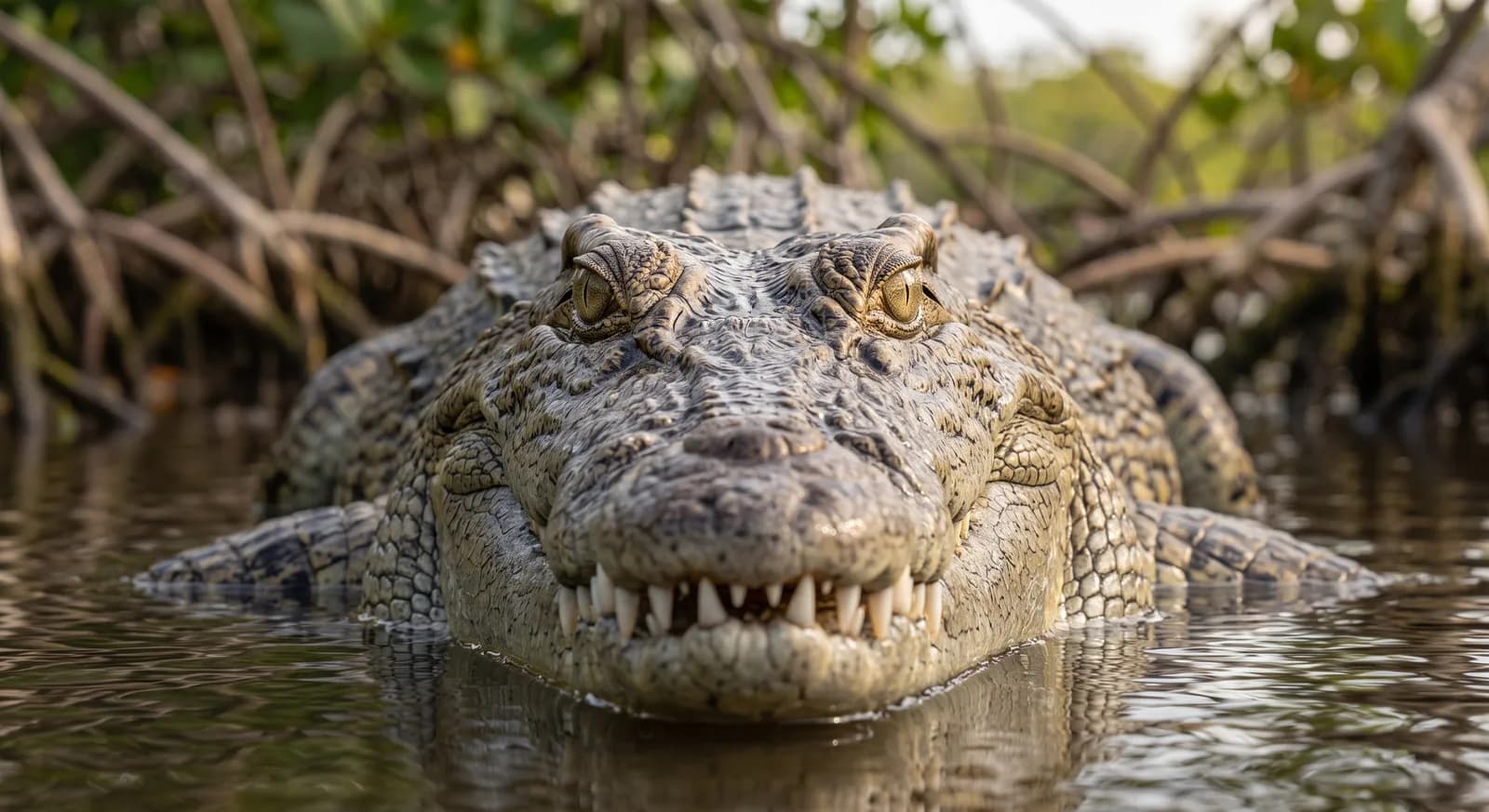 Vulnerable
American Crocodile
Crocodylus acutus
Yellow-bellied Sea Snake
Hydrophis platurus
Horn Shark
Heterodontus francisci
Bluntnose Sixgill Shark
Hexanchus griseus
Thornback Ray
Raja clavata
Southern Stingray
Hypanus americanus
Keep exploring
Based on what we already know about lettered olive.
Comments
Share an experience, a fun fact or a tip for seeing the lettered olive.
Be the first to comment.