One of the 10 crocodiles on WAnimals
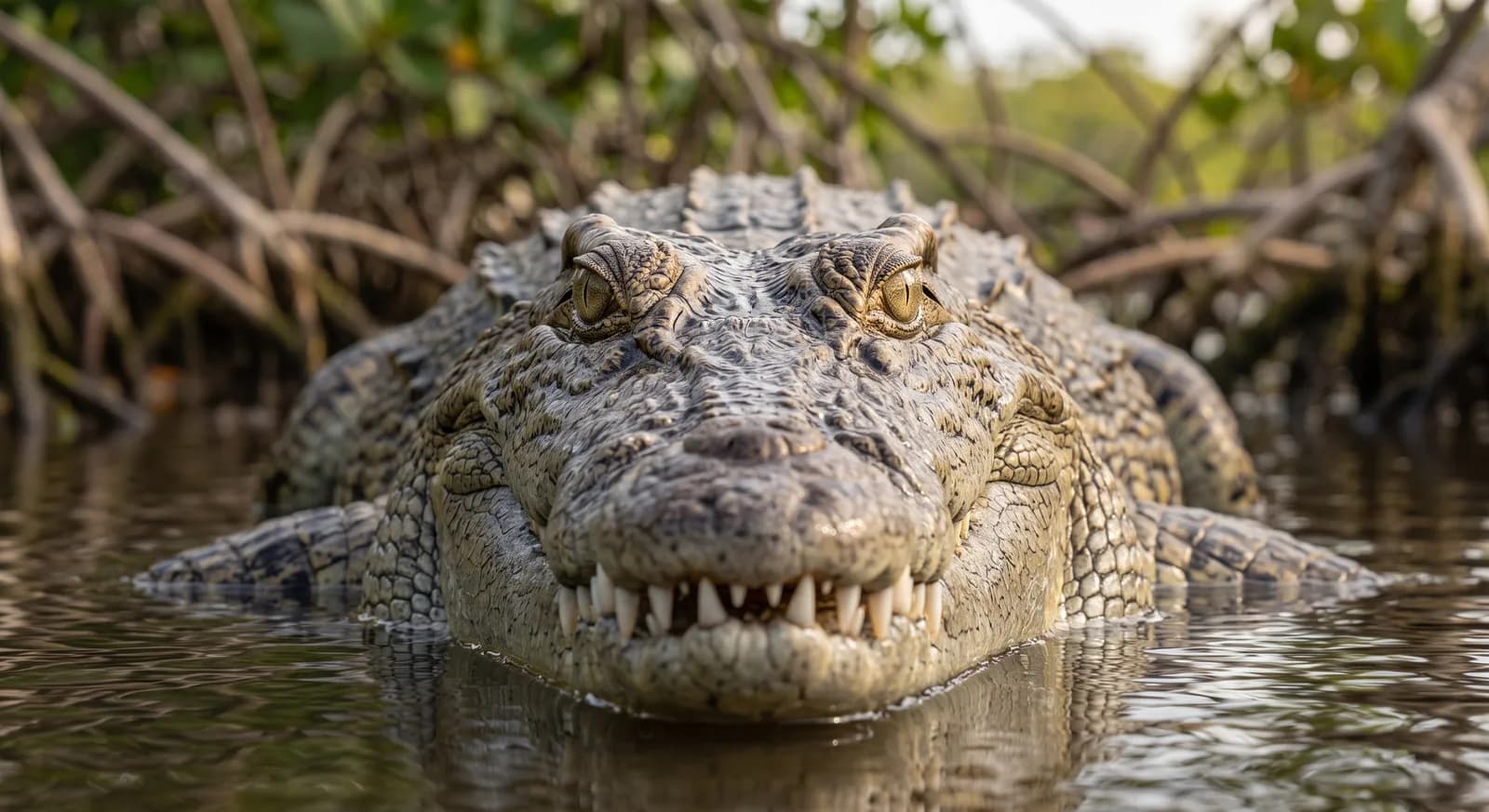
Reptiles · Crocodilia · Crocodylidae
American Crocodile
Crocodylus acutus
It faces a high risk of extinction in the wild over the medium term. See full glossary
The temperature of the nest determines the sex of the hatchlings: low and high temperatures produce females and intermediate ones males — the reverse of the pattern in many other crocodiles.
Weight
up to 907 kg
Size
3 m – 6.1 m
Lifespan
60 years
Diet
Carnivore
Feeds mainly on other animals.
Activity
Nocturnal
Active mainly at night.
Social structure
Solitary
Lives and hunts alone, joining others only to breed.
Sighting difficulty
Moderate
Fun facts
- It is the most widely distributed crocodile in the Americas, found from southern Florida to Peru and Venezuela.
- It feeds on fish, crustaceans, birds and mammals, scaling the size of its prey to its own.
- It lives in estuaries, mangroves, rivers and lakes, from fresh water to brackish.
- fisiologíaUnlike the alligator it has a narrower snout and can tolerate salt water, thanks to specialised glands that excrete the excess salt, so it lives in rivers and along coasts alike.
Life cycle & biology
- Skeleton type
- Vertebrate - internal bony skeleton (reptile)
- Habitat & environment
- Estuaries, mangroves, rivers and lakes from fresh to brackish, from southern Florida to northern South America
- Birth weight
- 22-27 cm long at hatching
- Size at birth
- 22 - 27 cm long at hatching
- Sexual maturity
- 8-18 years (at a length of 1.8-2.8 m)
- Gestation / incubation
- 75-90 days
- Litter / clutch size
- 9 to 80 eggs per clutch (most commonly 30-60)
- Lifespan in captivity
- Documented record of up to 70-80+ years in captivity
Sources consulted: Reptiles of Ecuador; Animal Diversity Web; Animalia.bio; Animal Kingdom; The Animal Facts; Animal Spot; PMC (Everglades bioindicator study); GEER 2017 poster (survival population growth study)
Where to find it
See its range on the interactive mapWhere to watch it
Parques y spots de buceo donde se ha documentado esta especie — se muestran 15 de 24 documentados.
Related species
Other species in the catalogue with the most in common with American Crocodile — same habitat, park, country, tags or family.
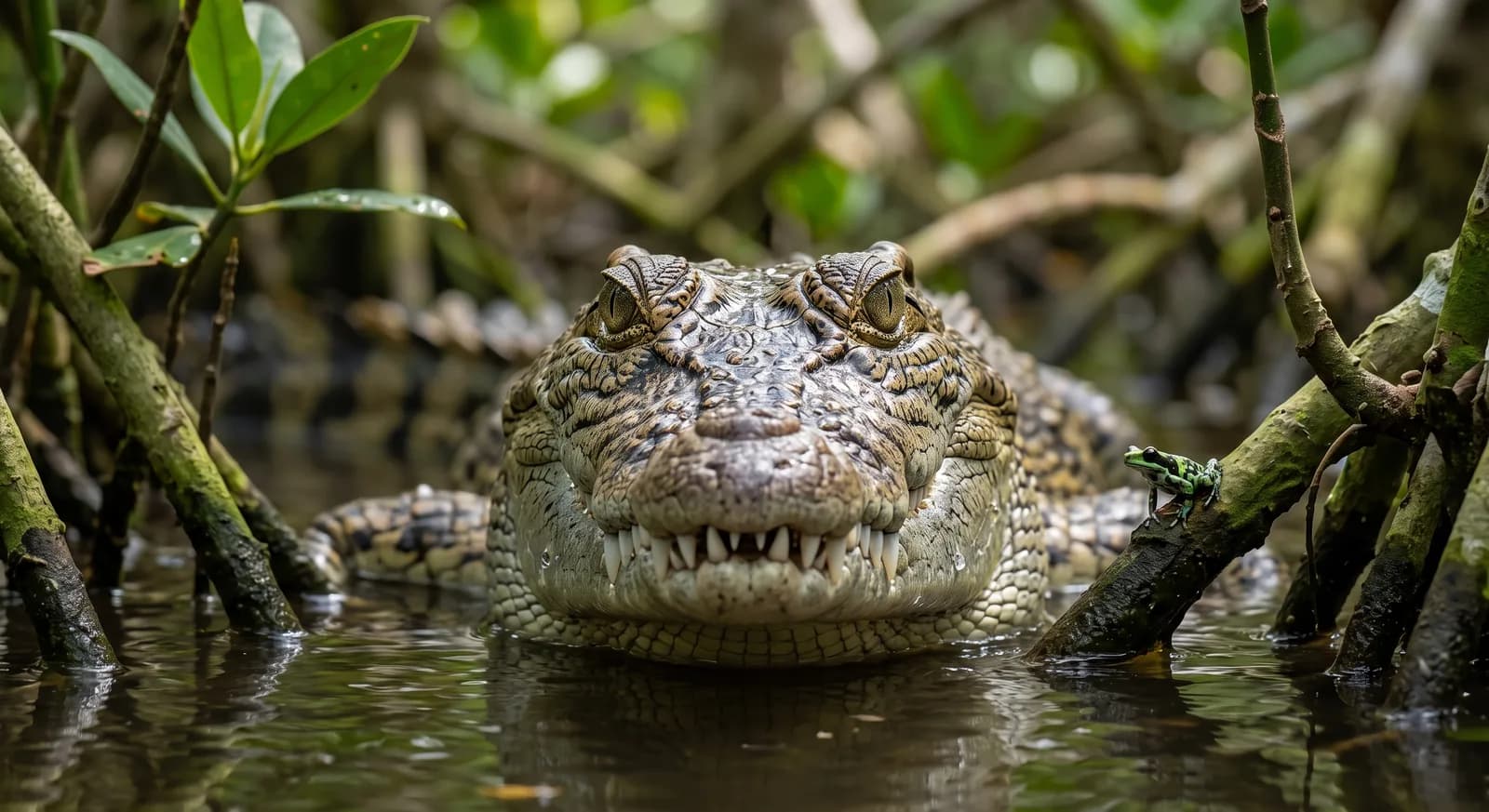 Least Concern
Morelet's Crocodile
Crocodylus moreletii
West Indian Manatee
Trichechus manatus
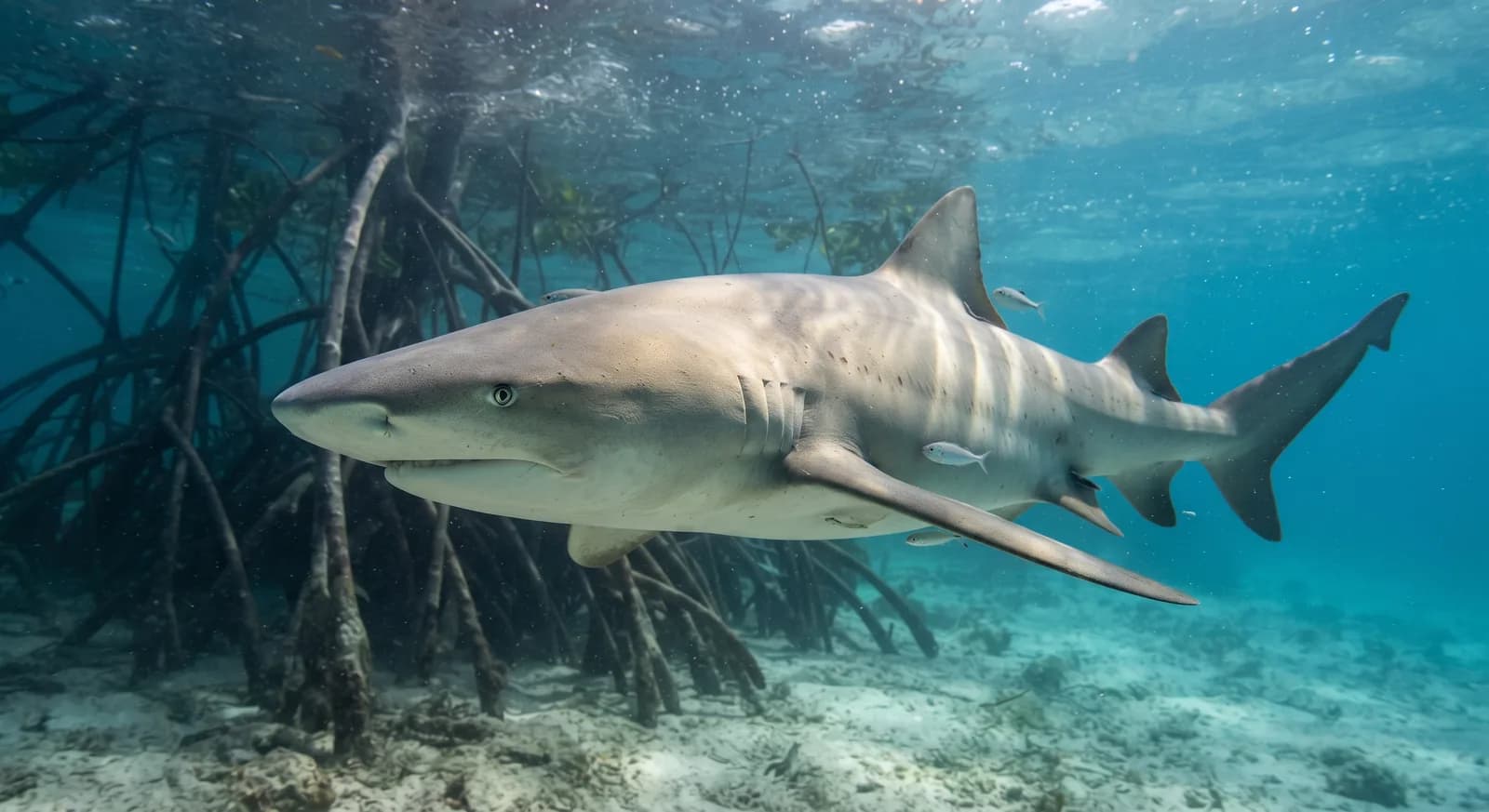 Vulnerable
Lemon Shark
Negaprion brevirostris
Tarpon
Megalops atlanticus
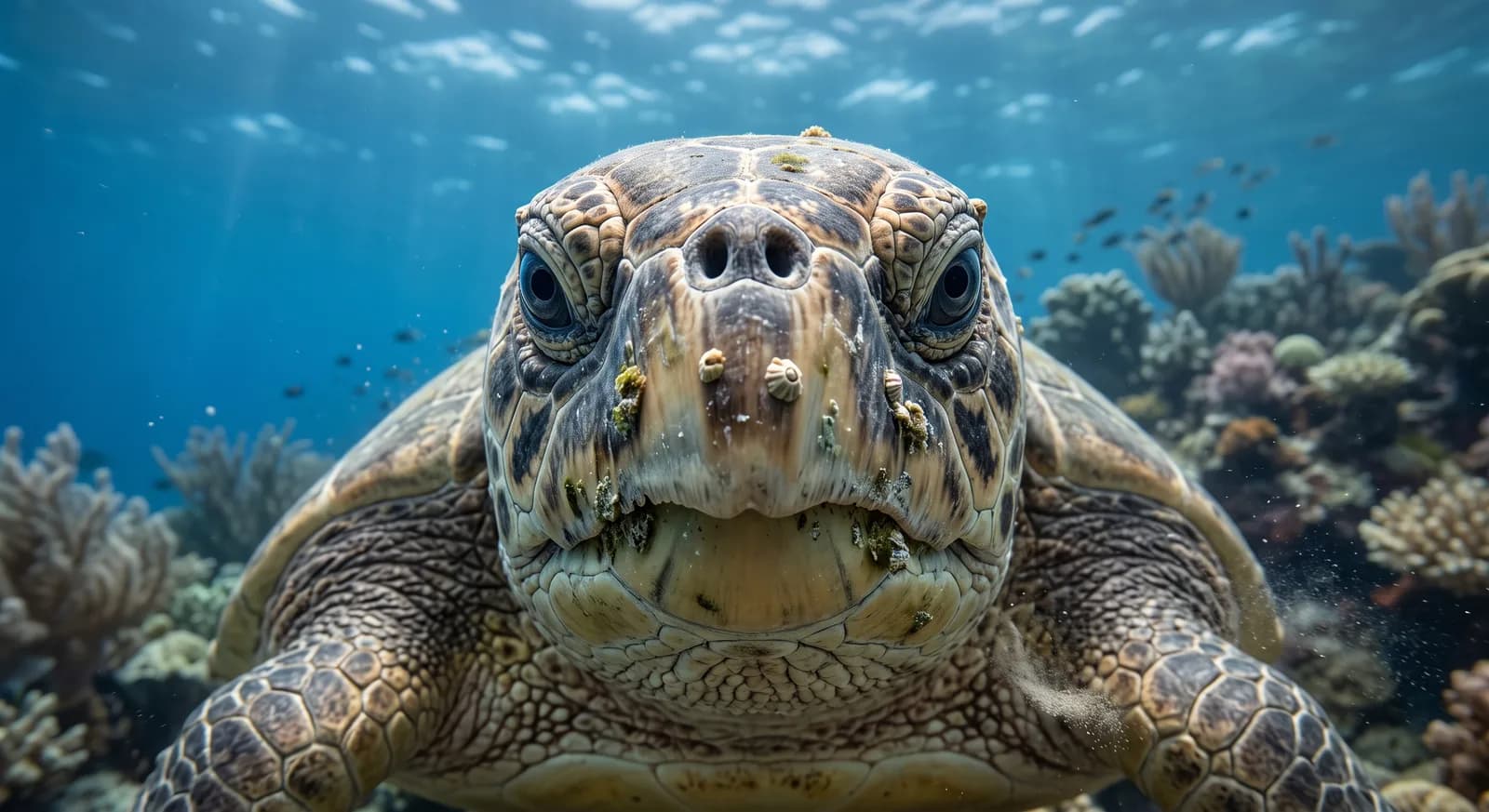 Vulnerable
Loggerhead Turtle
Caretta caretta
Southern Stingray
Hypanus americanus
How to help
The american crocodile is classified as vulnerable. Organizations such as UICN, WWF y Wildlife Conservation Society work specifically on its conservation and that of its habitat; looking into their programs is a good starting point if you want to get involved.
It's documented in 12 real protected areas — part of why protecting these places matters for its conservation.
Keep exploring
Based on what we already know about american crocodile.
Comments
Share an experience, a fun fact or a tip for seeing the american crocodile.
Be the first to comment.