Polychaetes · Sabellida · Siboglinidae
Giant Tubeworm
Riftia pachyptila
It has not yet been assessed against the IUCN criteria. See full glossary
The giant tube worm of the Pacific hydrothermal vents, which lives in dense forests of white tubes up to two and a half metres tall, crowned by a deep red plume. The adult has no mouth, no anus and no gut.
Size
50 cm – 2.5 m
Lifespan
40 years
Diet
Detritivore
Feeds on dead organic matter as it decomposes.
Social structure
Colony
Lives in large concentrations, often for breeding reasons.
Sighting difficulty
Unknown
Fun facts
- GeneralIt has neither mouth nor gut: it lives off internal bacteria that work on sulphide.
- fisiologíaIt lives beside hydrothermal vents thousands of metres down and takes its energy from symbiotic bacteria that oxidise sulphur compounds, rather than from sunlight.
- Its haemoglobin, which gives the plume its red colour, carries oxygen and sulphide at the same time without the latter poisoning it, something exceptional in animal biochemistry.
- Its discovery in 1977 off the Galápagos showed that whole ecosystems exist that do not depend on sunlight, and changed what was thought possible about life on Earth and on other planets.
- The adult has no mouth, no gut and no anus. All its nourishment comes from the billions of chemosynthetic bacteria it houses in an internal organ called the trophosome.
- Those bacteria use the energy in the vent's hydrogen sulphide to fix carbon, just as plants use light. It is an entire ecosystem that does not depend on the sun.
- The larva is born with a mouth and a gut: that is how the bacteria get in, and afterwards the digestive system turns into the trophosome.
- Its red plume is haemoglobin, and an extraordinary haemoglobin at that: it carries oxygen and sulphide at the same time without the latter poisoning it, something that would kill almost any other animal.
- It grows faster than any other marine invertebrate known: it can colonise a new vent, reach sexual maturity and measure a metre and a half in under two years.
- It was discovered in 1977, at the Galápagos hydrothermal vents, and its finding changed what was believed about the limits of life.
Life cycle & biology
- Habitat & environment
- Hydrothermal vents at 2,500 m
Sources consulted: Jones (1981); Cavanaugh et al. (1981), Science; Lutz et al. (1994), Nature; Animal Diversity Web
Related species
Other species in the catalogue with the most in common with Giant Tubeworm — same habitat, park, country, tags or family.
Christmas Tree Worm
Spirobranchus giganteus
Greater Bulldog Bat
Noctilio leporinus
Herring Gull
Larus argentatus
Great Black-backed Gull
Larus marinus
 Least Concern
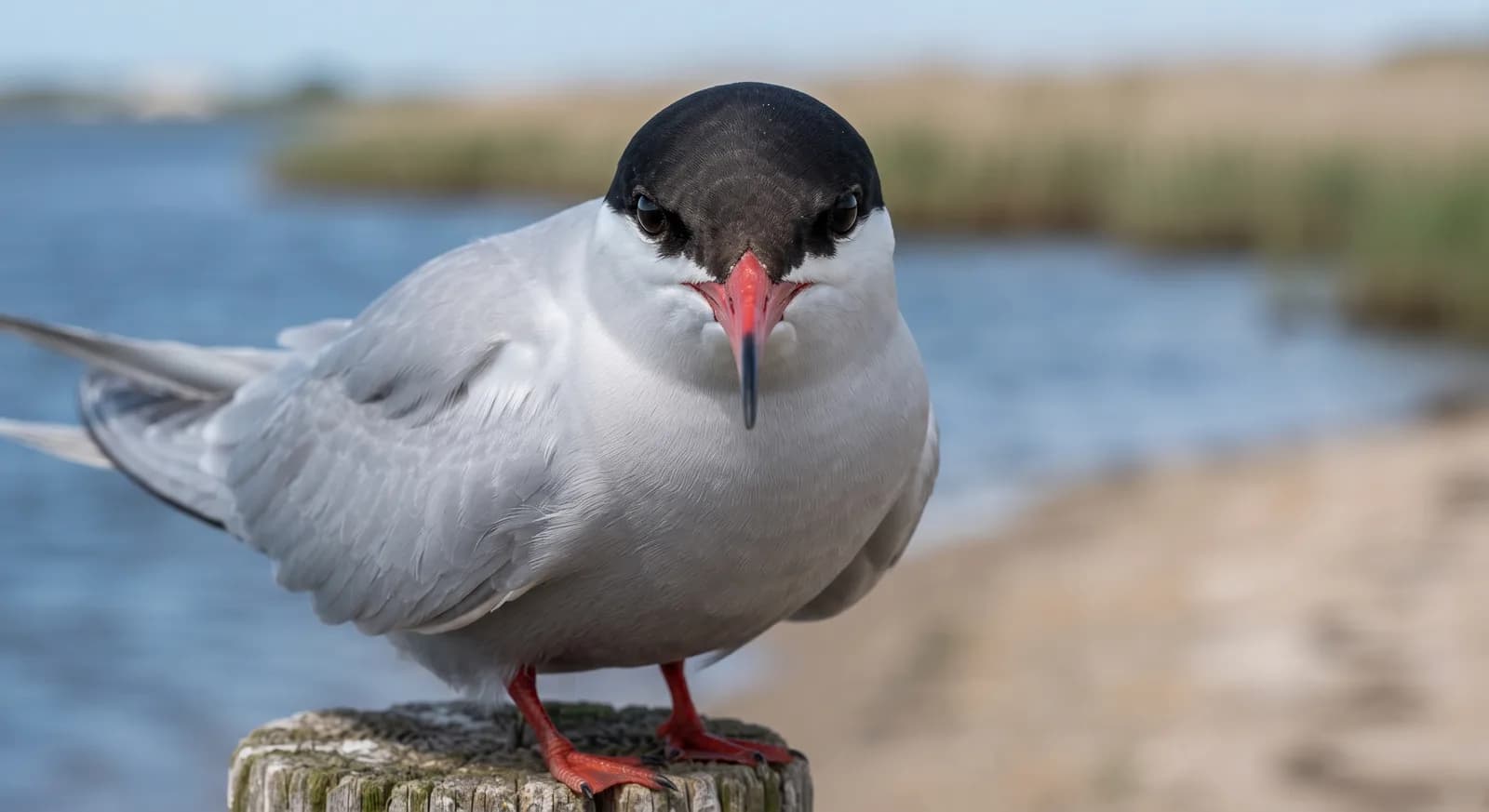
Common Tern
Sterna hirundo
 Vulnerable
Atlantic Puffin
Fratercula arctica
Keep exploring
Based on what we already know about giant tubeworm.
Comments
Share an experience, a fun fact or a tip for seeing the giant tubeworm.
Be the first to comment.