Skip to content
WAnimals
  • Map
  • Species
  • Parks
  • Diving
Log inCreate account
WAnimals

The guide for travellers and animal lovers: discover, plan and share your wild adventures around the world.

Discover wildlife

  • Species
  • Ecosystems
  • Glossary
  • Tags

Explore places

  • Map
  • Countries
  • Parks
  • Diving

Plan experiences

  • Guides

Learn

  • Blog

Resources

  • About us
  • How we build our profiles
  • Help centre
  • Contact
  • Install the app

Follow us

Account

  • Log in
  • Create account

© 2026 WAnimals. All rights reserved.

Terms of servicePrivacyCookiesLegal notice
MapSpeciesParksDiving
  1. Home
  2. Species
  3. Alligator Snapping Turtle

One of the 41 turtles and tortoises on WAnimals

Reptiles · Testudines · Chelydridae

Alligator Snapping Turtle

Macrochelys temminckii

Vulnerable

At high risk of extinction in the wild over the medium term.

Spotted something wrong?

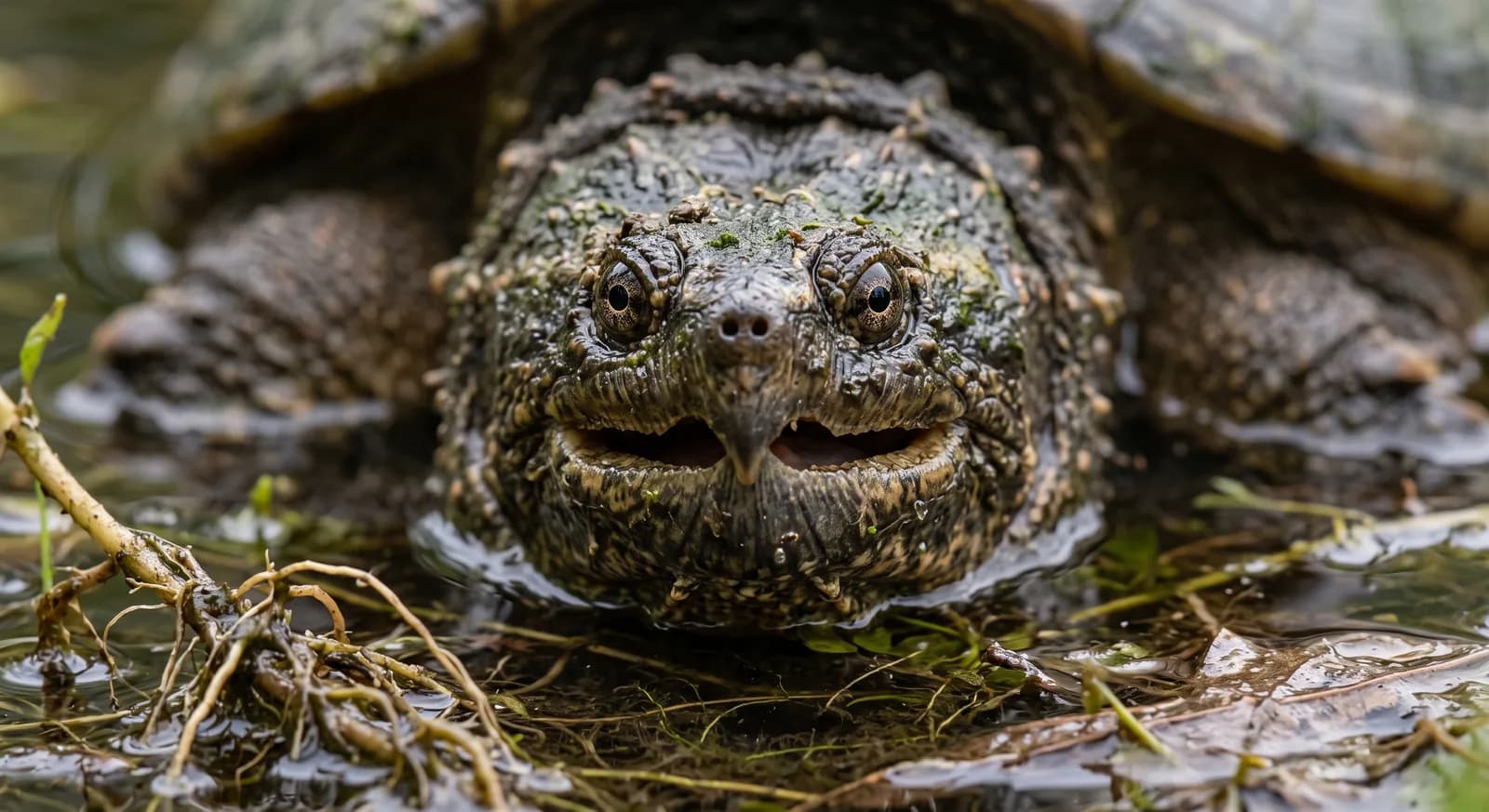
The alligator snapping turtle is the heaviest freshwater turtle in the Americas and one of the largest in the world: males exceed a hundred kilos. Its shell is crossed by three toothed ridges and its head is enormous. It fishes with a lure: it lies motionless on the bottom with its mouth open, wiggling a pink appendage on its tongue that mimics a worm.

Weight

20 kg – 100 kg

Size

40 cm – 80 cm

Life expectancy

80 years

Diet

Carnivore

Feeds mainly on other animals.

Activity

Nocturnal

Active mainly at night.

Social structure

Solitary

Lives and hunts alone, joining others only to breed.

Freshwater
1countries17parks1dive sites1same family

Fun facts

  • It fishes with a rod of its own: a pink, forked appendage on the tongue that it wriggles like a worm, drawing fish straight into its open mouth, which it closes in a fraction of a second.
  • It can stay submerged for fifty minutes without surfacing to breathe, and spends most of its life motionless on the bottom, covered in algae and practically indistinguishable from a rock.
  • It can live more than seventy years and does not breed until past its first decade, which means overharvesting for food takes generations to reverse.

Life cycle and biology

Skeleton type
Vertebrate - internal bony skeleton with a shell (reptile)
Habitat and environment
Slow rivers, bayous, lakes and swamps of the Mississippi basin and the south-eastern United States
Sexual maturity
11 years
Gestation / incubation
3.9 months
Litter / clutch size
30

Sources consulted: Wikipedia (en): Alligator snapping turtle

Where to find it

Loading map…

The pins mark the parks and dive sites where its presence is documented.

Where to see it

Parks and dive sites where this species has been documented — showing 11 of 18.

Related species

Other species in the catalogue with the most in common with Alligator Snapping Turtle — same habitat, park, country, tags or family.

Same taxonomic family
Shares a park
Shares a park
Shares a park
Shares a park
Shares a park

How to help

The alligator snapping turtle is classified as vulnerable. Organisations such as the IUCN, WWF and the Wildlife Conservation Society work specifically on its conservation and that of its habitat; looking into their programmes is a good starting point if you want to get involved.

It's documented in 10 protected areas — one reason why protecting these places matters for its conservation.

Keep exploring

Based on what we already know about alligator snapping turtle.
Share an experience, a fun fact or a tip for seeing the alligator snapping turtle.
See full glossary
This page in other languages: Español · Deutsch · Français · Português · Italiano
See its range on the interactive map→
EvergladesUnited States
Great Smoky MountainsUnited States
AcadiaUnited States
Big BendUnited States
Mammoth CaveUnited States
VoyageursUnited States
Isle RoyaleUnited States
CongareeUnited States
BadlandsUnited States
ShenandoahUnited States
Ginnie SpringsUnited States
See all 17 parks
Common Snapping TurtleLeast Concern

Common Snapping Turtle

Chelydra serpentina

Least Concern

Spiny Softshell Turtle

Apalone spinifera

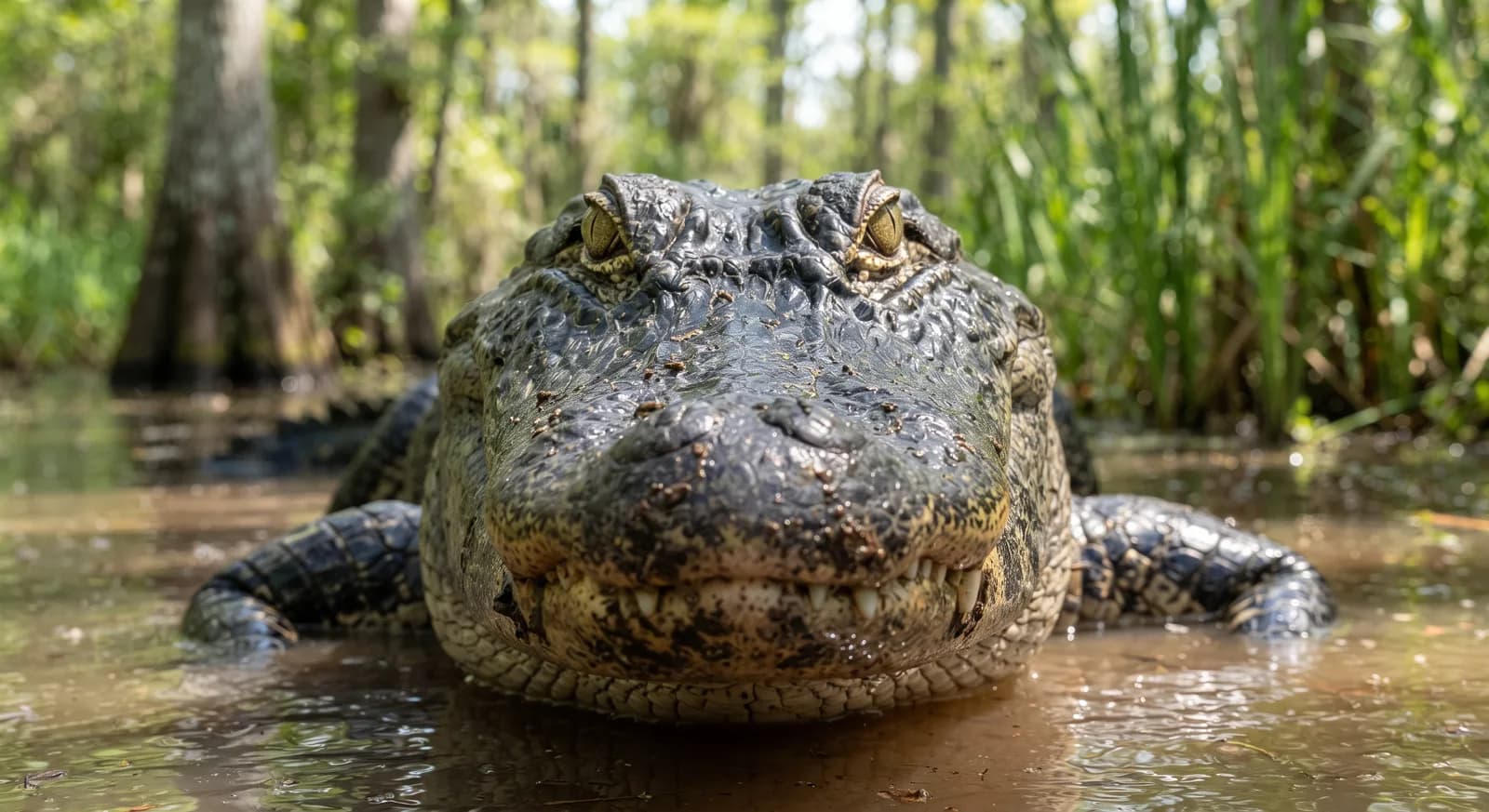
American AlligatorLeast Concern

American Alligator

Alligator mississippiensis

Least Concern

American Bullfrog

Lithobates catesbeianus

Least Concern

Greater Siren

Siren lacertina

Least Concern

Two-toed Amphiuma

Amphiuma means

CountriesUnited States
ParksEvergladesUnited States
TagsCarnivore
Carnivore
Nocturnal
Solitary
Vulnerable
Reptile
Freshwater
United States