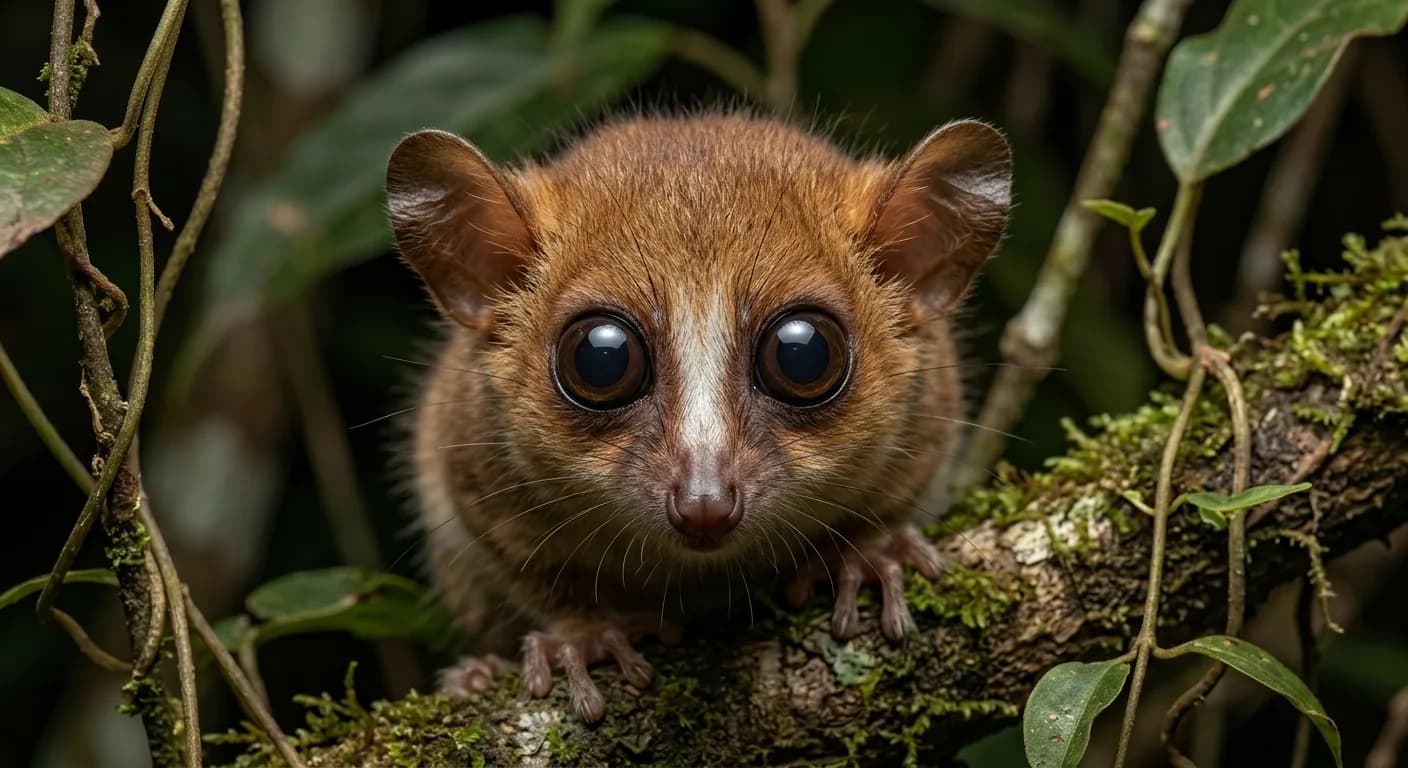
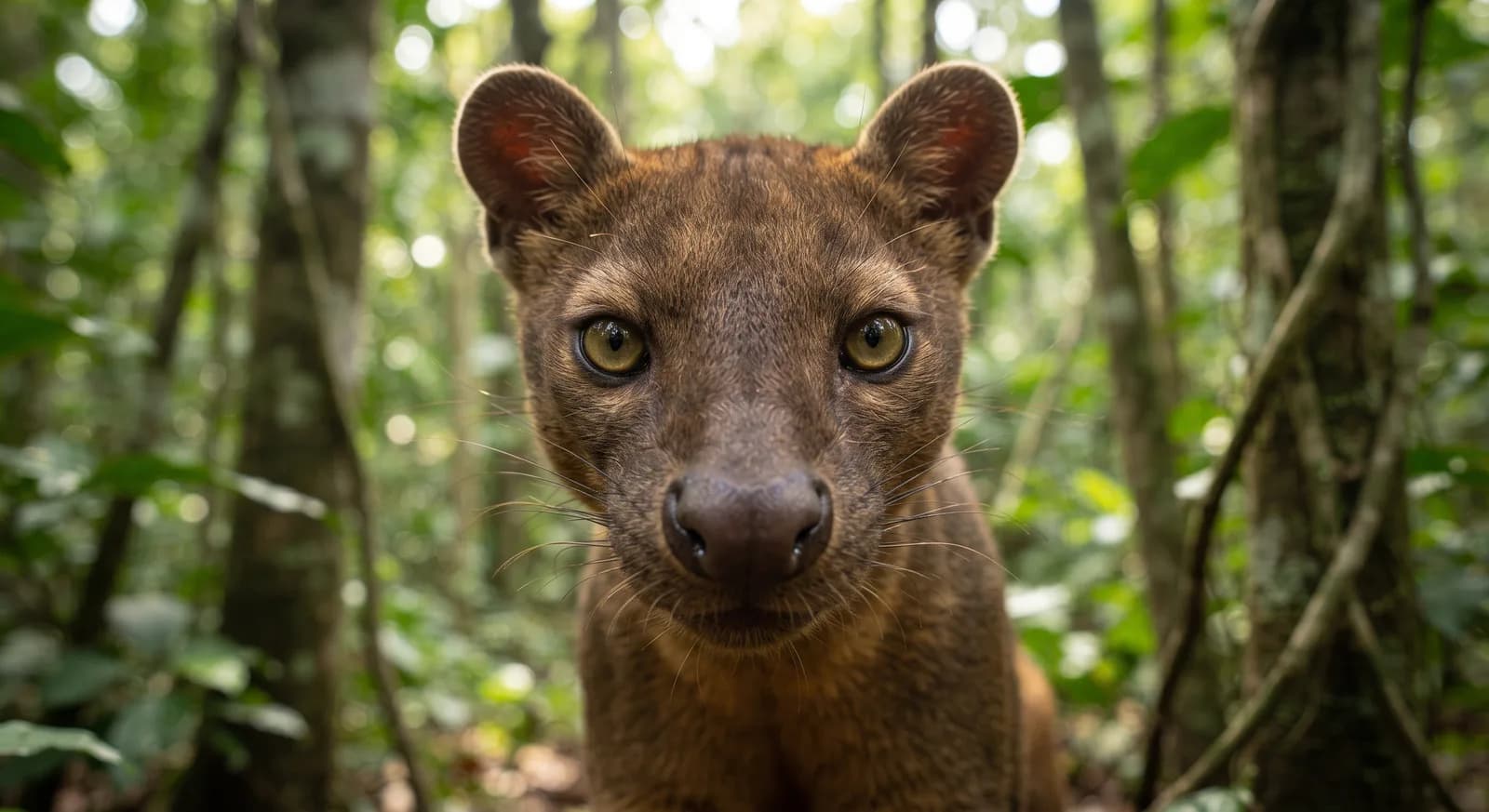
 Vulnerable
Fossa
Cryptoprocta ferox
Mammals · Carnivora · Eupleridae
Fossa fossana
At high risk of extinction in the wild over the medium term.
Its Malagasy name, fanaloka, comes from a Malay word meaning "mouse deer", after its outline. It stores fat in its bushy tail, a reserve it draws on when food runs short in the forests of Madagascar.
Weight
1.5 kg – 2 kg
Size
40 cm – 47 cm
Life expectancy
11 years
Diet
Carnivore
Feeds mainly on other animals.
Activity
Nocturnal
Active mainly at night.
Social structure
Solitary
Lives and hunts alone, joining others only to breed.
Sources consulted: Fandom · Encyclopedia of Life · Wikipedia · Animalia.bio · Animal Diversity Web · Wildlife Madagascar
Best time: All year round in the rainforests of eastern Madagascar, at night; at Ranomafana and Andasibe it is the easiest Malagasy civet to find.
The pins mark the parks where its presence is documented.
Parks and dive sites where this species has been documented.
Other species in the catalogue with the most in common with Spotted Fanaloka — same habitat, park, country, tags or family.
The spotted fanaloka is classified as vulnerable. Organisations such as the IUCN, WWF and the Wildlife Conservation Society work specifically on its conservation and that of its habitat; looking into their programmes is a good starting point if you want to get involved.
It's documented in 7 protected areas — one reason why protecting these places matters for its conservation.
Based on what we already know about spotted fanaloka.