 Least Concern
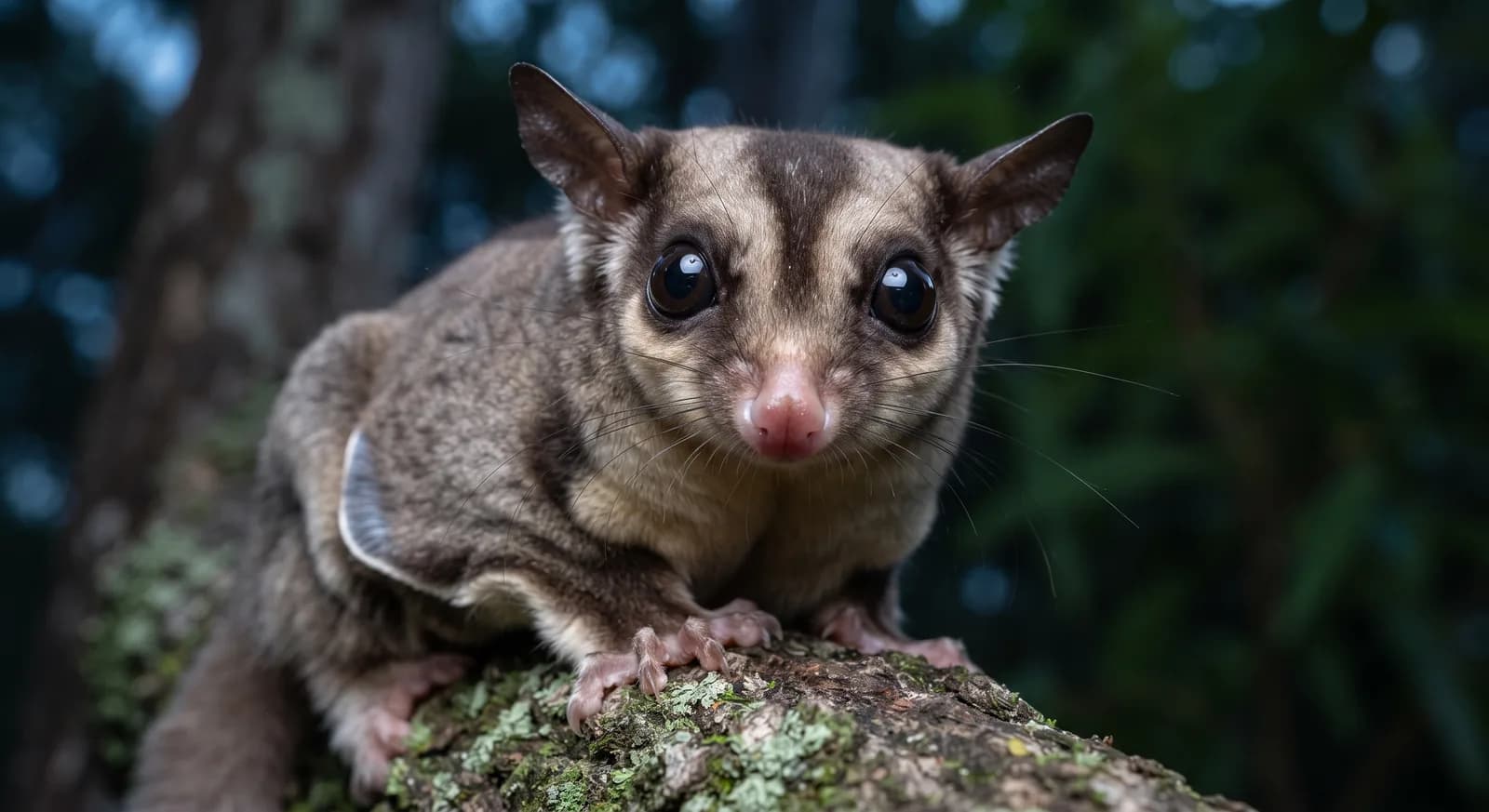
Sugar Glider
Petaurus breviceps
One of the 2 wrist-winged gliders on WAnimals
Mammals · Diprotodontia · Petauridae
Petaurus norfolcensis
The species is abundant and widely distributed; it faces no significant short-term risk.
The squirrel glider is a gliding marsupial of eastern Australia, intermediate in size between the sugar glider and the greater glider. It spreads a membrane of skin between wrists and ankles and glides between trees, covering up to fifty metres. It feeds on eucalypt sap, nectar, pollen and insects, and makes incisions in the bark of particular trees to make them bleed. It lives in family groups and depends entirely on old trees with hollows to nest in, a scarce resource in managed forests.
Weight
170 g – 300 g
Size
18 cm – 23 cm
Life expectancy
6 years
Diet
Omnivore
Combines animal and plant food depending on availability.
Activity
Nocturnal
Active mainly at night.
Social structure
Family group
Lives in small family groups with close bonds.
Sources consulted: IUCN Red List · Animal Diversity Web · Wikipedia (es)
Best time: All year in eastern Australia, at night; found by torchlight in the eucalypts and acacias whose sap it takes.
The pins mark the parks where its presence is documented.
Parks and dive sites where this species has been documented — showing 10 of 15.
Other species in the catalogue with the most in common with Squirrel Glider — same habitat, park, country, tags or family.
Based on what we already know about squirrel glider.