One of the 8 marmots on WAnimals
Mammals · Rodentia · Sciuridae
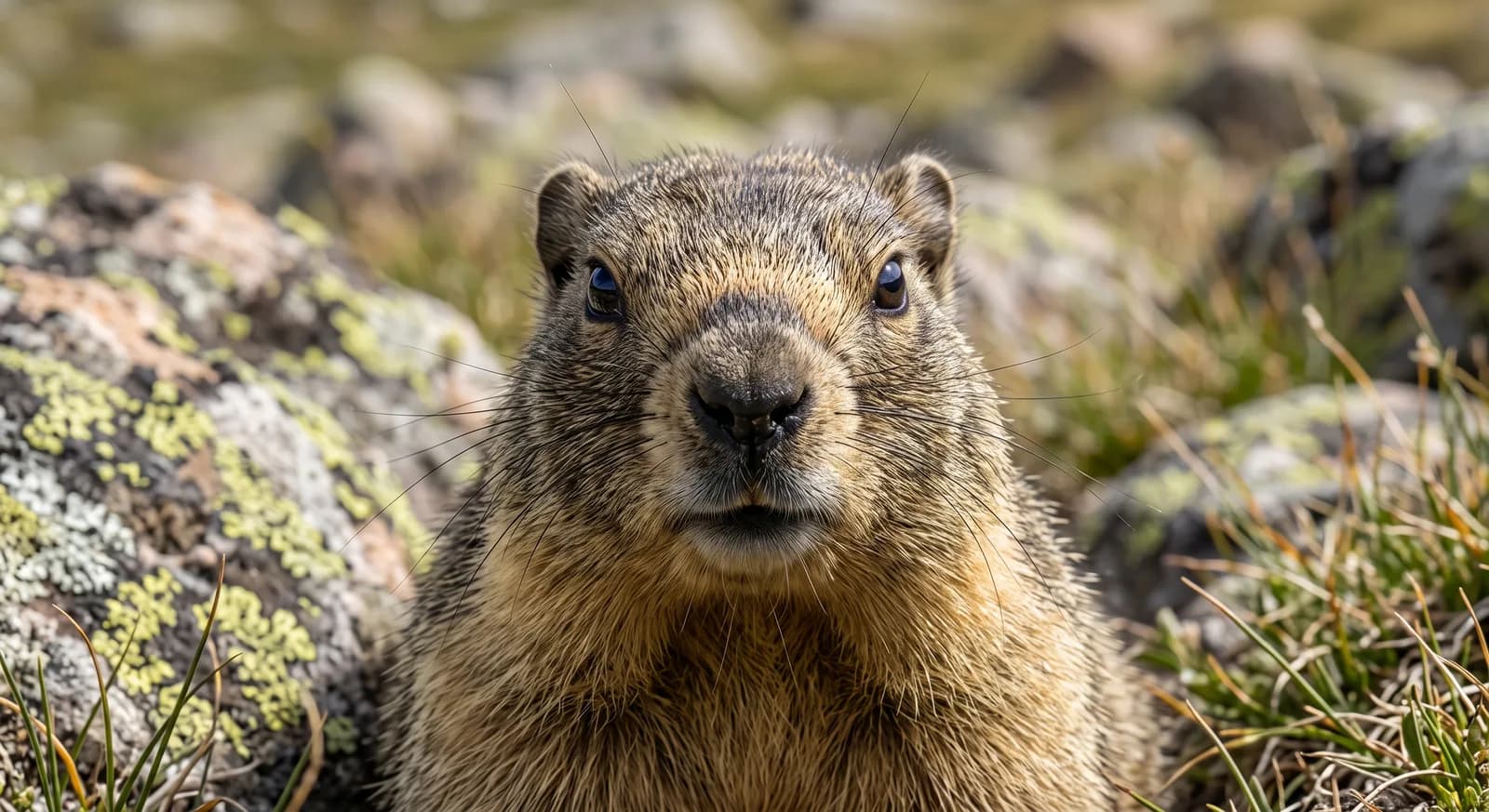
Yellow-bellied Marmot
Marmota flaviventris
The species is abundant and widely distributed; it faces no significant short-term risk. See full glossary
It spends roughly 80% of its life underground in burrows, hibernating for as much as 8 months a year, during which it can lose 50% of its body weight.
Weight
1.6 kg – 5.2 kg
Size
47 cm – 70 cm
Lifespan
15 years
Diet
Herbivore
Feeds mainly on plants.
Activity
Diurnal
Active mainly during the day.
Social structure
Colony
Lives in large concentrations, often for breeding reasons.
Sighting difficulty
Easy
Fun facts
- That hibernation is the species' main cause of death.
- It eats grasses, insects and the occasional bird's egg.
- It lives on rocky mountain meadows of the western United States and Canada.
Life cycle & biology
- Skeleton type
- Vertebrate - internal bony skeleton (mammal)
- Habitat & environment
- Rocky mountain meadows of the western United States and Canada
- Birth weight
- 33.8 g and 111 mm long at birth
- Size at birth
- 33.8 g at birth
- Sexual maturity
- 2 years
- Gestation / incubation
- ~30 days
- Litter / clutch size
- 3 to 8 young per litter (average 4.3)
- Lifespan in captivity
- Documented record of up to 21.2 years
Sources consulted: Animal Diversity Web; AnAge (genomics.senescence.info); Wikipedia (Yellow-bellied marmot); BioKIDS; Journal of Zoology (32-year demography study); NPS Jewel Cave
Where to watch it
Parks and dive sites where this species has been documented.
Related species
Other species in the catalogue with the most in common with Yellow-bellied Marmot — same habitat, park, country, tags or family.
Red-bellied Squirrel
Sciurus aureogaster
Olympic Marmot
Marmota olympus
Hoary Marmot
Marmota caligata
American Pika
Ochotona princeps
Mountain Goat
Oreamnos americanus
Bighorn Sheep
Ovis canadensis
Keep exploring
Based on what we already know about yellow-bellied marmot.
Comments
Share an experience, a fun fact or a tip for seeing the yellow-bellied marmot.
Be the first to comment.