One of the 2 pikas on WAnimals
Mammals · Lagomorpha · Ochotonidae
American Pika
Ochotona princeps
The species is abundant and widely distributed; it faces no significant short-term risk. See full glossary
The American pika is a small lagomorph of the mountains of western North America, tied to scree and boulder fields above the tree line. Unlike the Asian pikas it is territorial and solitary: each animal defends its own patch of scree and its own haypile. It does not hibernate, so it spends the summer cutting grasses and flowers and piling them in the sun to dry. It is extremely sensitive to heat: it can die after a few hours exposed to temperatures above 25 degrees.
Weight
121 g – 176 g
Size
16 cm – 22 cm
Lifespan
6 years
Diet
Herbivore
Feeds mainly on plants.
Activity
Diurnal
Active mainly during the day.
Social structure
Solitary
Lives and hunts alone, joining others only to breed.
Sighting difficulty
Easy
Fun facts
- It is one of the mammals most often cited as an indicator of climate change: since it cannot tolerate heat and lives on isolated summits, it has nowhere higher to go when its mountain warms, and several populations in the Great Basin have already died out locally.
- It cuts and dries grass in the sun into haypiles that can weigh several kilos, and defends its heap with squeaks against any neighbour that tries to steal from it.
Life cycle & biology
- Skeleton type
- Vertebrate - internal bony skeleton (mammal)
- Habitat & environment
- High-mountain scree and boulder fields of the Rockies and the Californian Sierra Nevada
- Sexual maturity
- 11.4 months
- Gestation / incubation
- 30 days
- Litter / clutch size
- 3
Sources consulted: https://es.wikipedia.org/wiki/Ochotona_princeps
Where to watch it
Parques y spots de buceo donde se ha documentado esta especie — se muestran 10 de 19 documentados.
Related species
Other species in the catalogue with the most in common with American Pika — same habitat, park, country, tags or family.
Bushy-tailed Woodrat
Neotoma cinerea
 Least Concern
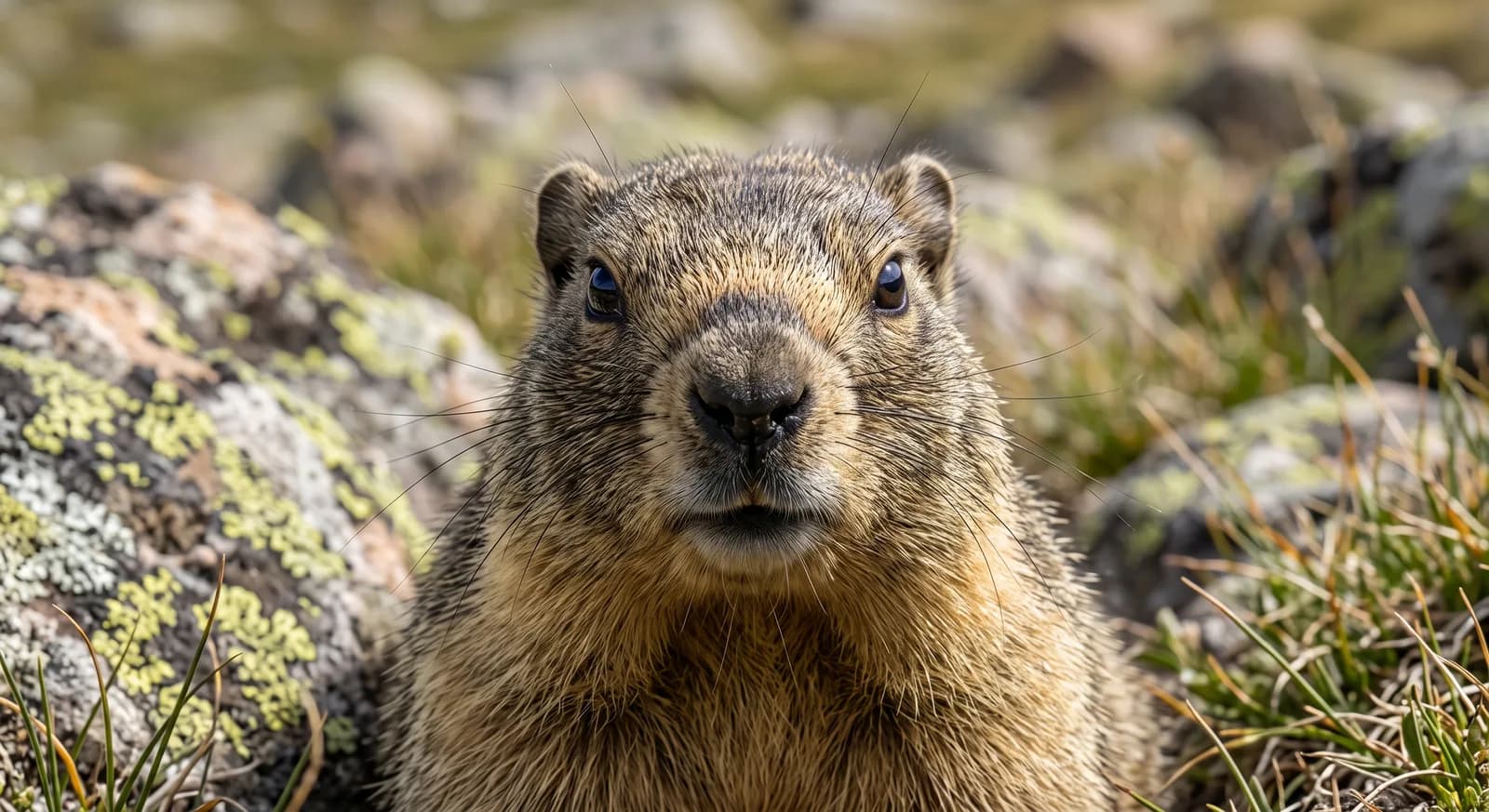
Yellow-bellied Marmot
Marmota flaviventris
Mountain Goat
Oreamnos americanus
Bighorn Sheep
Ovis canadensis
Common Chuckwalla
Sauromalus ater
Hoary Marmot
Marmota caligata
Keep exploring
Based on what we already know about american pika.
Comments
Share an experience, a fun fact or a tip for seeing the american pika.
Be the first to comment.